
Looking Glass Lodge: Inside Rik and Lindsey's Elevated Woodland Retreat Near Hastings, East Sussex
Produced & Written by Dan Burge | 24 June 2026
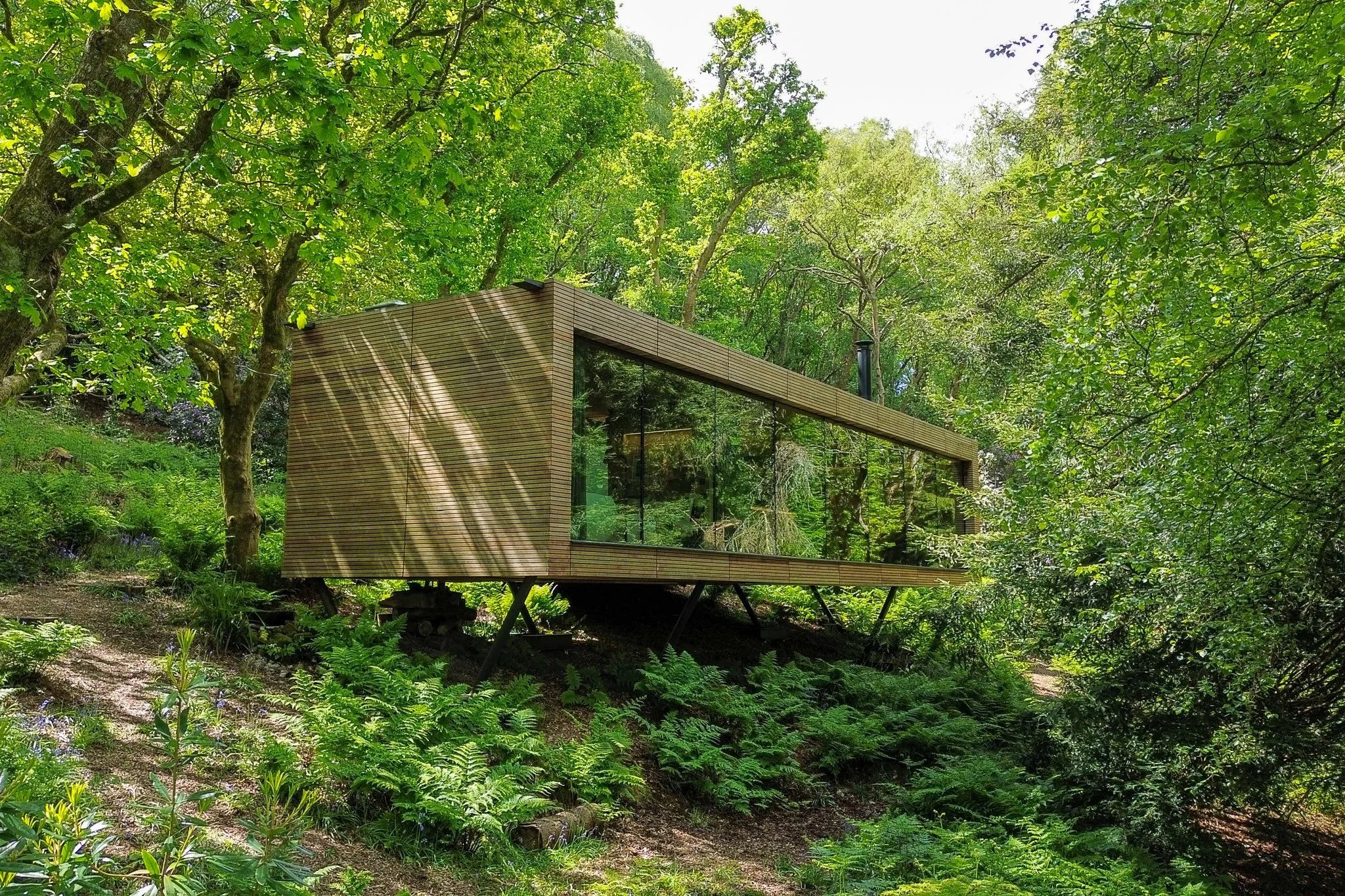
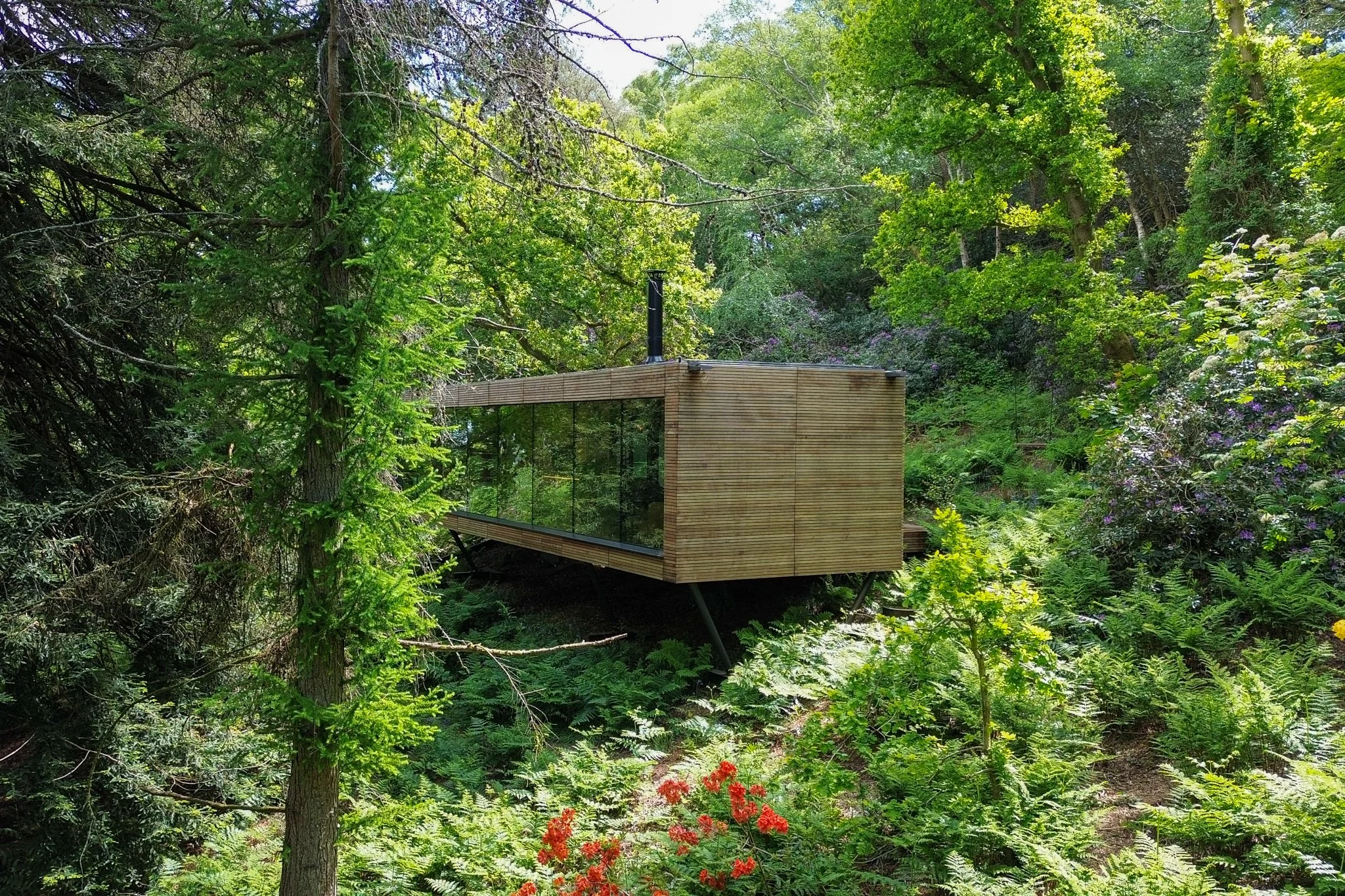
HomeInspire visited Looking Glass Lodge, the RIBA award-winning woodland retreat that Rik and Lindsey built deep inside an 8-acre clearing on the edge of the High Weald, just outside Hastings. It's a project that started life as a simple shepherd's-hut idea and ended up one of the most technically ambitious lodges we've featured: full-height electrochromic glass that darkens itself to protect the local bat population, a structure raised on 22 screw piles so that not a single tree root was disturbed, and an interior designed from a woodland illustration rather than a computer render. Two and a half years in planning, eight months to build, and not one tree felled to make room for it.
A Childhood Spent in These Woods
Growing Up Next to the Nature Reserve
Rik grew up a few hundred yards from where Looking Glass Lodge now stands. His parents ran a nature reserve on the same patch of land for the better part of 35 to 40 years, planting many of the trees that now surround the lodge. "I remember as a kid this was just a grassy bank, and I can remember sledging down here as a kid, which seems crazy now when you look at it." The site carries that history in a very literal sense — the trees Rik played among as a child are the same trees the lodge has since been built to protect.
A Decision Made While Pregnant
The idea to move down and help out properly began back in 2010, just as Lindsey was pregnant with the couple's daughter. Rik and Lindsey were living in the Midlands at the time, and watching Rik's parents manage 8 acres of woodland alone as they got older started to feel like something they should be part of. It wasn't a fully formed plan yet — just a growing sense that the time had come to be closer to family, and to a piece of land that meant a great deal to all of them.
Moving Down From the Midlands
It took until 2014 for the move to actually happen. Lindsey had been working freelance in graphic design, a job she describes as one she "didn't really enjoy so much," and juggling that alongside the pull to be outdoors in the garden made the decision easier than it might otherwise have been. Once they relocated, the idea that had been forming for four years — some kind of small structure to help share the land and bring in a little income — finally had somewhere to go.
From a Single-Bedroom Shed to an Architect-Led Lodge
Wanting Something That Didn't Feel Disruptive
The earliest version of the plan was modest by design. Rik and Lindsey didn't want to disturb the woodland any more than necessary, so they started out thinking about something closer to a garden shed or a shepherd's hut — a single bedroom, minimum footprint, minimum impact. "We just felt it was a shame not to share it," is how the idea is described, but neither of them wanted that generosity to come at the expense of the land itself.
Avoiding the "Fairy Tale Cabin"
Once they started looking at what was actually available, the scope of the project began to shift. Most of the off-the-shelf cabin companies offered the same kind of building — round timber structures with cone-shaped roofs that felt more fairy tale than woodland retreat. None of it fitted what Rik and Lindsey had in mind. They wanted something that made a quiet statement rather than a loud one: a building that would sit back into the woodland rather than announce itself.
Bringing in Michael Kendrick
That search led them to architect Michael Kendrick, whose approach to design felt sympathetic to the site rather than imposed on it. "His approach seemed natural, sympathetic to the environment and ecologically friendly," is how the couple describe their first conversations with him. It was the start of a process that would eventually produce a lodge that went on to win RIBA South East Small Project of the Year — but at this early stage, it was simply the right architect for a very particular brief.
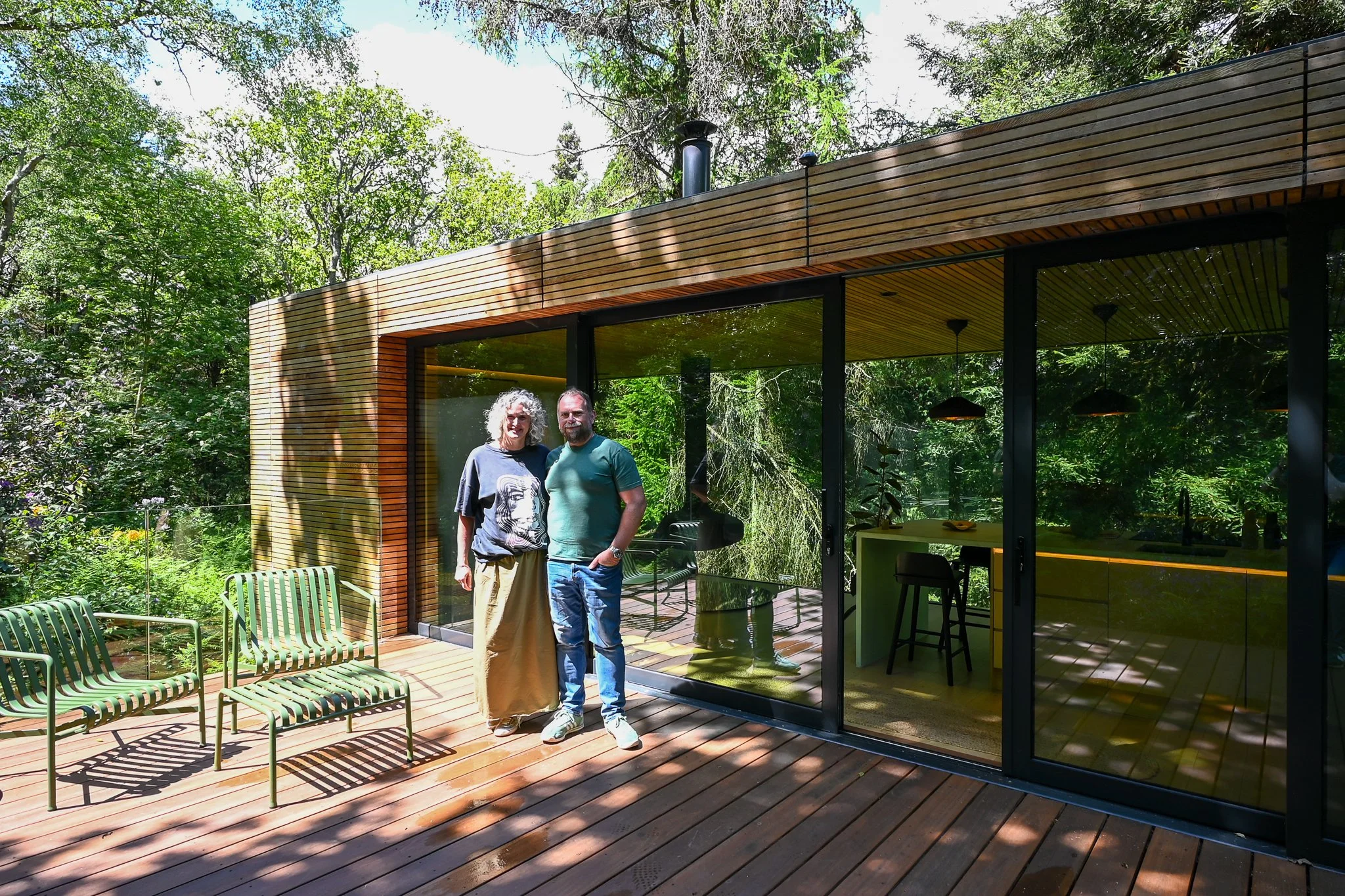
Planning Permission: Surveys, Bats and a 22-Pile Foundation
Two and a Half Years to Get to Yes
The idea for the lodge took proper shape around 2018, and what followed was a planning process that took roughly two and a half years — considerably longer than the build itself. The first application didn't succeed, but it generated detailed feedback that gave Rik and Lindsey a much clearer sense of what would actually be acceptable on the site, and helped them refine both the location and the design until everything finally lined up.
Built Around the Redwood, Not Over It
The eventual position of the lodge was shaped almost entirely by a single tree — a large redwood standing in the clearing that became the lodge's central feature. No trees were felled to make room for the building; the design was developed around what was already there. "That kind of led the design of the lodge itself," and the relationship between the building and that redwood is still the first thing most visitors notice.
Screw Piles Instead of Footings
To avoid disturbing tree roots or the animals living beneath the clearing, the lodge was raised on 22 screw piles rather than conventional concrete footings, with the piles threaded carefully through the existing root systems. There's no significant groundwork and no large footprint cut into the woodland floor. Since construction finished, the undergrowth beneath the lodge has recovered to the point that the bluebells and ferns are now thicker than they were before the build ever began.
The Glass Condition That Changed the Budget
A Specification With No Equivalent
Among the long list of planning conditions — badger surveys, dormouse surveys, great crested newt surveys among them — one stood out as the most consequential. To stop light spill disturbing the bats in the surrounding woodland, the lodge had to be built using a specific type of electrochromic glass, capable of darkening itself to control how much light escaped at night. The planning condition named the product directly, with the usual "or equivalent" caveat attached. There turned out to be no equivalent.
Shipped in From Minneapolis
The glass specified was only manufactured in one place: Minneapolis. Getting it to a remote woodland clearing in East Sussex, with no real vehicle access beyond a single narrow track, became its own logistical challenge — every pane had to be brought down to the site and craned into position, along with the steel structure needed to support it. Each individual pane cost in the region of £6,000, a figure that on its own reshaped the entire project budget.
Committing Past the Point of No Return
The scale of that cost only became fully apparent once the order had already gone in. "There were points where we felt like we'd almost gone too far now to sort of come back," is how the couple describe the period around committing to the glazing. The final glass bill ran well past what they had originally budgeted for the whole build, and there was little choice at that stage but to see the project through and adapt everything else around it.
HomeInspire Downloads
Download Our Complete Renovation Handbook
A step-by-step guide to planning, designing, and delivering your dream home.
Planning your first renovation doesn’t have to be overwhelming. This 62-page step-by-step eBook guides you through every stage - from budgeting and planning to design, permissions, and finishing touches. Packed with expert advice, checklists, and cost guides, it helps you avoid mistakes, stay on track, and bring your dream home to life.
Scaling Back the Glass, Bringing in the Cedar
Avoiding an Office Building Look
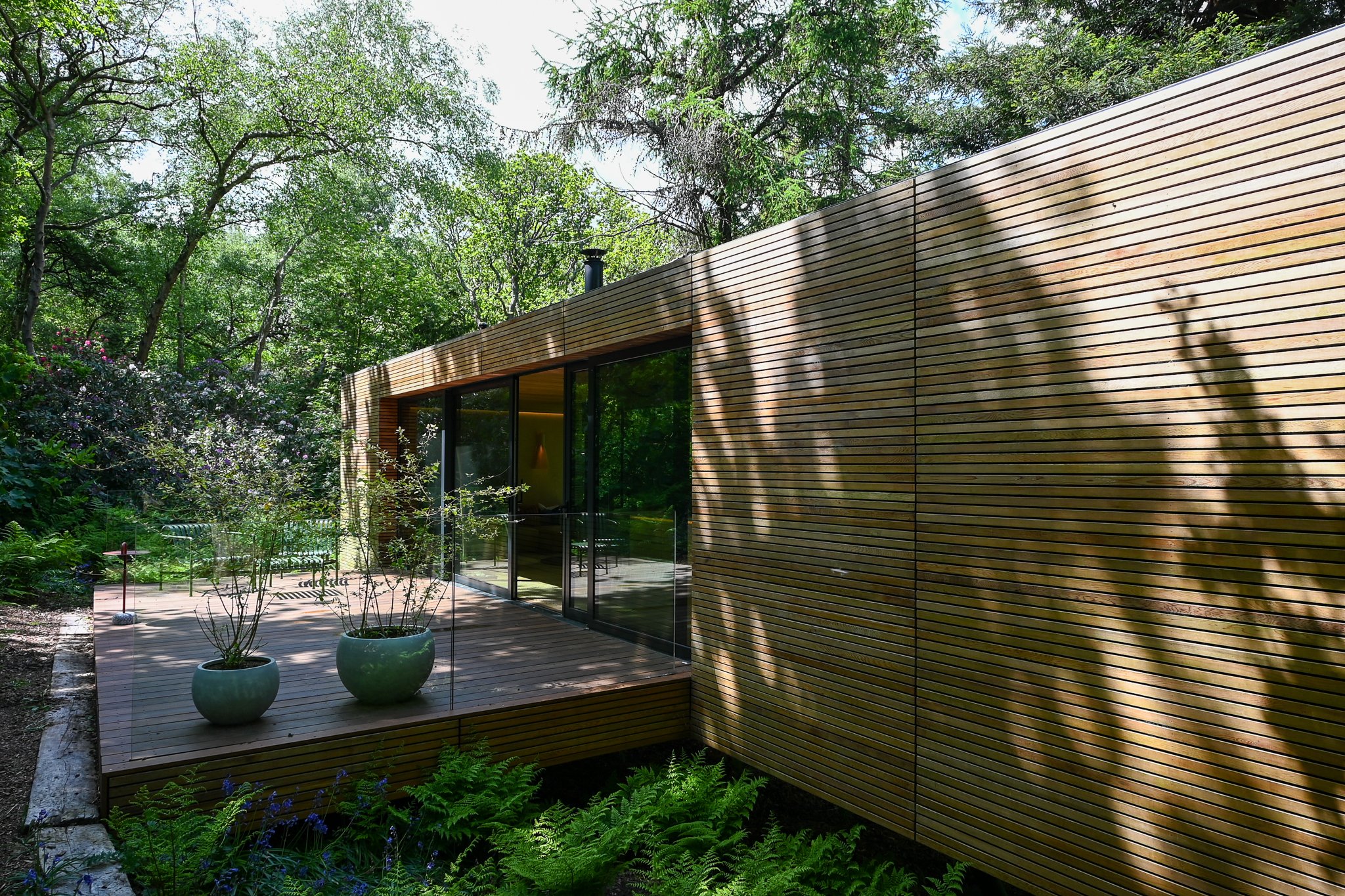
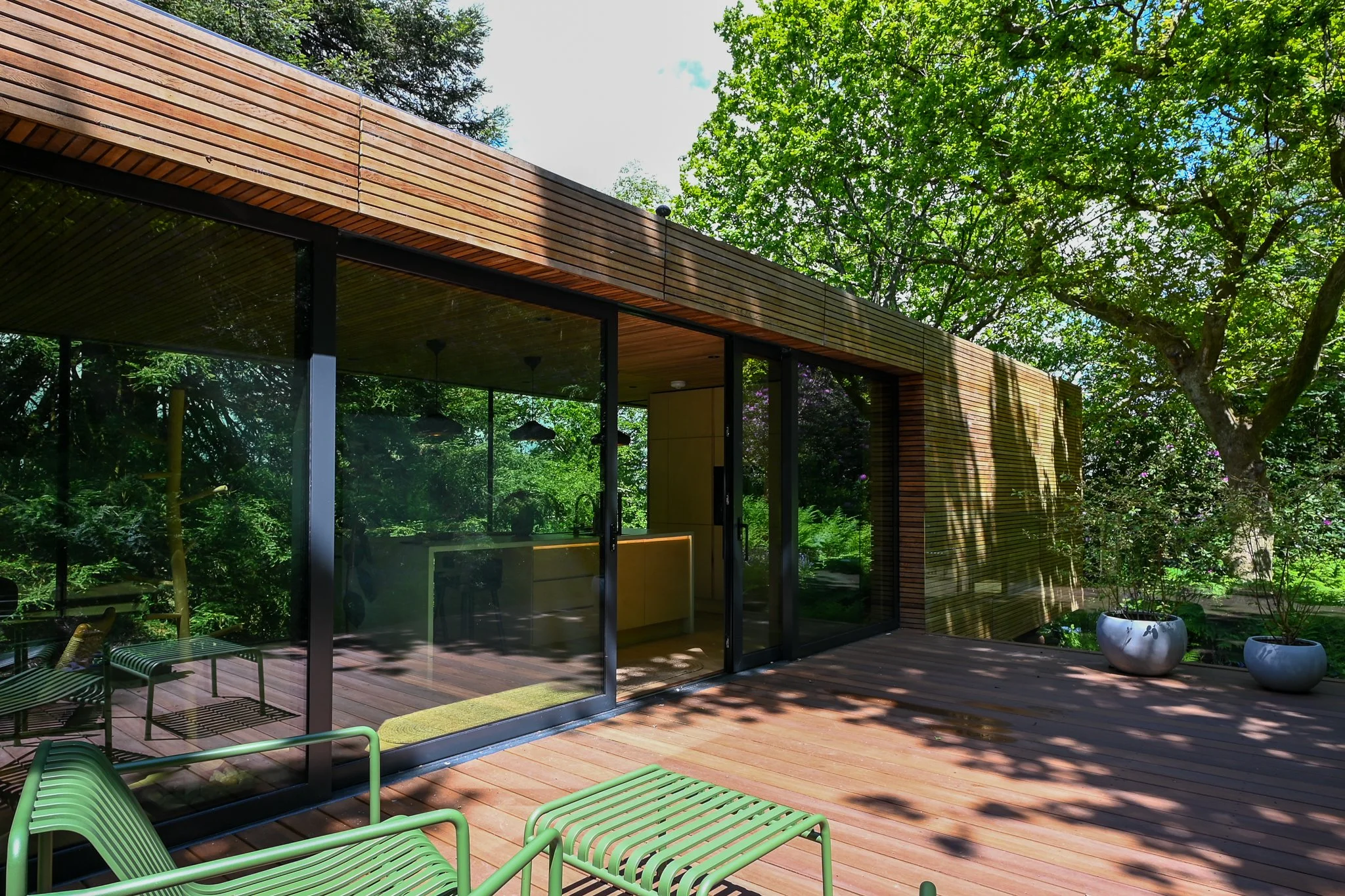
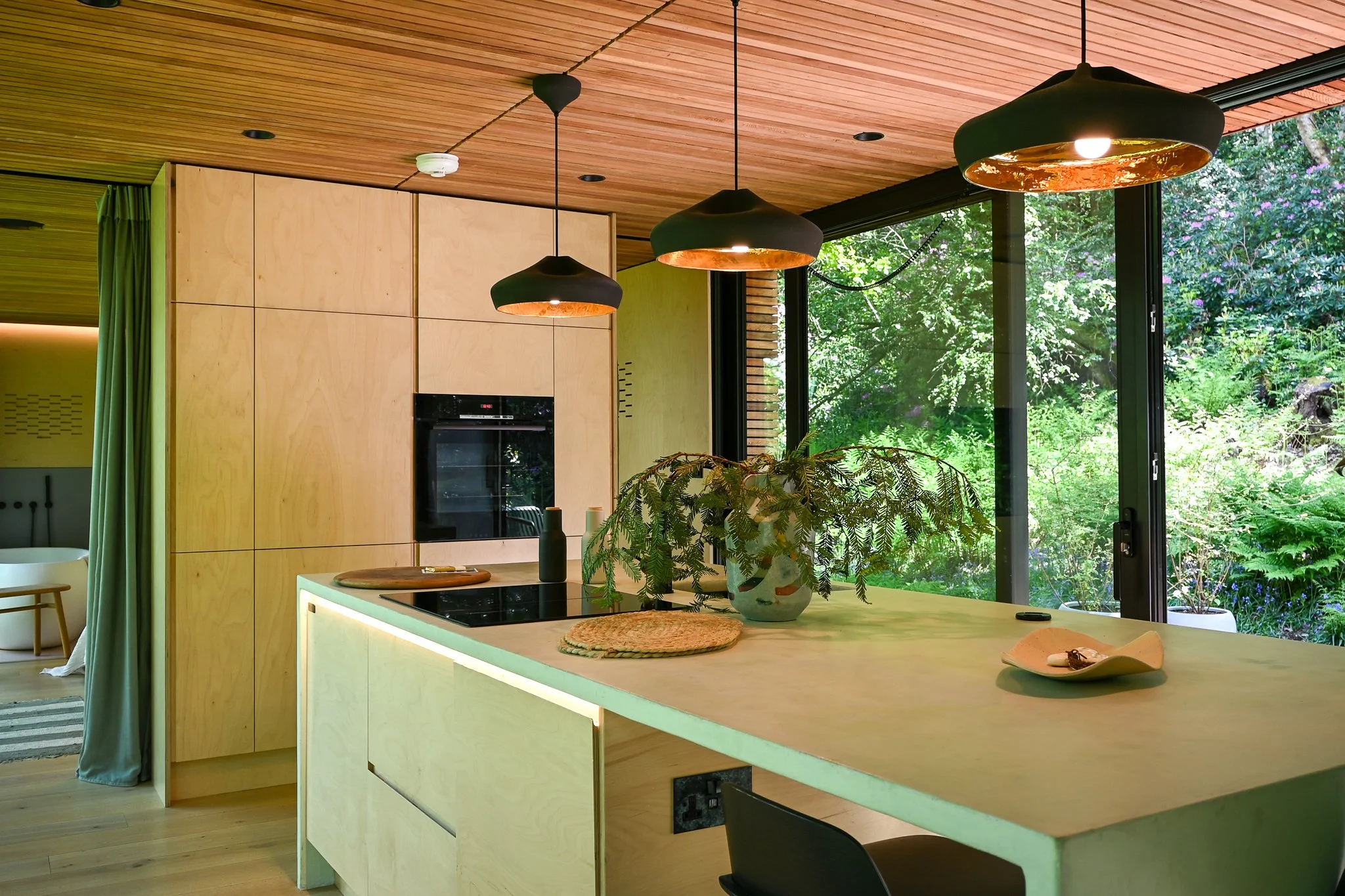
One direct consequence of the glazing cost was a reduction in the number of glass panels originally planned. What started as a more heavily glazed design was scaled back — and the couple are now glad it was. A building this modern, set down in a woodland clearing, risked reading as something closer to an office block than a retreat. Cutting back the glass and bringing western red cedar cladding in to fill the gaps gave the lodge a series of smaller, cosier sections rather than one continuous wall of glass.
A View Drawn Through to the Redwood
What glazing remained was positioned deliberately. Standing on the terrace, the eye is drawn straight through the building to the redwood and the larches beyond — that connection to the woodland is the first thing meant to register, with everything else inside treated as secondary to it. The cedar, used both inside and out, was chosen partly for that reason: to let the glass do the work of connecting the building to the trees, without competing with the view.
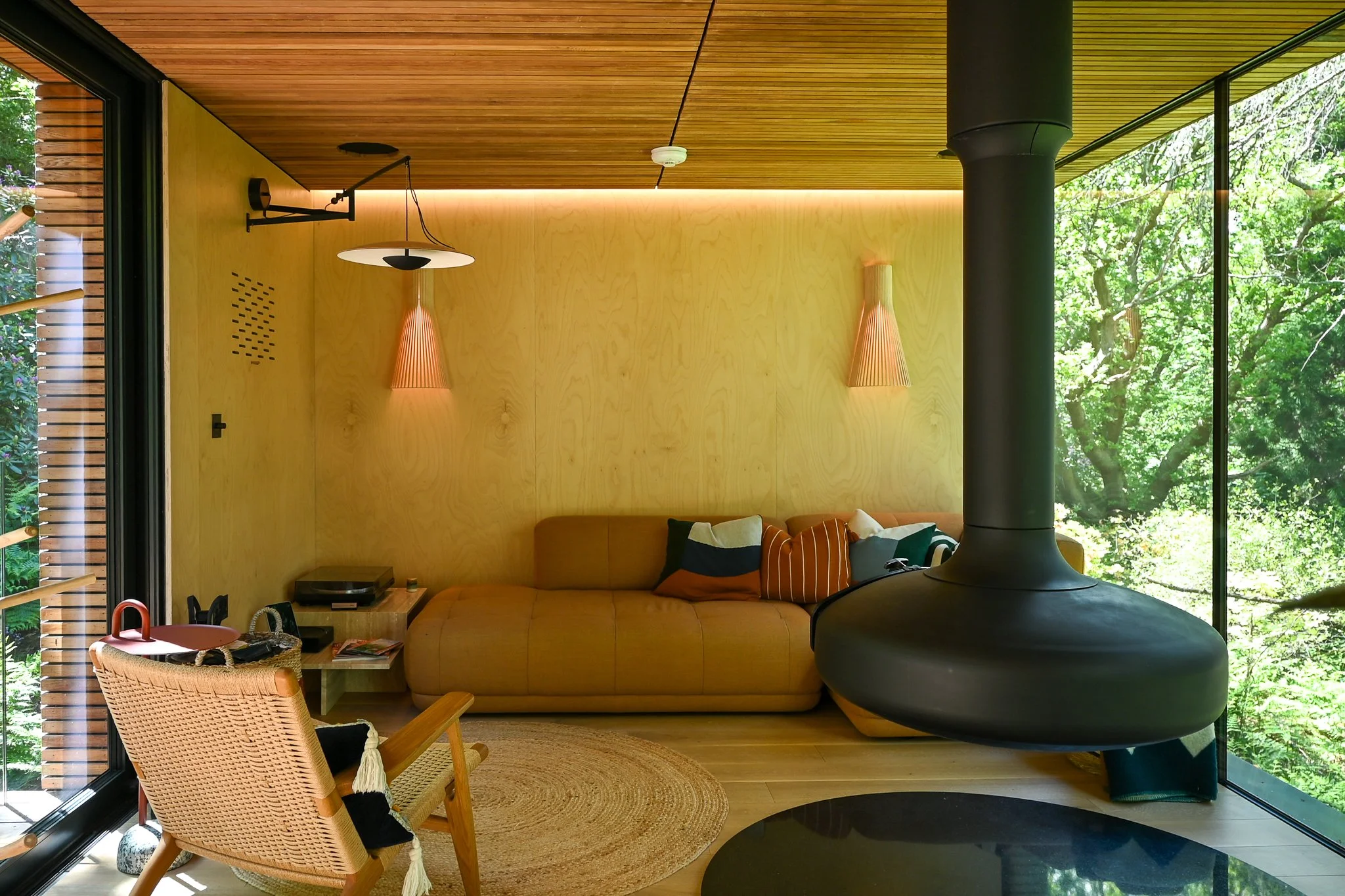
A Tactile Interior, Designed by Illustration
An Illustration Instead of a CGI
Rather than working from a computer-generated render, Rik and Lindsey commissioned an illustrator to sit out in the woodland clearing — before the lodge existed — and draw what she saw. From that illustration, she developed a colour palette pulled directly from the surrounding trees and undergrowth, which became the basis for the entire interior. The intention was simple: every colour inside the lodge should feel like it belongs to the woodland outside it.
Biophilic Down to the Light Switches
That same instinct shaped almost every material decision inside. The brief was for everything to have a texture, a smell, some kind of sensory quality — right down to sourcing light switches with a biophilic feel, which Rik and Lindsey admit was far harder than it sounds. "Not easy," is the blunt verdict on trying to find fittings that didn't look like they'd come straight off a standard hardware shelf.
Ordering a Sofa Before the Walls Existed
Running alongside the design decisions was a constant awareness that the budget could run out before the interior was finished. Several pieces, including the main sofa, had long lead times and had to be ordered before the lodge was built, based purely on measurements taken from the drawings. "I would wake up having nightmares," is how the couple describe that period — committing to furniture for a space that didn't yet exist, with no way to check the fit until it was far too late to change anything.
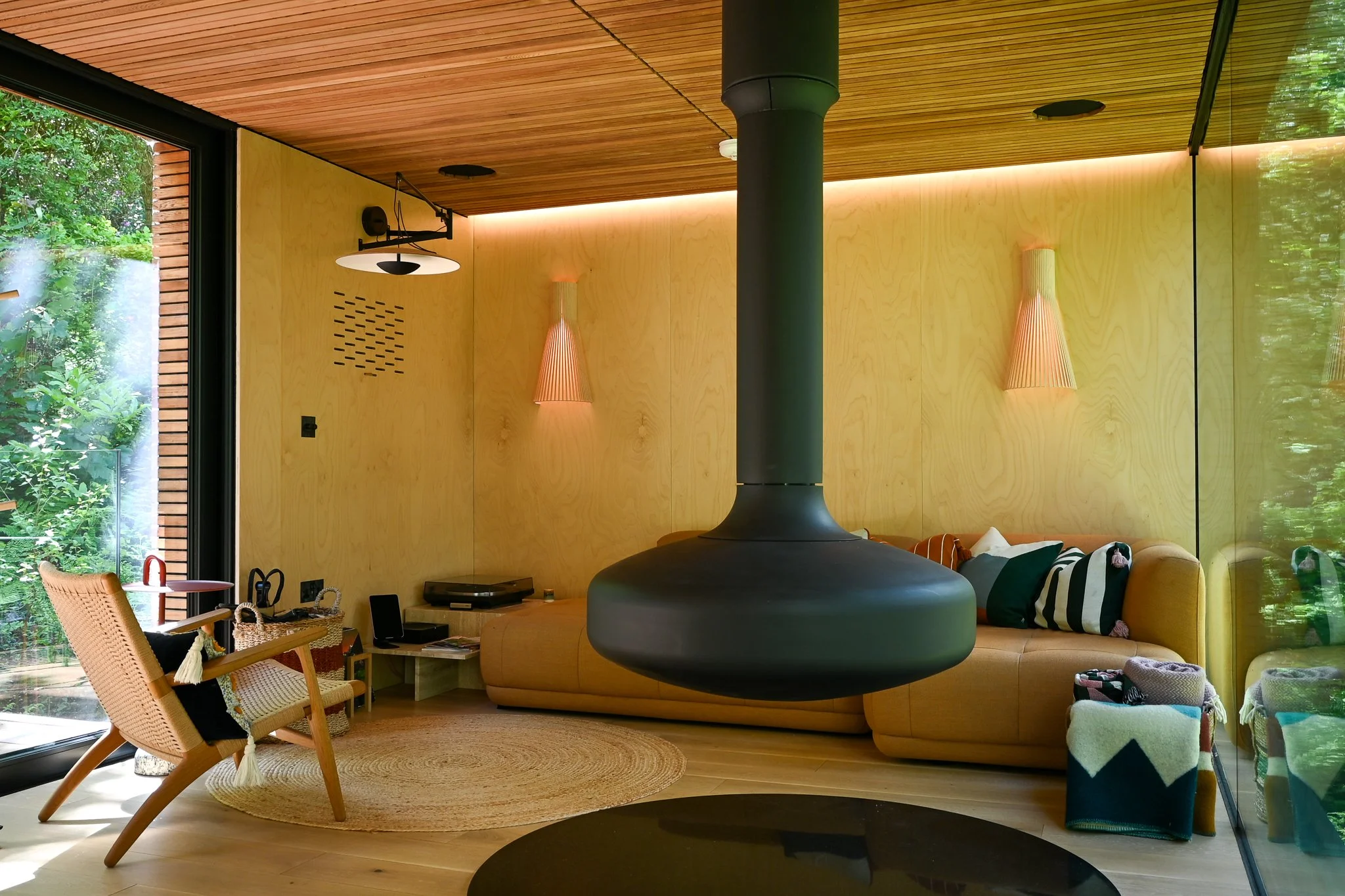
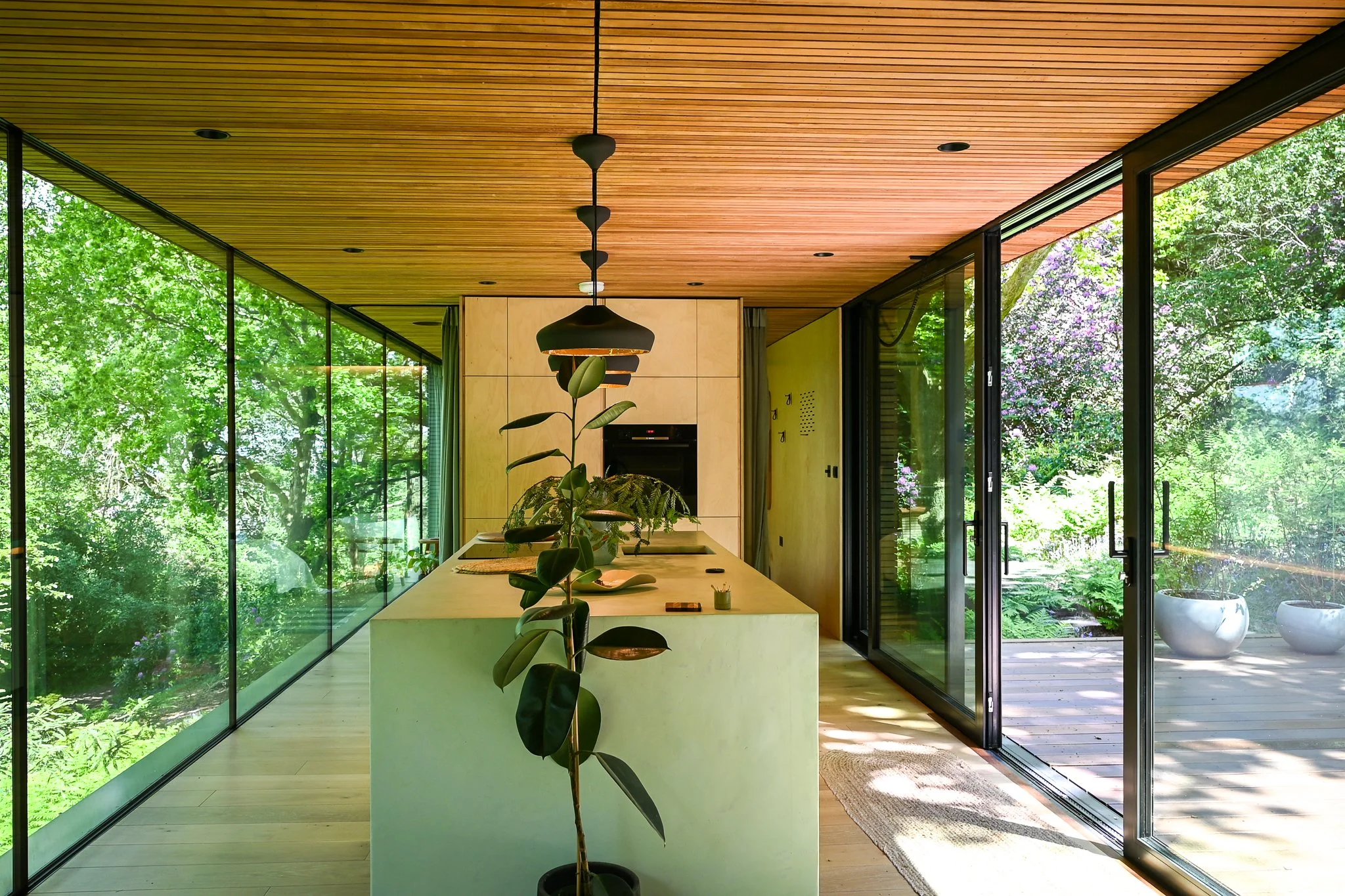
The Final Stretch: A Bath, a Pandemic Ceiling and a Fireplace
Five Millimetres of Clearance
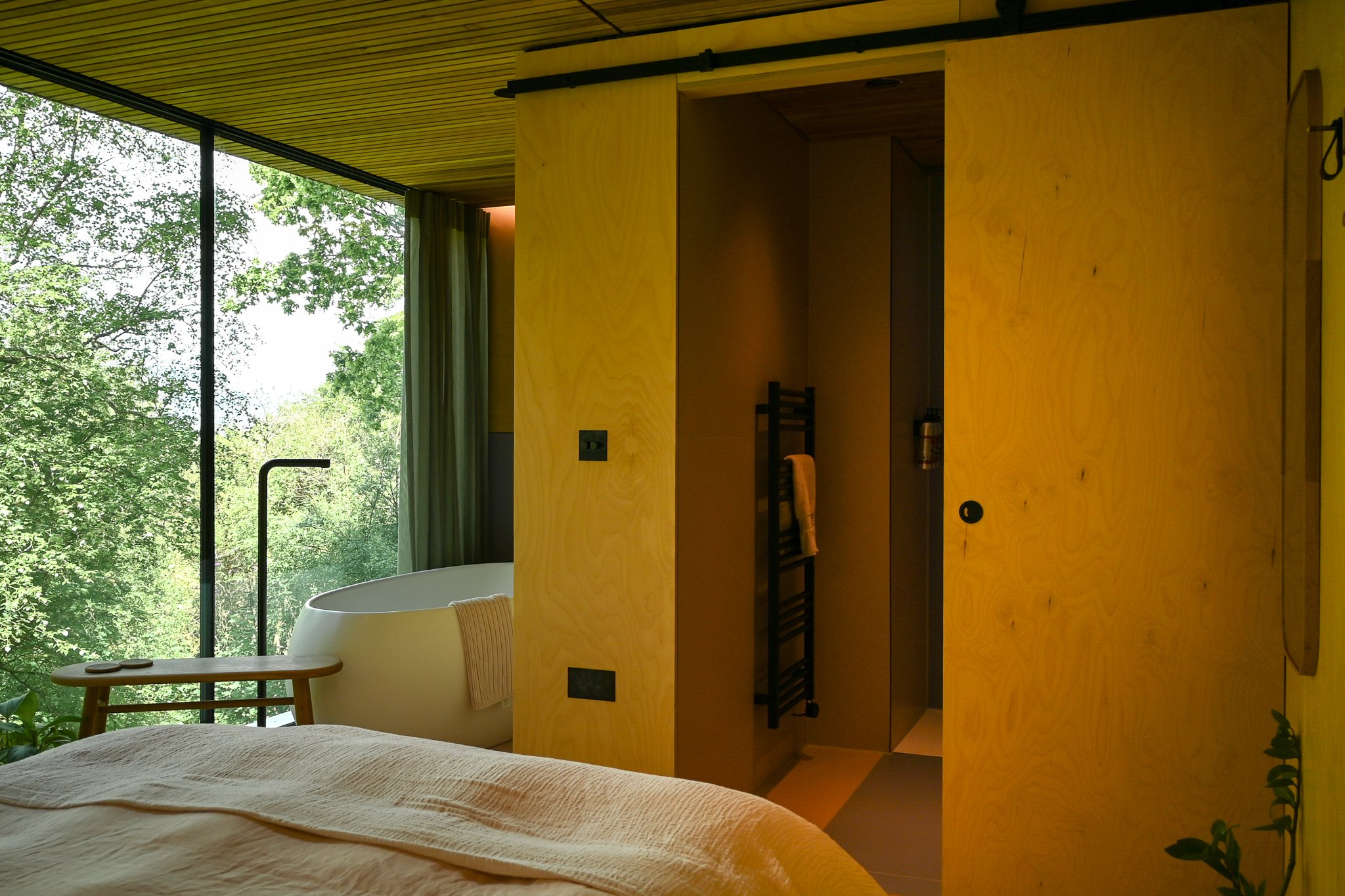
The bath came with its own moment of panic. Rik and Lindsey had worried it might be too big for the space, but the real problem turned out to be sequencing: a structural steel beam for the kitchen went in before the bath was installed, narrowing the gap it needed to pass through. One of them ended up at the lodge at around 1am with a tape measure, checking whether it would still fit. It cleared the gap by roughly 5 millimetres.
When Plywood Went From £60 to £300 a Sheet
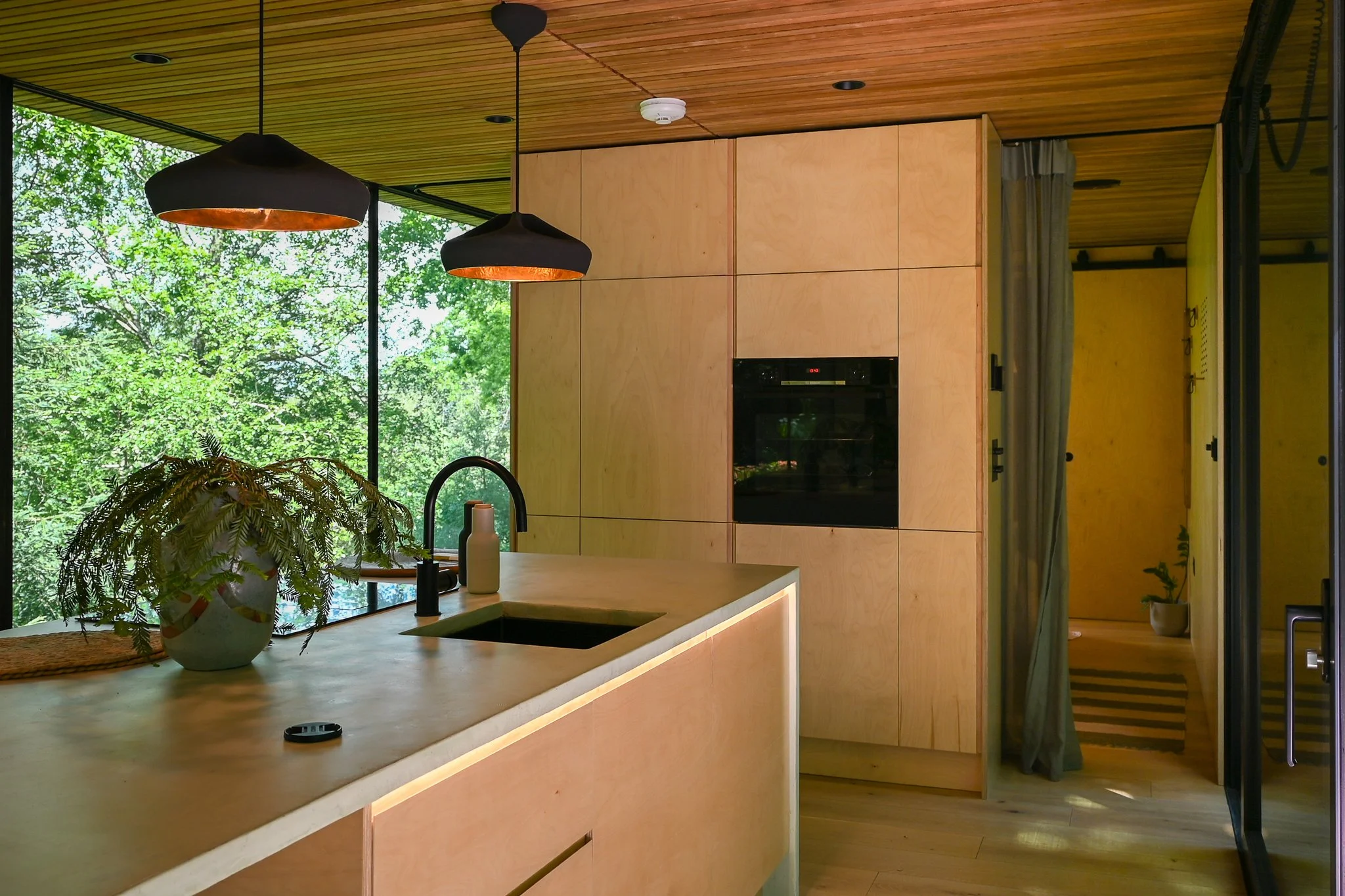
The ceiling was originally going to be finished in plywood, running in the same pattern as the back wall — until the pandemic sent material prices climbing, and the cost of the ply sheets jumped from around £60 to £300 each. The solution turned out to be an improvement rather than a compromise: bringing the external cedar cladding inside to wrap the ceiling, creating one seamless run from outside to in, with the added benefit of dampening sound and reducing echo through the open-plan space.
The Fireplace and the Glass That Darkens Itself
The fireplace anchors the living area and acts as the lodge's primary source of heat through winter, supplemented by underfloor heating beneath the cedar flooring. The electrochromic glass does its own quiet work alongside it — the same self-tinting technology used in large office buildings to manage solar gain, fitted with sensors that darken individual panels as the sun moves around, keeping the lodge cool without needing blinds or curtains across the main glazing.
The Kitchen and the Bedroom-Bathroom Cocoon
A Tactile, Concealed Kitchen
The kitchen continues the tactile brief set for the rest of the lodge, with plywood-fronted cupboards designed to conceal toasters, kettles and the usual clutter of small appliances rather than display them. The worktop is finished in a cement topping, coloured to echo the lichen and bark of the larch trees outside. Wherever possible, Rik and Lindsey sourced products locally and deliberately, so that guests staying at the lodge could walk into Hastings Old Town or Rye and buy versions of what they're using.
A Curtain That Wraps the Bed and Bath Together
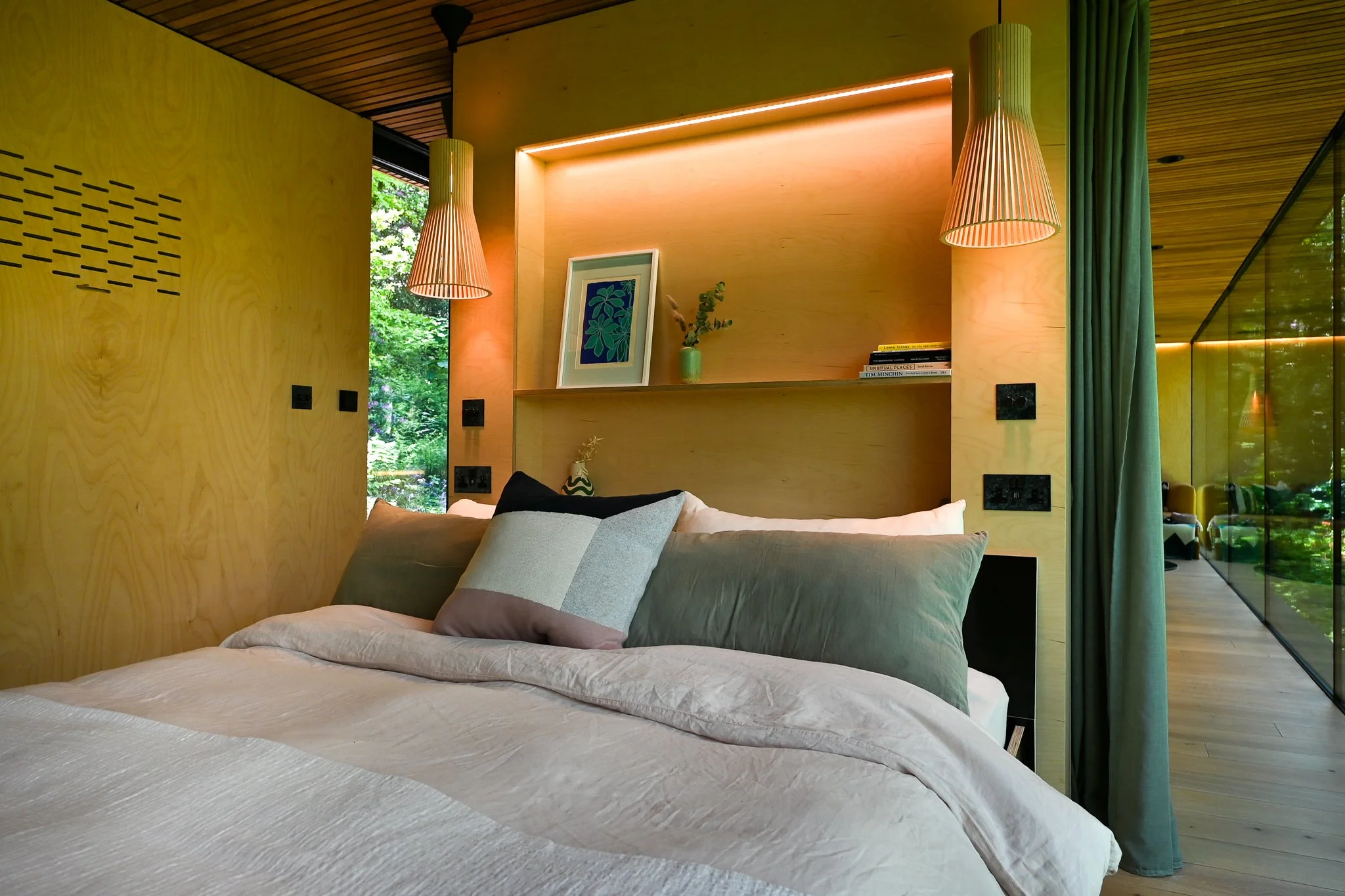
The bedroom and bathroom sit together in their own zone, separated from the open-plan living space. A floor-to-ceiling curtain wraps around both, closing on one side and continuing round to meet a matching curtain by the bath, so the whole area can be cocooned off at night. The lodge itself was originally drawn slightly longer, before being shortened to cut back on glazing costs — a change that ended up making the proportions feel tighter and cosier than the original design ever would have.
A Pebble-Shaped Bath for a Pebble Beach
The bath is the one genuinely white object in the entire lodge, and it stands out because of it. Its rounded, pebble-like shape was chosen deliberately, in reference to the pebble beaches along the coast just below Hastings — a small, specific detail that ties the most private room in the lodge back to the same landscape the rest of the building is built around.
A Lodge Built to Sit Within the Woods, Not On Top of Them
Looking Glass Lodge is the product of a planning process that took longer than anyone involved expected, a glazing bill that forced a complete rethink of the budget, and a series of small, hard-won decisions — a curtain, a ceiling, a bath with five millimetres to spare — that together produced something genuinely considered. None of it happened quickly, and very little of it happened to plan, but the building that resulted sits in its clearing as though it had always been there.
What Rik and Lindsey have built is, at heart, a way of sharing a piece of land they've known their whole lives without disturbing it. The redwood is still there. The bats are still undisturbed. The bluebells have come back thicker than before. And the lodge that almost didn't get planning permission has since won a RIBA award for the very qualities that made it so difficult to build in the first place.
Project Info
Location: Hastings, East Sussex (High Weald Area of Outstanding Natural Beauty)
Website: Looking Glass Lodge
Architect: Michael Kendrick Architects
Filmed & Produced by: HomeInspire
Written by Dan Burge | Founder of HomeInspire
Share This Story
Get in touch if you’d like to be featured on HomeInspire.
FAQs - Contemporary Self-Build Homes
-
Electrochromic glass is a self-tinting glazing technology that can darken electronically, usually in response to sensors that detect light or heat levels. It's the same glass used in many large office buildings to control solar gain, but it's increasingly specified for rural and woodland buildings too, where planning conditions often require developers to limit artificial light spill at night. Bats are highly sensitive to light pollution, so darkening the glass after dark prevents interior lighting from disturbing roosting and foraging behaviour nearby. It's an effective solution, but it comes at a significant cost premium over standard double or triple glazing, so it's worth budgeting for early if a planning condition specifies it.
-
In almost all cases, yes. Even on land you own, erecting a permanent structure in woodland — particularly within a National Park or an Area of Outstanding Natural Beauty — will usually require full planning permission, and often a more rigorous set of ecological surveys than a typical residential extension. Expect requirements around protected species (bats, badgers, dormice and great crested newts are common in the UK), tree root protection, drainage, and light pollution. Pre-application advice from the local planning authority is almost always worth the time and cost, since it surfaces these conditions before you commit to a design.
-
Screw piles are steel foundation elements that are screwed directly into the ground, rather than requiring excavation or poured concrete footings. They're commonly used on sites with poor or sensitive ground conditions, sloping topography, or — as with woodland buildings — where minimising disturbance to tree roots and wildlife habitats is a priority. Because they can be threaded between existing root systems, they allow a building to be raised above the ground with minimal excavation, which both protects mature trees and reduces the building's overall footprint and environmental impact.
-
Biophilic design is an approach that aims to strengthen the connection between a building's occupants and the natural world, through material choice, light, texture, layout and even sound. In practice, this can mean prioritising natural materials like timber and stone over synthetic alternatives, orienting key views towards landscape features, choosing colour palettes drawn from the surrounding environment, and paying attention to smaller sensory details — acoustics, smell, texture underfoot — that are often overlooked in conventional interior design. It's a popular approach for woodland and rural retreats specifically because it reinforces the sense of being immersed in nature rather than sheltered from it.
-
For a project involving ecological surveys, a sensitive or constrained site, and bespoke materials, it's realistic to budget for a planning process of one to three years before construction even begins, particularly within a protected landscape designation. The build itself is often considerably shorter — six to twelve months is typical for a single-storey lodge of this scale — but only once a design has been worked through the planning process and any specialist materials or systems have been sourced and lead times accounted for.


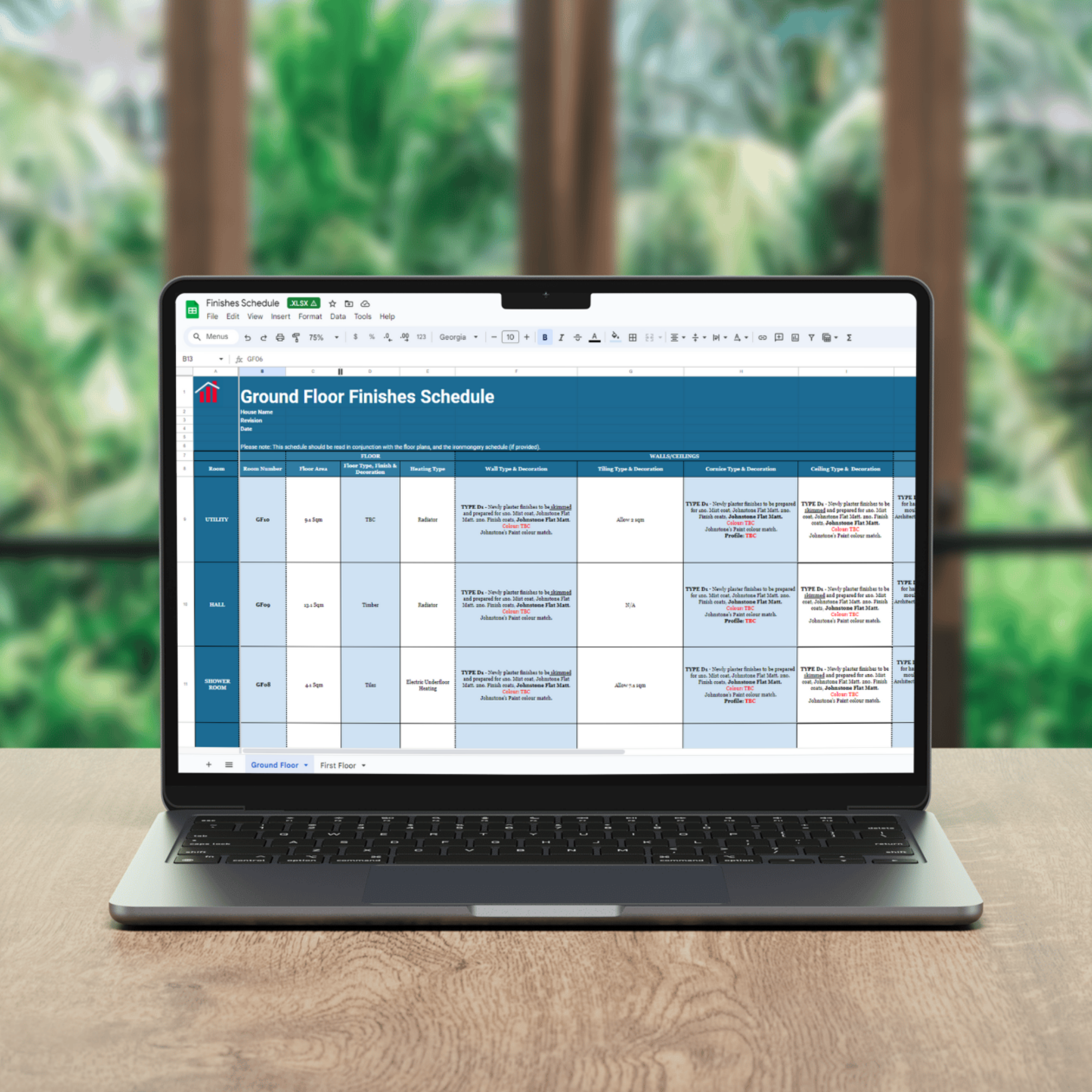
The Ultimate Home Renovation Planner is an all-in-one tool to estimate costs, track progress, and manage every detail of your renovation. Designed by a UK architect, this downloadable Google Sheet includes nine structured tabs to help you stay organised, compare builder quotes, and budget effectively.