
Dacres: Inside an Architect-Designed Sustainable Home on the South Downs, East Sussex
Produced & Written by Dan Burge | 03 May 2026
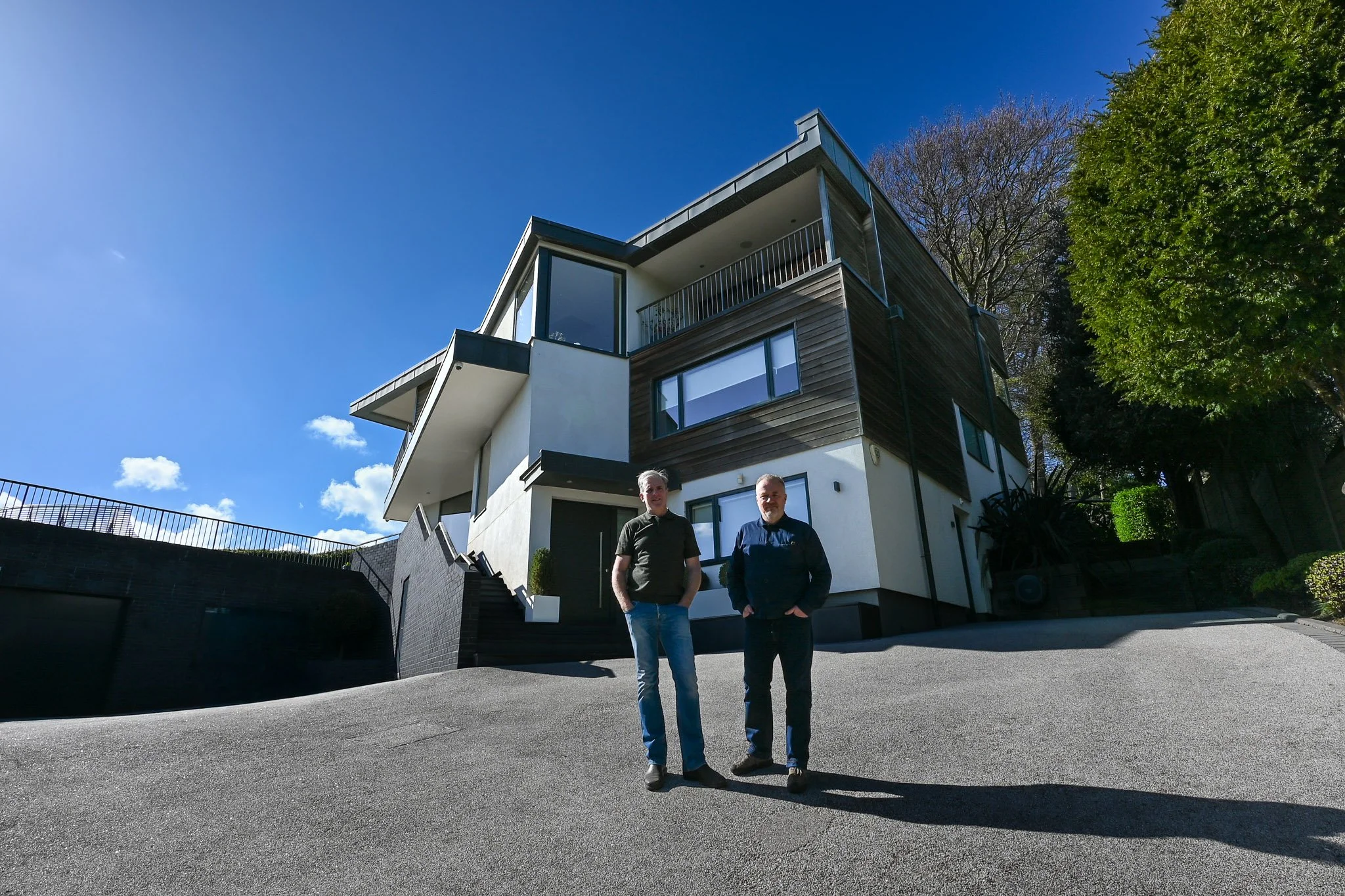
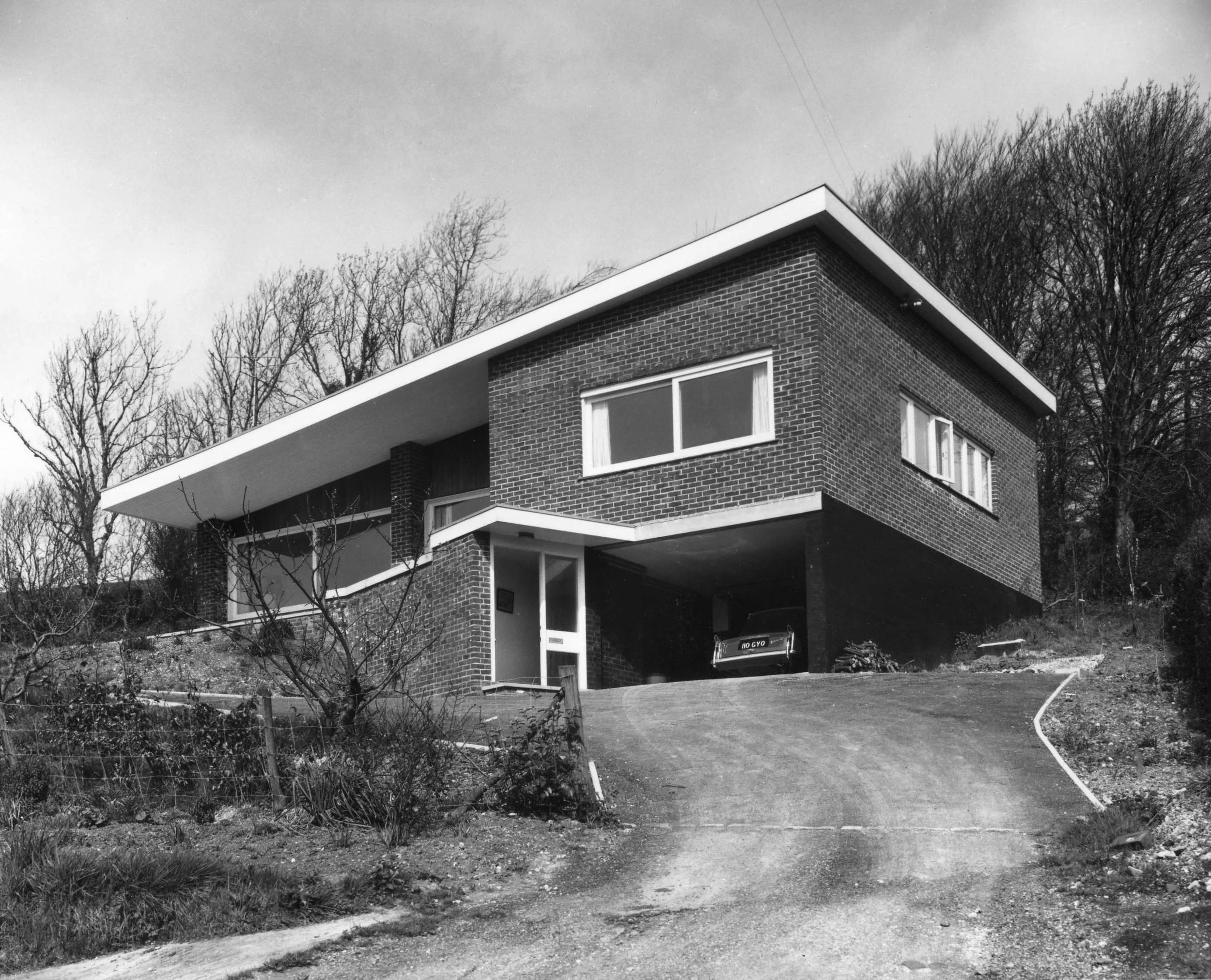
When Architect Duncan Baker Brown returned to a house he designed ten years ago on the outskirts of Lewes, on the edge of the South Downs National Park, he found something rare: a sustainable, architect-designed home that has not only stood the test of time but looks, performs and feels as considered as the day it was completed. This is the story of how a tired, wedge-shaped bungalow became one of the most remarkable eco homes in the south of England — and what it still looks like a decade on.
From Bungalow to Contemporary Eco Home
The Brief and the Site
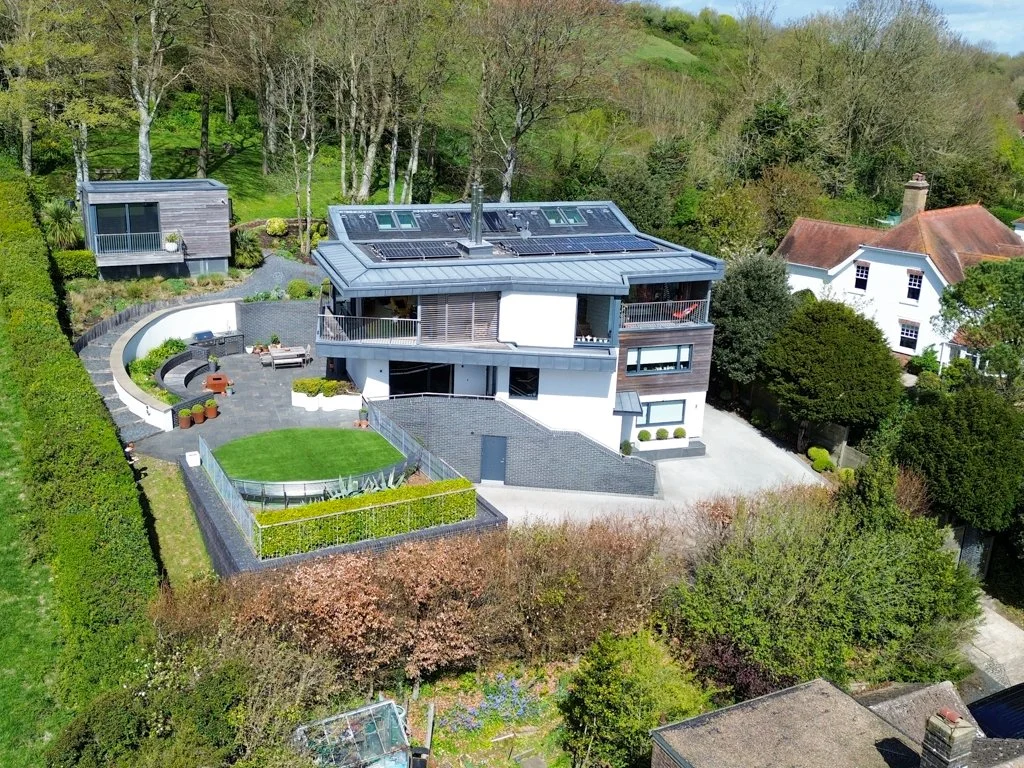
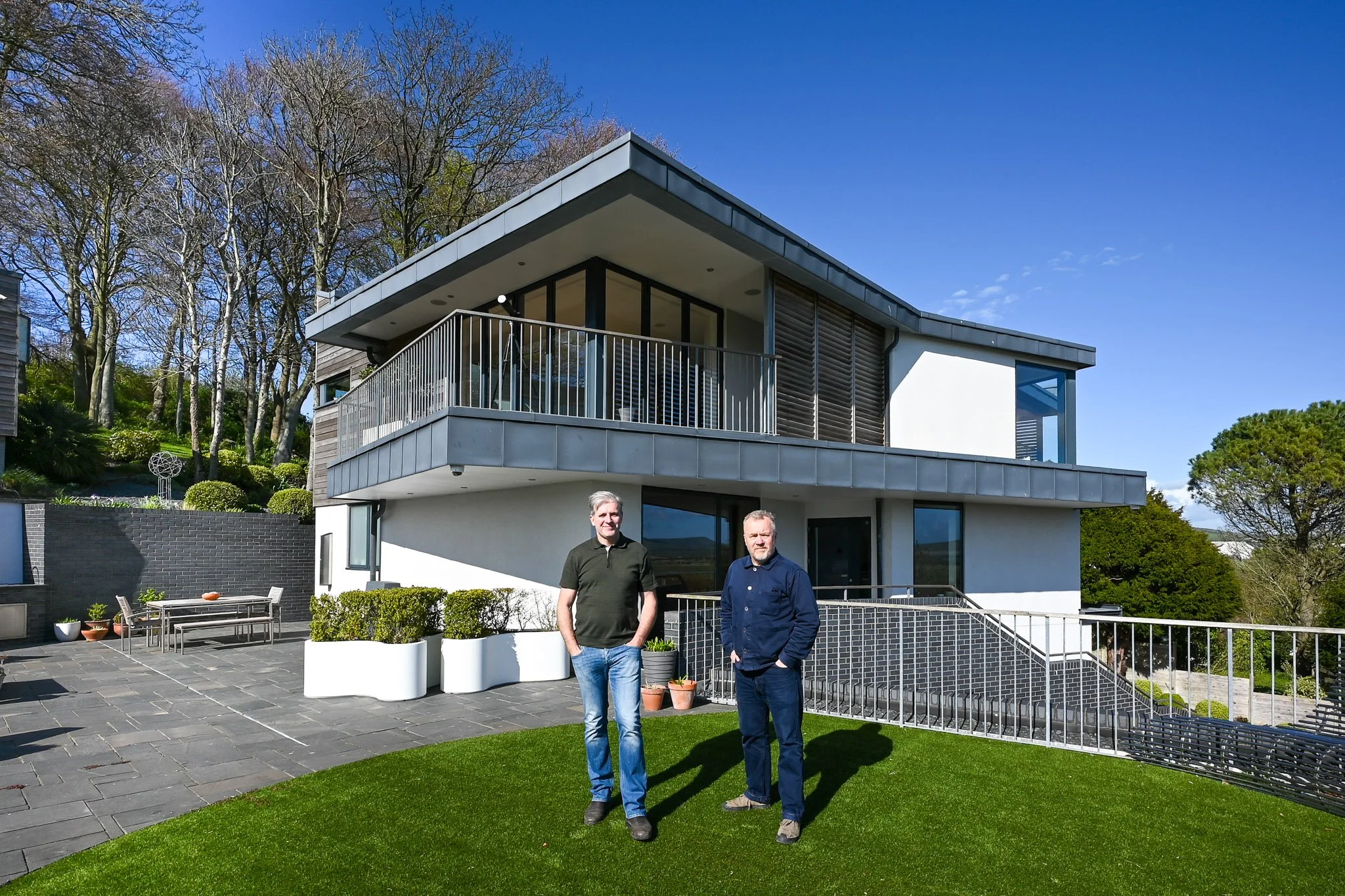
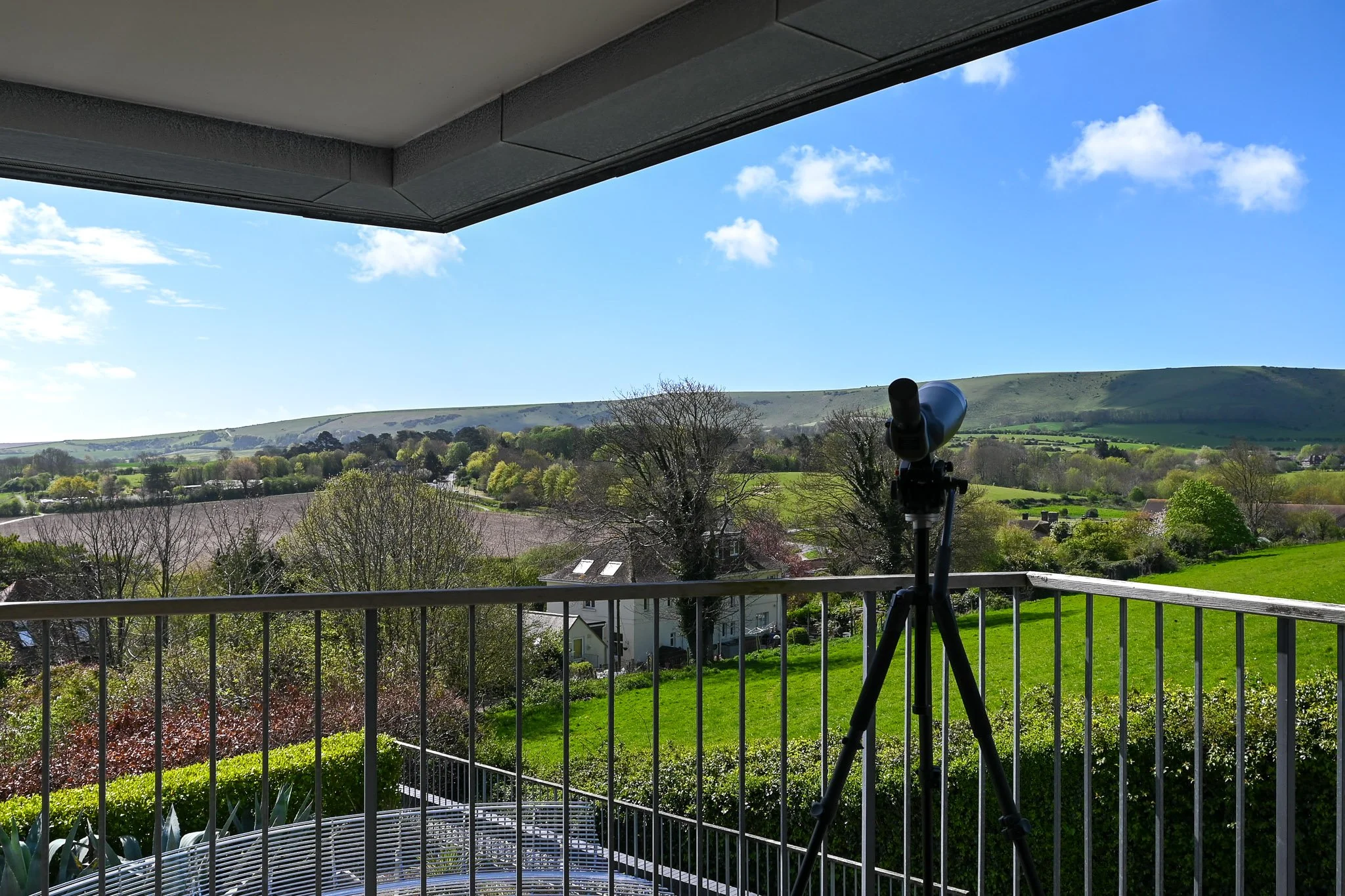
The project began with a modest two-bedroom weekend bungalow on a dramatic, sloping site just outside Lewes, East Sussex, within the South Downs National Park. When homeowner Steve first commissioned Baker Brown Studio, the remit was clear: create a sustainable family home that blended with the chalk landscape, maximised the extraordinary 270° views across the South Downs, and proved that contemporary living and eco architecture could coexist without compromise.
What made the project particularly compelling — and challenging — was the planning context. Building within a National Park demands exceptional sensitivity to landscape, materials and massing. The design response was to retain the original bungalow's footprint entirely, building vertically rather than outward, and to wrap the new building in materials drawn directly from the surrounding environment: white render referencing the chalk of the Downs, darkened cedar cladding, zinc roofing and black engineering brick.
A Two-Stage Planning Strategy
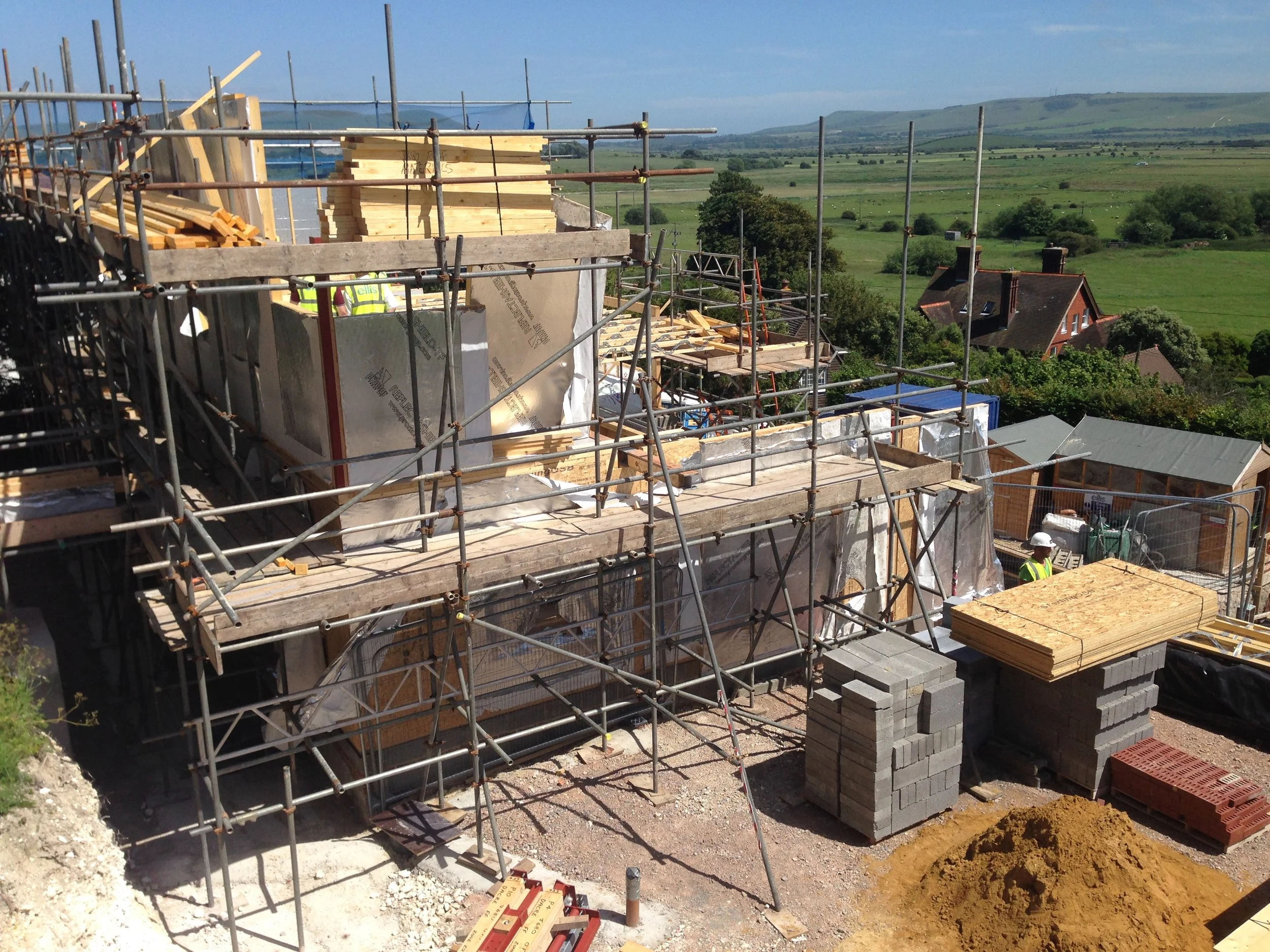
Planning was achieved in two tranches — a deliberate and strategic approach. The first application secured permission for a major refurbishment and extension. The second returned to demolish the original house down to its slab and build a new home on top of it. The only deviation from the original footprint was a front atrium and cantilevered overhangs that don't touch the ground.
The project went to planning committee and passed unanimously — ten votes to zero. Duncan Baker Brown attributes this in part to the eco credentials of the scheme, the sensitivity of the material palette, and the use of non-reflective glazing specified as a planning condition to ensure the house didn't reflect light down into the valley below.
Sustainable Architecture and Eco Design
An EPC A-Rated Home in the Top 1% of UK Housing Stock
One of the most remarkable facts about this house is its energy performance. It holds an EPC A rating — placing it in the top 1% of UK residential properties. For a home of this scale, in this location, and built over a decade ago, that is an extraordinary achievement and a testament to the rigour of Baker Brown Studio's approach to sustainable home design.
The eco credentials of the scheme are comprehensive:
- Timber frame construction with 150mm insulation between studs and additional external insulation — creating a super-insulated building envelope
- Air source heat pump providing the primary heat source
- Mechanical ventilation with heat recovery (MVHR) ensuring constant fresh air without heat loss
- Solar photovoltaic (PV) panels positioned on the upward-kicking rear roof section for maximum solar exposure from sunrise to sunset
- Solar thermal panels supplementing hot water production
- Underfloor heating throughout, working efficiently with low-grade heat from the heat pump
- Double glazing — triple glazing was considered and omitted; the passive solar design and super-insulated envelope made it unnecessary
- Thermal mass provided by a substantial masonry fireplace, absorbing heat in summer and releasing it in winter
The house is 100% electric. Steve describes the running costs as remarkably low for a property of this size — a point that has become increasingly relevant in the current energy climate.
Passive Solar Design and Architectural Shading
The orientation and massing of the house were calculated with passive solar performance in mind from the outset. Cantilevered overhangs shade the glazing in summer, preventing overheating, while allowing lower winter sun to penetrate deep into the living spaces. The roof kicks up at the rear — not simply as a geometric flourish, but to accommodate south-facing solar panels and roof lights that wash the rear of the building with natural light.
Cross-ventilation is achieved through the building's geometry, ensuring the home rarely becomes uncomfortably warm even on the most exposed days on the Downs. The result is a house that is genuinely comfortable in all seasons, with minimal mechanical intervention.
Architecture and Design
Inverted Living: Putting the Views First
One of the defining architectural decisions of the project was to invert the conventional house plan. Living spaces — kitchen, dining, sitting room and study — are placed on the upper floors where the South Downs views are most dramatic. Bedroom accommodation sits on the ground and lower ground floors, where the building digs into the hillside to create cooler, more cave-like, intimate spaces.
This inversion creates a moment of revelation every time you move upstairs: the view is never omnipresent, but when you find it, it is, as Duncan Baker Brown describes it, "cinematic." A wide-format glazed wall frames the South Downs panorama like a living painting. Bifold doors by IQ Glass fold back entirely, dissolving the boundary between inside and out.
Architectural Gymnastics: Four Completely Different Elevations
Duncan Baker Brown describes the house as performing "architectural gymnastics." Despite its relatively straightforward plan, not one of its four elevations is the same as another. Each facade responds to a different aspect, view and function — the north side is more closed and industrial in character, with galvanised steel railings and black engineering brick; the south opens up entirely to the landscape; the east and west navigate between the two.
The building feels simultaneously simple and complex. It was complicated to build, but it reads as stunningly straightforward from the outside — a quality that reflects careful architectural thinking rather than decorative effort.
The Garden and the Bridge
One of the most memorable features of the project was born from a practical problem. When the main living spaces are on the upper floor, the connection to the garden is lost. Landscape designer Nick Howard — now a Chelsea gold medal winner — proposed the solution: a bridge. Running from the upper living level directly into the garden, it reconnects the house to its landscape in a way that feels both functional and theatrical.
The garden itself is divided between a wilder, more naturalistic zone of native South Downs grass and mature trees, and a more formal lower garden created by excavating a level terrace from the sloping site — the so-called "bond layer" — for outdoor dining and entertaining. The planting palette was designed to belong to the landscape rather than impose upon it.
The Interior
The Main Living Space
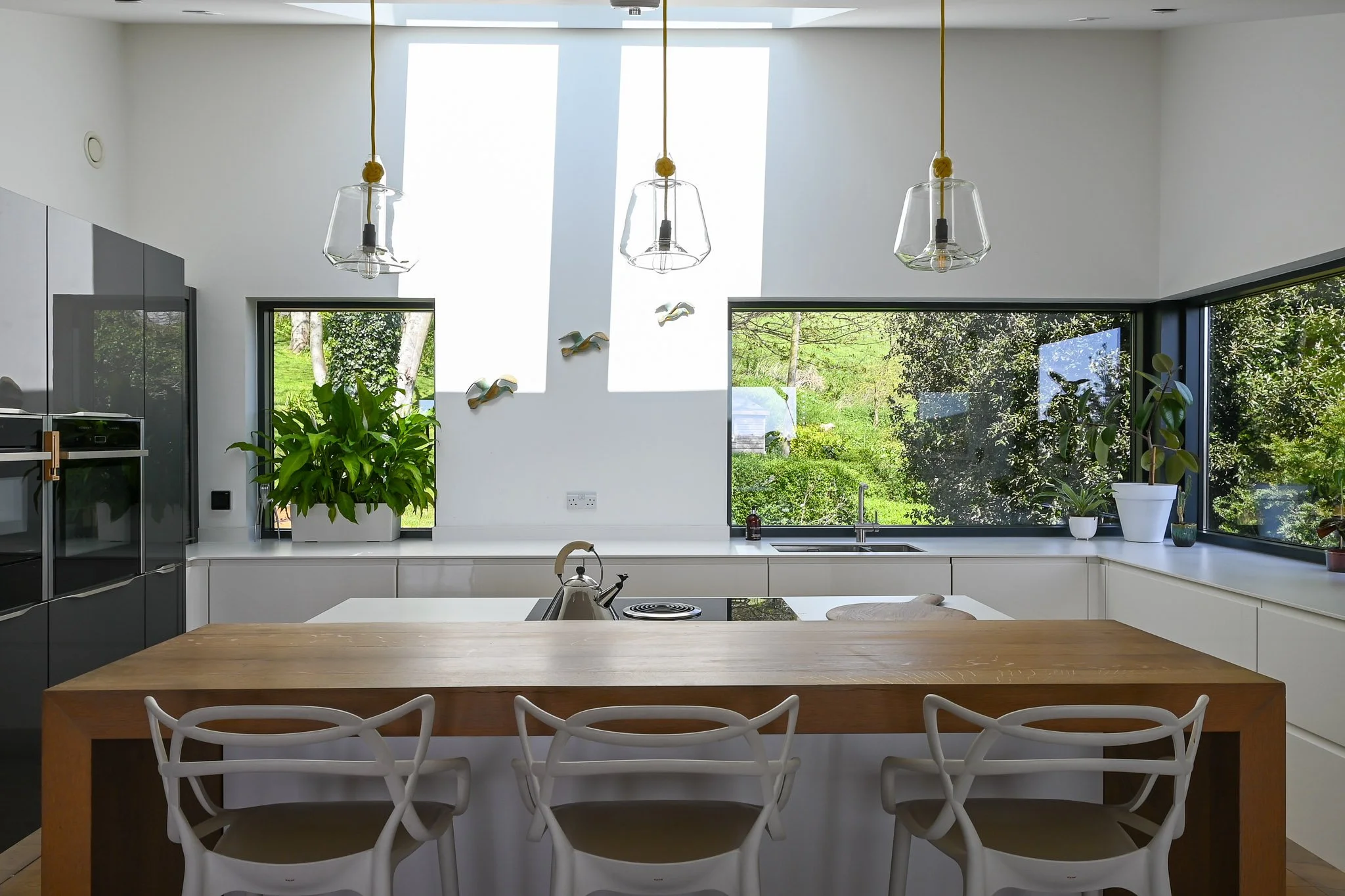
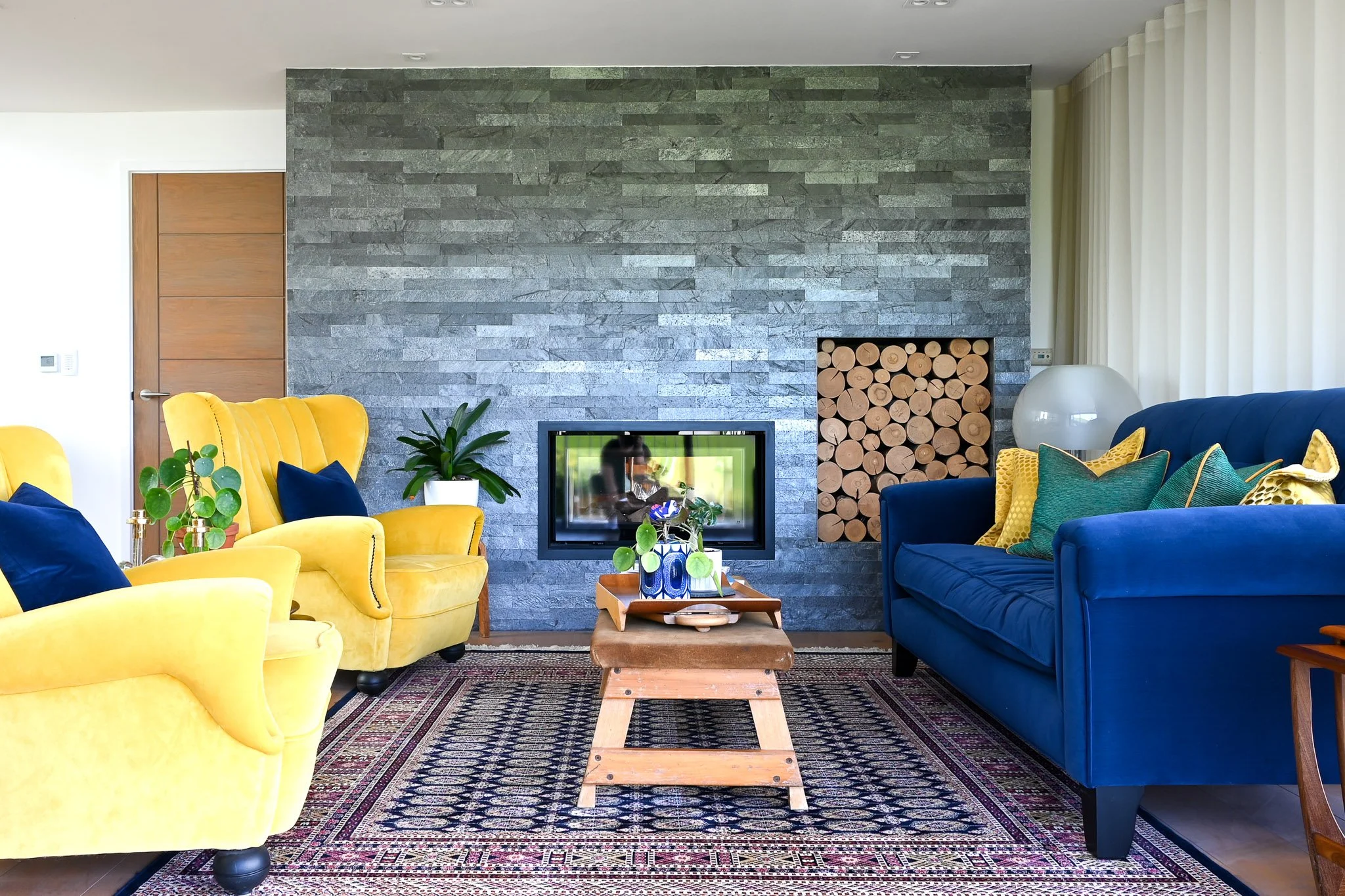
The upper floor living space is generous and open, with the ceiling form doing the work of defining distinct zones without the need for walls. A lower ceiling creates an intimate television and sitting area; as it kicks upward, the space opens into the dining and kitchen zone, flooded with light from roof lights at the rear. A substantial masonry fireplace anchors the after-dinner seating area — a piece of thermal mass that gives the room a sense of grounded permanence and nods to the mid-century spirit of the original 1958 bungalow.
The Kitchen
The kitchen features Dekton worktops — a sintered stone surface specified for its durability, with Steve noting that it is effectively indestructible under normal domestic use. Timber contrast warmly against the cool stone, and the kitchen connects directly to the outdoor terrace via the bifold door system, making it a natural hub for entertaining.
The Atrium and Staircase
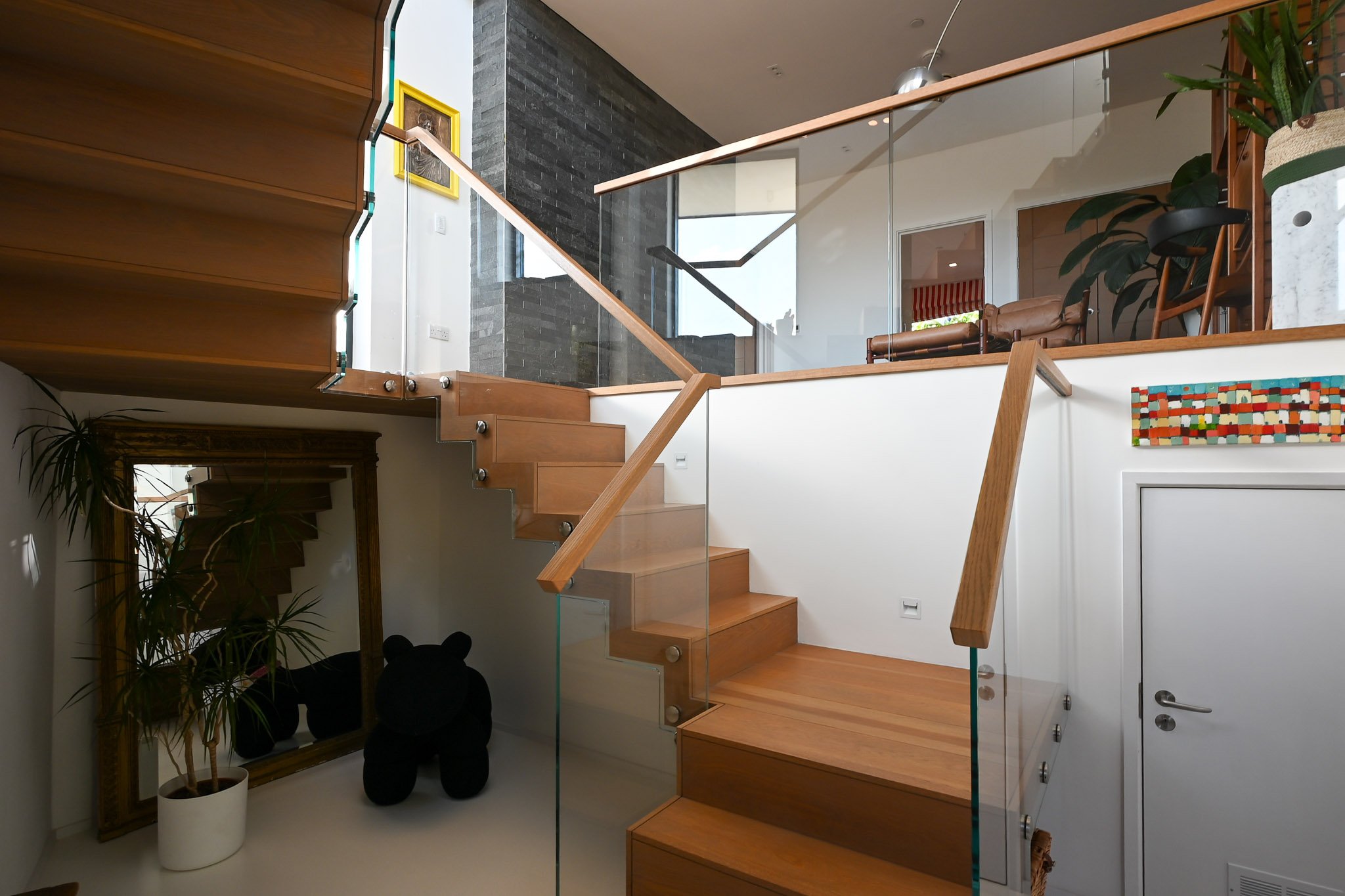
The front atrium houses one of the home's most talked-about features: an open three-storey staircase with a bespoke OLED light fitting — the first of its type installed in a UK residential property. The OLEDs cycle between cool and warm white tones, casting a shifting quality of light down through the full height of the building. Timber treads and a timber handrail soften the geometry of the stair, making it as warm and practical as it is visually striking.
The Bedroom Accommodation
Ground floor bedrooms retain the original bungalow's layout — the plan was so well resolved that it required no reinvention. The master bedroom occupies what was formerly the lounge and dining room, with automatic curtains that draw back to reveal the view on waking. A connecting en suite bathroom and a secondary seating area complete what Steve describes as having a boutique hotel quality. Two further bedrooms share access to what was formerly two separate bathrooms — now combined and reconfigured to include a steam room.
The Studio Annex and Lower Ground Floor
A self-contained studio annex — accessed via the bridge or from within the house — provides flexible working and living space. Originally conceived as a home office with the versatility to become a self-contained annex for older children, it is fully fitted with a kitchen, bathroom and balcony with automated solar shading blinds. The lower ground floor garage was converted into a second self-contained unit with its own kitchen, wet room and living space — giving the property the potential to accommodate six bedrooms across its various configurations.
HomeInspire Downloads
Download Our Complete Renovation Handbook
A step-by-step guide to planning, designing, and delivering your dream home.
Planning your first renovation doesn’t have to be overwhelming. This 62-page step-by-step eBook guides you through every stage - from budgeting and planning to design, permissions, and finishing touches. Packed with expert advice, checklists, and cost guides, it helps you avoid mistakes, stay on track, and bring your dream home to life.
A Decade On: What Has Lasted
Materials That Age Well
One of the most striking things about revisiting this house ten years after completion is how well the materials have weathered. The cedar has darkened to a rich, silvery tone that reads as almost inseparable from the landscape. The zinc has mellowed. The white render remains crisp. The black IBStock engineering bricks retain their precise, graphic quality. The IQ Glass bifold doors look, Steve says, brand new.
This is not accidental. The material palette was selected with longevity and low maintenance in mind — galvanised steel rather than painted metalwork, engineered materials chosen for their durability in an exposed National Park location. A decade of South Downs weather has only confirmed those decisions.
The Forever Home
Steve built this house as a forever home, and lived in it as one for ten years. The decision to sell — driven by "itchy feet" rather than any dissatisfaction with the house — is, he reflects, bittersweet. The next owners will inherit a home that costs very little to run, performs at the top 1% of UK housing stock for energy efficiency, sits within one of the most beautiful landscapes in the south of England, and has been loved and maintained by a family who built it to last.
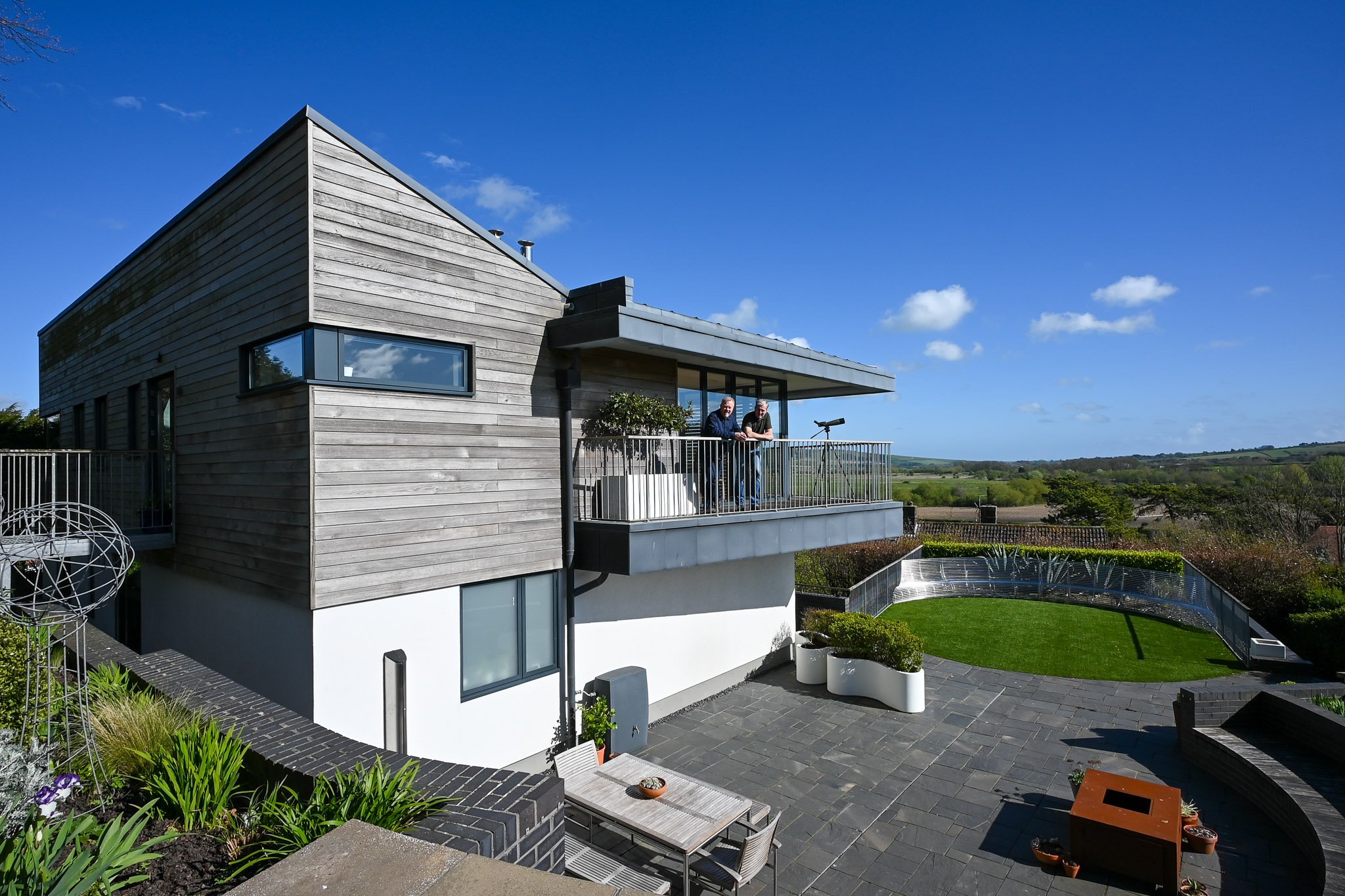
Duncan Baker Brown, returning to the project after a decade, is visibly moved. "We're only as good as the clients we work with," he says. "You gave us free rein to design something that fitted here - a low energy, sustainable house using sustainable materials, but also a contemporary house. And that was what we were trying to prove: you can have contemporary living and sustainable living, but not an executive white box."
This house is proof that you can.
Project Info
Location: Lewes, East Sussex, South Downs National Park
Architect: Duncan Baker Brown of Baker Brown Studio
Property Listing: Dacres, East Sussex
Landscaping: Nic Howard of We Love Plants
Stoves: M Design Fireplaces
Glazing: ID Systems
Kitchens: Nobilia
Work surfaces: Cosentino Dekton
Bathrooms: CP Hart
External Paving: Burlington Stone
Flooring: Reeve Flooring
Filmed & Produced by: HomeInspire
Written by Dan Burge | Founder of HomeInspire
Share This Story
Get in touch if you’d like to be featured on HomeInspire.
FAQs - Sustainable New Build Homes
-
A genuinely sustainable home combines a super-insulated building envelope, airtight construction, mechanical ventilation with heat recovery (MVHR), and renewable energy sources such as solar PV and an air source heat pump. When these elements work together, the result is a property that uses a fraction of the energy of a conventional house, with minimal impact on the environment and significantly lower running costs.
-
An Energy Performance Certificate (EPC) rates a property's energy efficiency on a scale from G (least efficient) to A (most efficient). An EPC A rating means the home has exceptional insulation, low energy demand and high renewable energy generation. Fewer than 1% of UK homes currently hold an EPC A rating, making it an extraordinary benchmark — and one that this South Downs new build achieved with double rather than triple glazing, thanks to the quality of its passive solar design and timber frame construction.
-
Yes — and this project is proof. Planning within the South Downs National Park is understandably rigorous, but contemporary architecture can be approved when it demonstrates genuine sensitivity to the landscape. Here, the material palette — white render, weathered cedar, zinc and black engineering brick — was drawn directly from the chalk downland setting. The scheme passed planning committee unanimously, and has since been described as a trailblazing project for the National Park.
-
Passive solar design uses the orientation, massing and glazing of a building to harness natural heat and light from the sun, reducing the need for mechanical heating. In practice this means south-facing glazing for solar gain in winter, cantilevered overhangs to shade windows and prevent overheating in summer, and roof lights positioned to draw daylight into the deepest parts of the plan. In this South Downs home, passive solar design works alongside an air source heat pump and underfloor heating to keep energy consumption exceptionally low year-round.
-
In many cases, yes. This project replaced a tired two-bedroom wedge-shaped bungalow with a four-bedroom contemporary eco home — without increasing the original footprint. By retaining the existing slab and building vertically, the design unlocked three storeys of living space, a self-contained studio annex and 270° views across the South Downs. Planning was achieved in two stages, and the result is a home that holds an EPC A rating and runs entirely on electricity. It demonstrates what is possible when a bungalow plot is approached with architectural ambition and a clear sustainability brief.


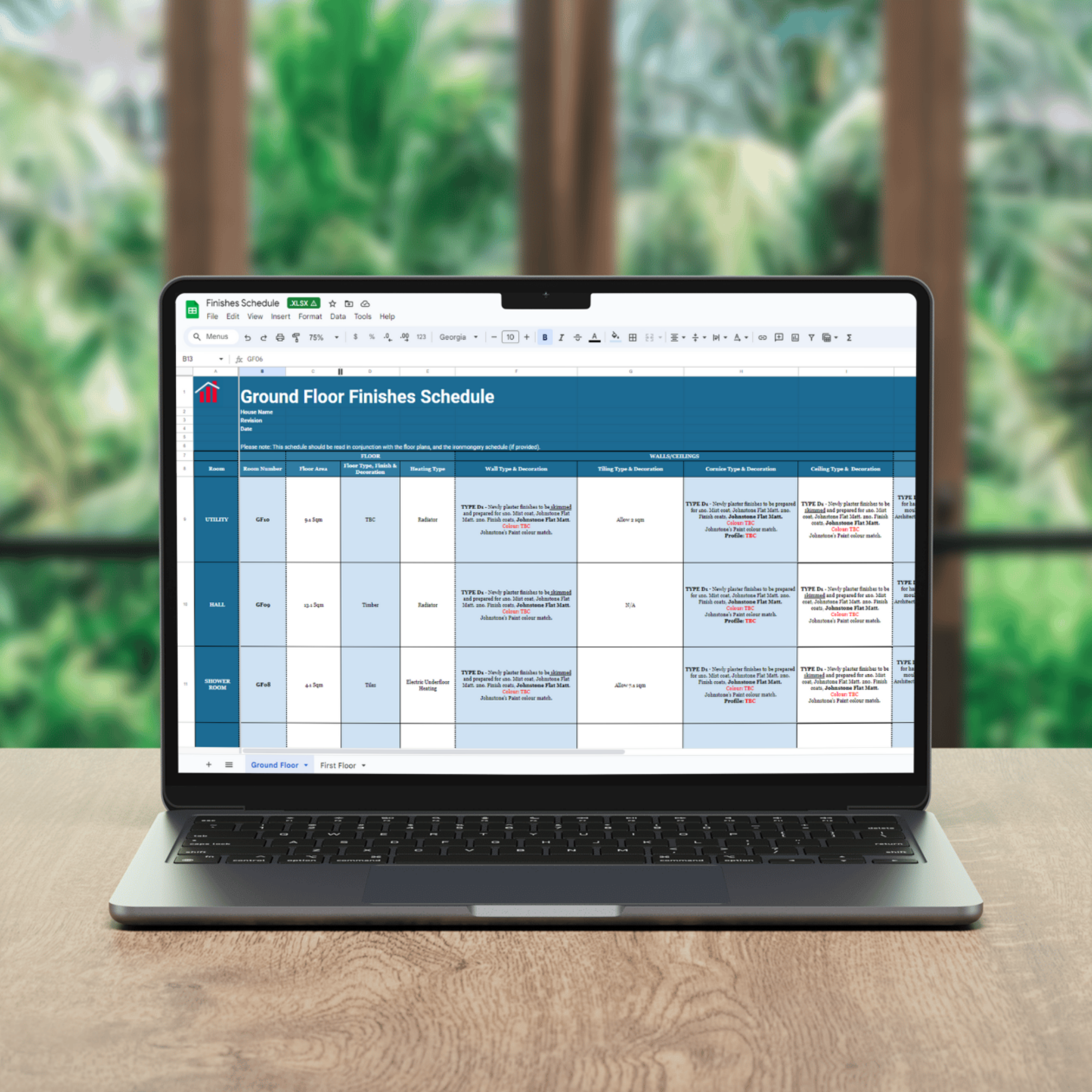
The Ultimate Home Renovation Planner is an all-in-one tool to estimate costs, track progress, and manage every detail of your renovation. Designed by a UK architect, this downloadable Google Sheet includes nine structured tabs to help you stay organised, compare builder quotes, and budget effectively.