
Hawley Square: Inside Architect Sam Causer's 200-Year-Old Home & Restoration in Margate.
Produced & Written by Dan Burge | 17 May 2026
When Architect Sam Causer bought a crumbling Georgian townhouse in Hawley Square, Margate in 2015, it had spent decades as a solicitor's storage facility — its rooms lined floor to ceiling with metal shelving, its walls damp, its history buried under layer upon layer of wallpaper, paint and neglect. What he has done with it since is not, by his own definition, a renovation. It is something more considered, more patient, and more quietly radical than that.
This is the story of a 200-year-old house that has lived many lives — and an architect who decided that every one of them was worth keeping.
A House With Many Lives
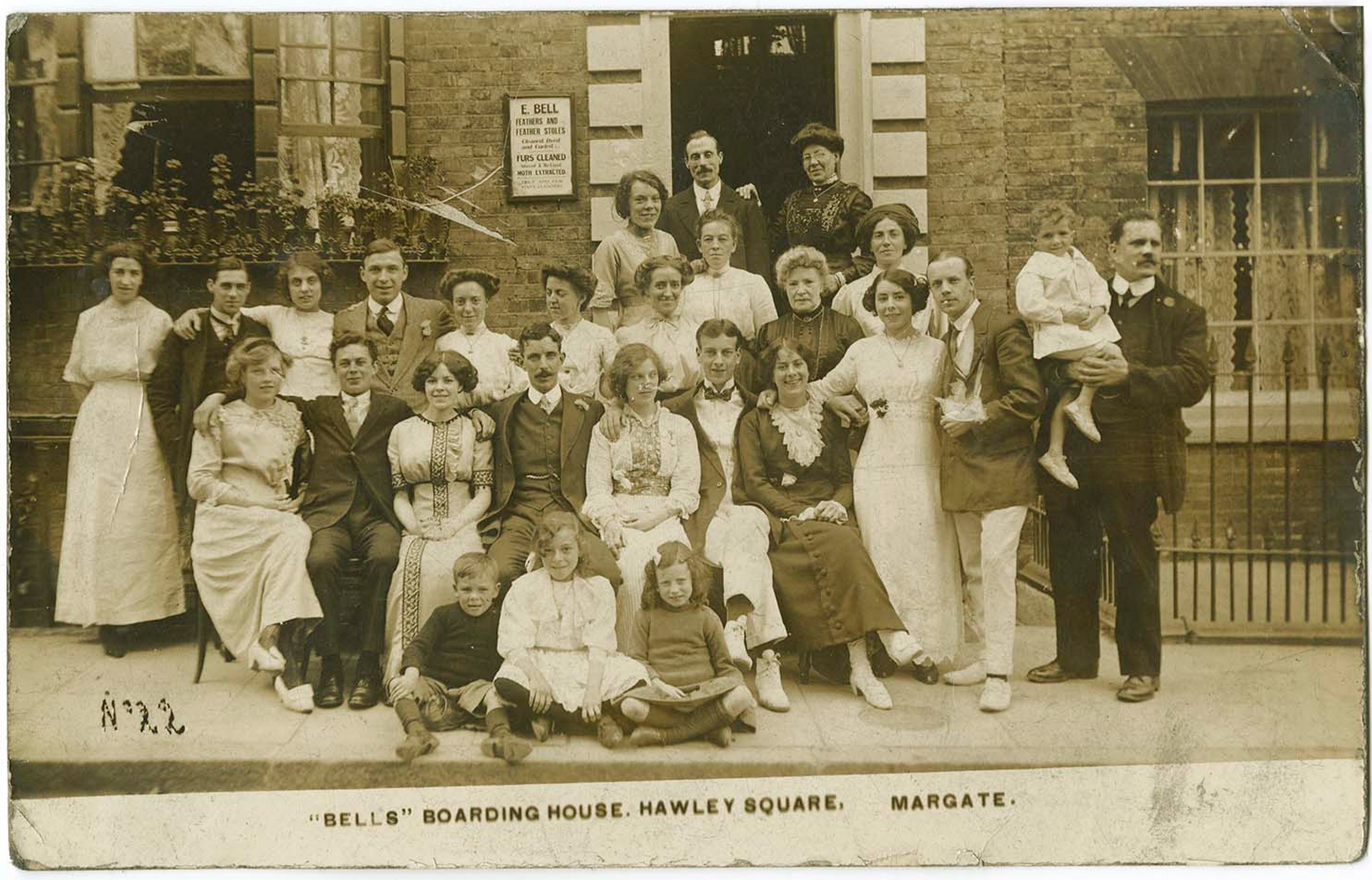
From Georgian Retreat to Feather & Fur Factory
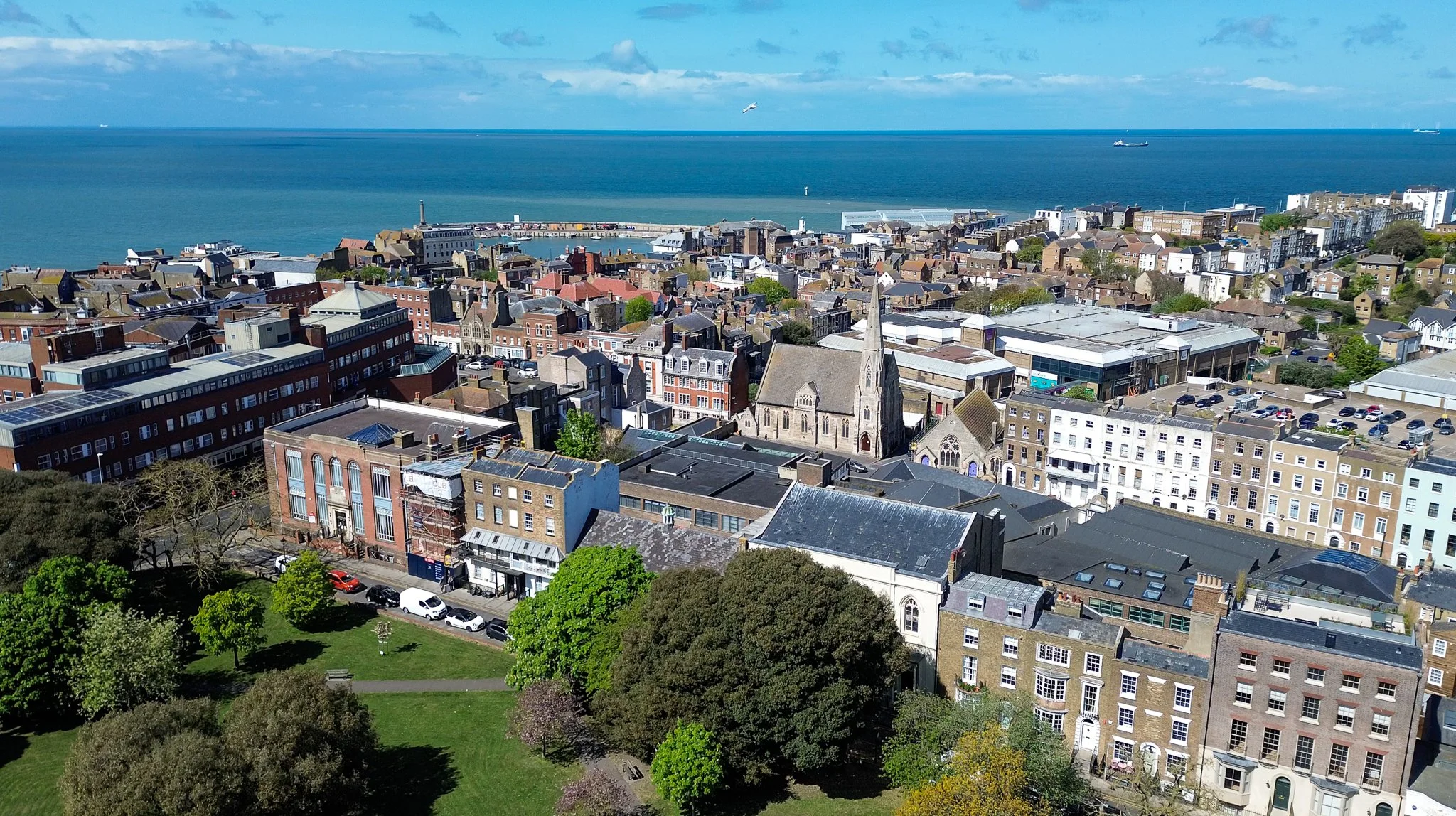
Hawley Square, where this house sits, was once the most fashionable address in Margate. Built around 1820, it was designed as a pleasure residence for wealthy Londoners spending the season by the sea — and it shows. The ground floor hallway is generous and imposing, the proportions designed to impress arriving guests rather than to function as practical living space.
"In the 1820s when it was built it would have been a kind of fancy Londoner's house," says Sam. "This whole square was the nicest square in town at the time — beautiful Georgian houses built around a garden square. It was a pleasure, leisure place to keep Londoners happy in the summer."
But as Margate's social character shifted over the following century, the house had to adapt. With the Theatre Royal two doors away, it found a new use as a feather and fur workshop in the winter months — dressing the actors and audiences who came to perform and watch — and as a boarding house for summer visitors.
A Building That Reorganised Itself
One of the most fascinating aspects of the house is how its fabric tells the story of these changes directly. The grand staircase that once swept dramatically through the upper floors has been cut back and rerouted, squeezed to the rear of the building to make way for a larger working floor.
"As you move up the house, the grander parts — the staircases and the landings — have all shrunk right down and the rooms have expanded," Sam explains. "When the first floor sitting room was turned into a factory for workers, they obviously wanted a bigger room rather than a bigger landing."
You can still see where the original balustrades and handrails were taken apart, reconfigured and reinstalled in a different position. The ground floor hallway — with its remnant of Georgian scale — is the only surviving trace of the house as it was first intended to be experienced.
Solicitors, Storage and a Fresh Start
By the 1970s the house had become offices for the local authority, and later a firm of solicitors. By the time Sam bought it, it had been reduced to pure storage — every room stacked with metal filing shelves, the walls hidden, the ceilings collapsing in places, and the original fabric of the building almost entirely obscured.
"Every room in the house was filled with these metal shelves that the solicitors had used for their files," Sam recalls. "By the time they finished clearing out, we had about 15 of these units left."
Remarkably, some of those shelves remain — repurposed in the office behind the main house, a small act of continuity that sets the tone for everything that followed.


A Philosophy of Light-Touch Conservation
Understanding the SPAB Approach
What Sam has undertaken at Hawley Square is guided by the principles of the Society for the Protection of Ancient Buildings — an approach to historic buildings that prioritises understanding, repair and minimal intervention over the more familiar impulse to make things look new again.
"It's a form of light-touch conservation, with an almost strict adherence to SPAB principles of repair and contemporary intervention only," Sam explains, "as distinct from renovation, where old surfaces and materials are made to appear new."
In practice, this means that where the walls carry marks, layered colours and the physical evidence of past lives, they are left. Where a ceiling poses a genuine safety risk, it is repaired. Where a window is structurally sound — even if the paint is lifting — it is left to breathe rather than sealed with modern paint that would trap moisture and hasten decay.
A Queer Approach to Conservation
Sam describes his broader philosophy as "a queer approach to conservation" — a framework for thinking about historic buildings that acknowledges and celebrates past histories rather than erasing them.
"Why would you need to hide that?" he asks, gesturing at a series of holes in a wall where pictures once hung. "Can't you just celebrate that someone once had a picture here?"
It's a position that extends to the most unexpected details. On one wall, a Victorian plumber's pencil inscription remains perfectly legible — the words "gas point" followed by an arrow, marking where a gas pipe was once installed for a fire now long gone. The holes in the floor where the pipes came through are still visible. The wire from the solicitors' power sockets is still in the corner — not as an aesthetic choice, Sam is careful to note, but simply because pulling it out would cause more disruption than leaving it.
When to Intervene and When to Leave Well Alone
The guiding question throughout the project has been a simple one: is this causing harm? If a crack in a ceiling poses a structural risk, it is repaired. If a wall has holes in it, they are left. The distinction is not about aesthetics but about honesty — about asking what a building is actually telling you rather than imposing a predetermined idea of what it should look like.
"It's about acknowledging past histories and not erasing them," says Sam. "If there's something causing harm to the building, it's not just covering that up as it's been done in the past. It's understanding — where is that harm coming from? Tracing right back."


Room by Room: The Story of the House
The Kitchen — Concrete, Colour and a Builder's Improvisation
The kitchen occupies what was once a storeroom at the back of the house — a later addition that Sam suspects was built to serve the growing needs of the house in its working life. When he bought it, it was bare and functional. What it has become is one of the house's most characterful spaces.
The worktop was cast in situ in concrete, its colour chosen to match the grey waterproof plaster on the adjacent walls — a 1970s repair job over what would once have been a grand fireplace. The effect is of the kitchen growing organically out of the building rather than being inserted into it.
But it is the draining board that Sam loves most. "I came in one evening to check how work was going and there weren't any grooves," he recalls. "I really wanted the grooves. The builder said, 'Oh no, I forgot — I'll come round right now.' He came, grabbed a bit of copper piping from downstairs and just shoved it in. I think he'd had one or two to drink, so they're all completely wonky. But I love the human touch in that very basic bit."
It is a small detail, but it perfectly captures the spirit of the whole project — the idea that the marks left by human activity, even imperfect ones, are worth preserving rather than correcting.
The Dining Room - Six Layers of Wallpaper and the Colour Beneath
The dining room carries perhaps the most visible record of the house's changing fashions over two centuries. The walls are a layered composition of brown boarding and orange - what Sam believes is not paint at all, but remnants of rabbit skin glue used to hang wallpaper.
"When I bought it, there was wall-to-ceiling wallpaper throughout - six different layers," he explains. "The bottom layer was a thick hessian-backed paper, which explains a bit about what this boarding down here is."
What the boarding reveals is a pattern of changing taste: original Georgian wall panelling ripped out in the later 1800s when high skirting boards and wallpaper came into fashion, replaced with rough-backed timber that was never intended to be seen. It didn't need planing because it was going behind wallpaper.
"Behind that aesthetic appearance is a whole history of changing fashions, techniques and economic use of materials," says Sam. "And I think the choice to leave it is a conscious one."


The First Floor Sitting Room — Factory Hooks and Reclaimed Radiators
The first floor sitting room looks out across Hawley Square's garden, now shaded by what appears to be a cherry tree coming into blossom. The room is generous — more so than it would originally have been — because the staircase was squeezed to the back of the house when it became a factory floor.
In one corner, a built-in cupboard retains its original hooks — almost certainly where factory workers hung their overalls at the end of a shift. "I think this whole cupboard is probably from that period, maybe around 1900," says Sam.
Throughout the house, Sam bought approximately 25 salvaged radiators in various states of decay — each flushed out, made functional, and carefully paired with rooms based on both physical fit and colour tone. In this sitting room, a radiator painted in the same blue as the original wall panelling offers a quiet nod to the room's past without recreating it.
The Second Floor Bedroom — Linseed Paint and Balanced Imperfection
The upper bedroom is where Sam's conservation approach is perhaps most visible. The ceiling is clean and white — repaired where necessary to remove any structural risk. The walls are a quiet composition of layered colours: green paint beneath, yellow where wallpaper backing refused to come away cleanly.
"We just left it," Sam says of the stuck wallpaper. "We could have got the steamer out and got it off — but that steam probably would have loosened the lime plaster underneath and caused more harm."
The windows, original 1830s joinery, remain unpainted in places — the peeling paint deliberately left to allow moisture to evaporate rather than becoming trapped. Sam has now treated the rear windows with linseed oil paint, which breathes with the timber rather than sealing it. The radiator in this room was chosen from the salvage pile because it matches the tone of the unpainted window frame almost exactly.
"If I ever paint the window, I might have to decide whether to paint the radiator as well," he notes, "because they'll no longer match."

HomeInspire Downloads
Download Our Complete Renovation Handbook
A step-by-step guide to planning, designing, and delivering your dream home.
Planning your first renovation doesn’t have to be overwhelming. This 62-page step-by-step eBook guides you through every stage - from budgeting and planning to design, permissions, and finishing touches. Packed with expert advice, checklists, and cost guides, it helps you avoid mistakes, stay on track, and bring your dream home to life.
The Bathroom — Inspired by Hockney
Of all the rooms in the house, the bathroom presented the greatest challenge — and produced one of the most joyful outcomes. Unlike the other rooms, where the existing fabric of the building provided its own direction, a bathroom requires a positive decision about cladding.
"It threw me into a complete panic," Sam admits, "because there's endless choice of tiles."
The solution came from an unexpected source. Sam's husband Carlos was inspired by a David Hockney painting — specifically a particular combination of blue, pink and brown. The bathroom was built around that palette: blue tiles with pink grout, pink tiles with green grout (blue grout being unavailable at the time), and a brown floor with green grout.
The manufacturer of the tiles normally makes them with patterns; Sam and Carlos commissioned them plain. And in what Sam describes as a "bizarrely happy accident," the shelving made by one of his assistants at the time matched the proportions of the pink grout lines exactly.
"You can see, like elsewhere in the house, the new things that we brought in — it's as though they've got their DNA from what was there before," Sam reflects.
The Lower Ground Floor — Cave Conditions and Lime Plaster
The lowest level of the house, partly below ground, was in the worst condition when Sam bought it — bare brick, no ceiling, damp throughout. Evidence of earlier occupation remains: the suggestion that a young boy once slept here, traces of a time when the house divided its rooms between more uses than any single household would recognise today.
"What is really beautiful about this space," says Sam, "is that when I bought it, it was all damp brick. Getting some ventilation down here and also lime plastering has made a massive transformation."
The windows and doors at this level are all original, stripped and treated with linseed oil paint. One window required structural work — a new steel beam inserted to arrest collapsing brickwork above — but the window itself was retained, lowered and refurbished rather than replaced.
Today Sam uses this level as his main bedroom. The cave-like conditions — stable temperature, quiet, protected from the weather — suit him more than the upper floors. "It's never too hot in the summer and never too cold in the winter, and it's always very quiet and secure," he says.

Home, Studio and the Margate Model
The Mews Cottage Office
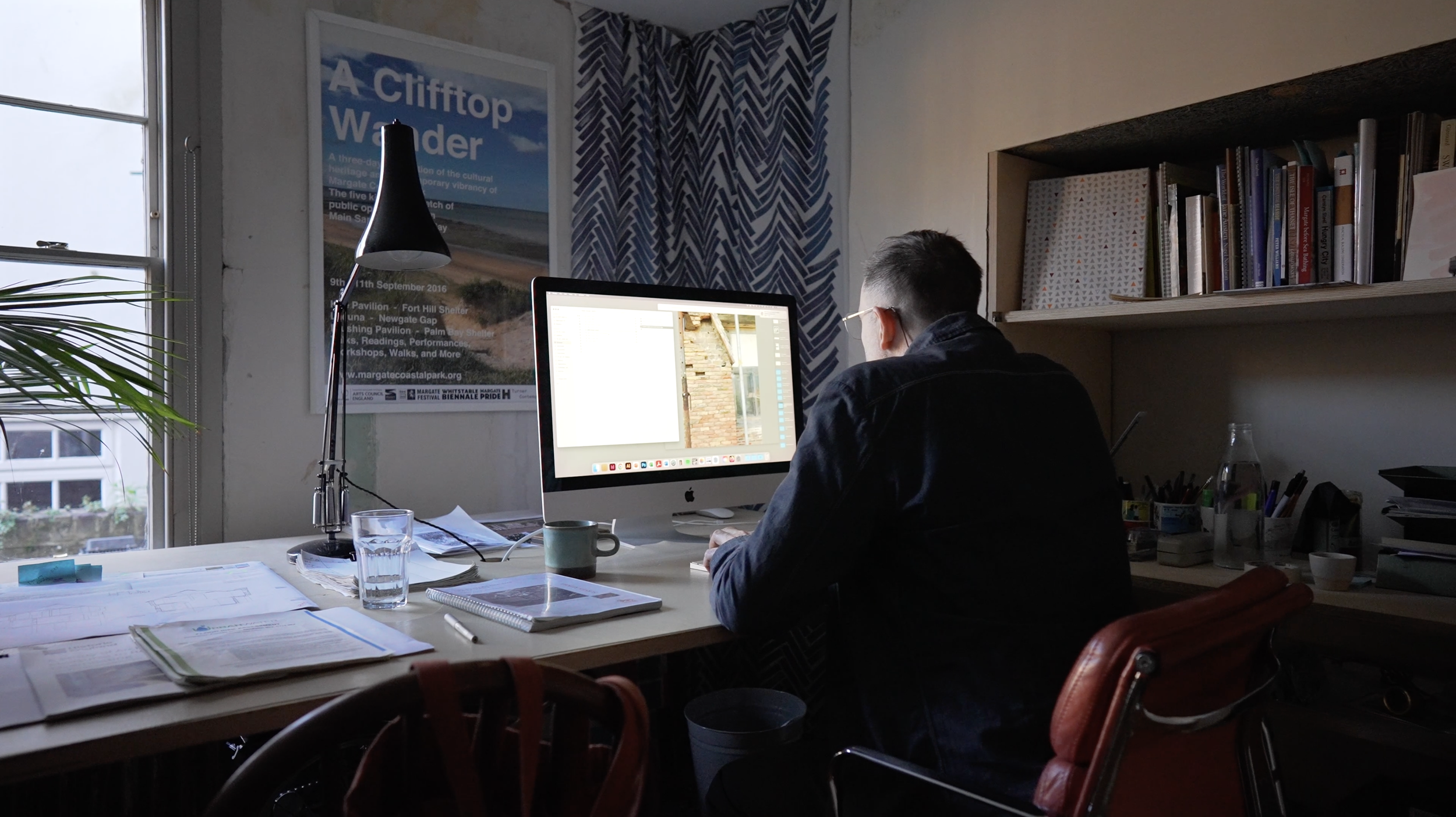
Behind the main house, a ruined mews cottage that once served the original Georgian household has been refurbished into Sam's architecture studio. What were three stacked rooms, with rotted staircases and collapsing ceilings, now houses five members of the practice.
"I'm really lucky the house had a ruined cottage behind it," Sam says. "The office then moved into that building — which allowed the practice to move out of the house and into a proper workspace."
Funding Restoration Through Airbnb
The upper three floors of the house — the principal Georgian rooms with their garden square views — are available to let on Airbnb, continuing what Sam describes as a centuries-old Margate tradition of opening homes to visitors.
"There's no way I could have put so much time and money into restoring the house as I have without that income," he acknowledges. "It's an incentive to keep the house looking really nice. And in some ways it justifies certain decisions — we need a nice bed because the guests will need a nice bed."
It is, in a small but meaningful way, the same arrangement the house has always had: serving the tourist economy of Margate during the season, and serving other purposes in between.
Project Info
Location: Hawley Square, Margate, Kent
Architect & Owner: Sam Causer
Airbnb Listing: Click here
Filmed & Produced by: HomeInspire
Written by: Dan Burge | Founder of HomeInspire
Share This Story
Get in touch if you’d like to be featured on HomeInspire.
FAQs - Sustainable New Build Homes
-
The Society for the Protection of Ancient Buildings (SPAB) was founded by William Morris in 1877 and remains the UK's leading voice on the sensitive repair of historic buildings. Rather than restoring a building to a previous appearance, SPAB principles advocate for honest, minimal intervention — repairing only what is necessary, using traditional materials and techniques, and preserving the authentic fabric of a building rather than recreating a false version of it. Sam Causer's approach at Hawley Square is guided by these principles throughout.
-
Renovation typically involves updating or replacing old surfaces and materials to make them appear new again. Conservation, by contrast, is about understanding, stabilising and preserving existing fabric — including its imperfections and the evidence of past lives. In a conserved building like Sam's Margate townhouse, layered plasterwork, original joinery and historic markings are retained as part of the building's identity rather than stripped back and replaced.
-
Light-touch conservation is an approach to historic buildings that prioritises the minimum intervention necessary to stabilise and protect the existing fabric. It avoids unnecessary stripping back, rendering over, or replacing original materials. For period properties — particularly Georgian, Victorian and Edwardian homes — it is widely considered best practice, preserving both the character and the long-term structural integrity of the building in ways that heavier renovation work often cannot.
-
Lime plaster is a traditional building material made from limestone that has been used in construction for thousands of years. Unlike modern cement-based plasters, lime is breathable — it allows moisture to move through walls and evaporate naturally, which is essential in older buildings where trapping damp can cause significant structural damage over time. For historic homes like Sam's 1820s townhouse in Margate, lime plastering is the appropriate choice for any repair work, ensuring the building can continue to breathe as it was designed to.
-
Linseed oil paint is a traditional, natural paint made from pressed flaxseed oil. Unlike modern plastic-based paints, which form an impermeable film on the surface of timber, linseed oil paint soaks into the wood and remains flexible and breathable over time. This allows any moisture that enters the timber to evaporate rather than becoming trapped — preventing rot and significantly extending the life of original windows, doors and joinery. It is increasingly recommended by conservation specialists and organisations like SPAB for use on historic timber, and is used throughout Sam Causer's Margate townhouse.
A dedicated placement on the HomeInspire homepage for 30 days, putting your business in front of every visitor to the site during that period. Requires an active Directory listing. Maximum one per month.