
Hackney Terrace: Inside Reiss and Dan's Renovated and Extended Victorian Home in East London
Produced & Written by Dan Burge | 23 June 2026
Reiss & Dan’s full house tour
Behind The Build Q&A with Reiss & Dan
HomeInspire visited Reiss and Dan's Victorian terrace in Hackney feature their renovation that touched almost every room of the house — a side return and rear extension, a stainless steel kitchen, a vaulted bathroom and study, and a complete reimagining of how a colourful, characterful Victorian terrace can work for modern life. Bought in 2021 as first-time buyers in the middle of the pandemic, this is Reiss and Dan's first renovation together. The result is a bold, warm and deeply personal home that proves period charm and confident colour can sit comfortably side by side.
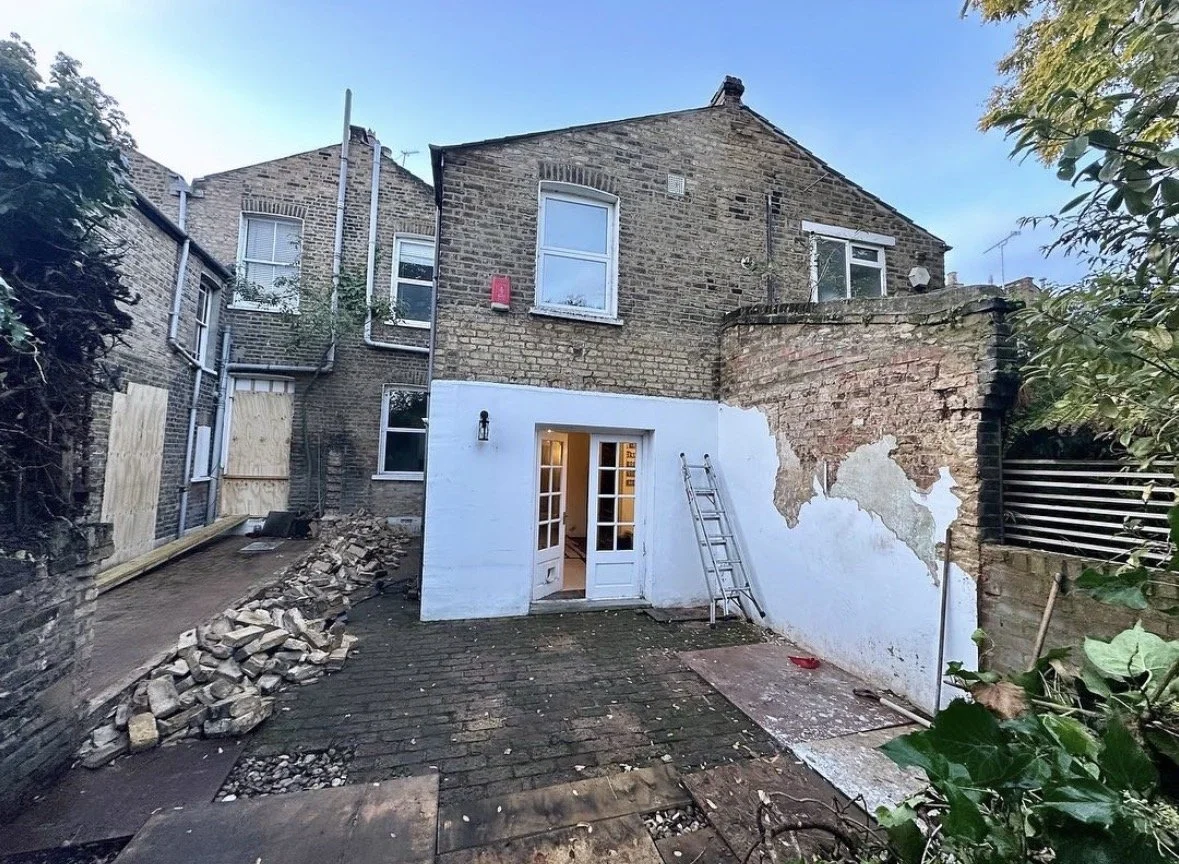
Rear Elevation - Before
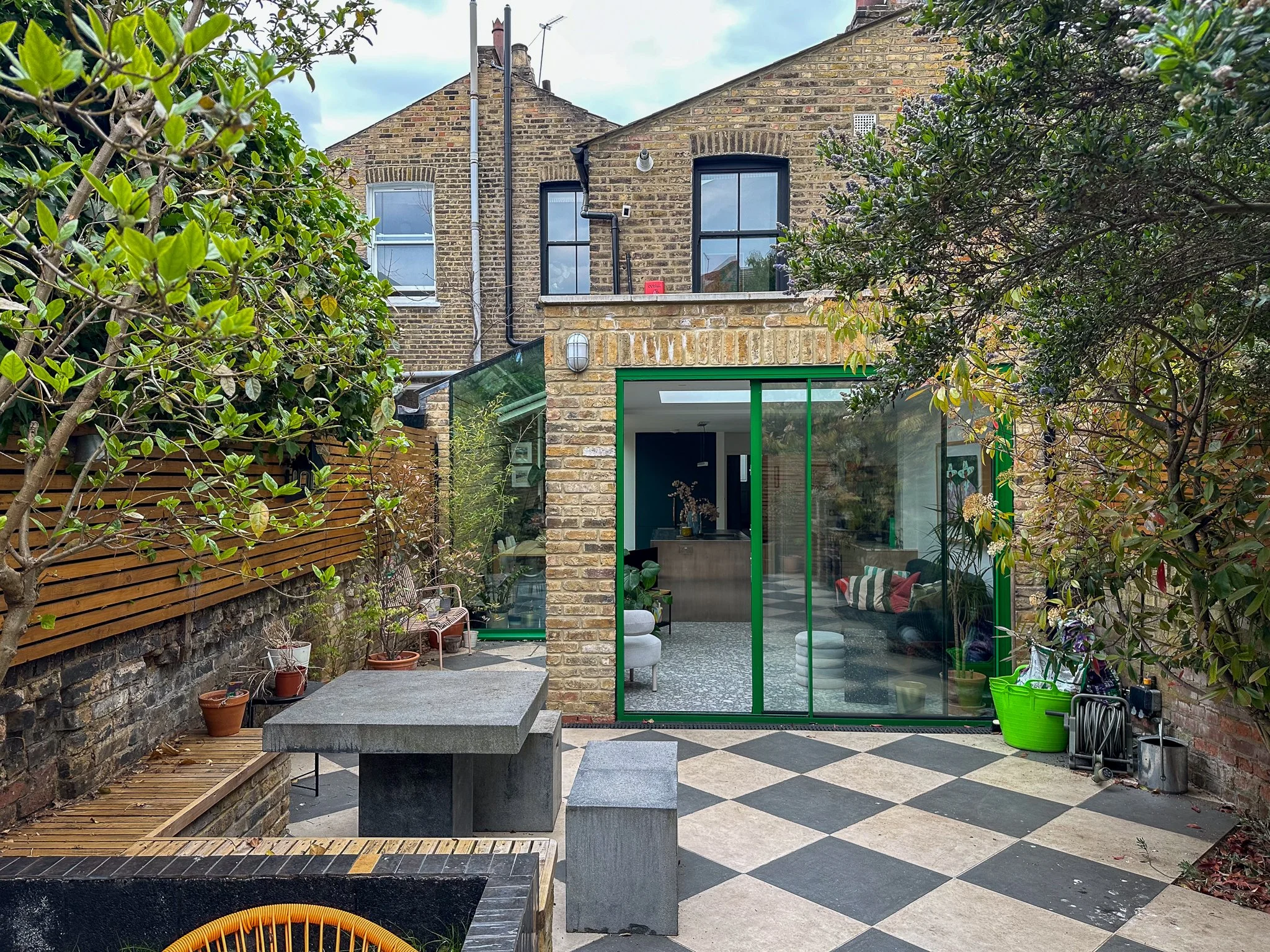
Rear Elevation - After
Project Overview and Vision
First-Time Buyers, First-Time Renovators
When Reiss and Dan bought this Victorian terrace in 2021, they were, in their own words, "very naive first-time buyers." They'd been searching for a property in the heart of Hackney that needed work, but specifically one they could live in before renovating, so they could properly understand the space first. "We figured out quite quickly that it was quite important to us to have a space that we knew we wanted to renovate but also that we'd actually lived in for a bit," says Dan. What they found was a house in decent but tired condition — magnolia walls throughout, original floorboards hidden under a decade of neglect, and a layout that hadn't been touched in years.
A Two-Week Paint Job That Took a Month
Before any structural work began, Reiss and Dan spent their first weeks simply painting the entire house white. "We thought we'd be able to do it in two days," says Dan. "We realised very quickly that it took us about half a day to actually prep one room." It set the tone for what was to come — a renovation that would expand well beyond its original scope, room by room, decision by decision.
From a Side Return to Every Room in the House
The initial brief was modest: a side return extension and a slight extension into the garden. "As we'll see, we ended up doing everything — from the windows to the door to the bathroom," says Dan. What started as a single architectural intervention became a renovation that touched every floor of the house, driven by a couple who, despite having no professional design background, knew exactly what they wanted.
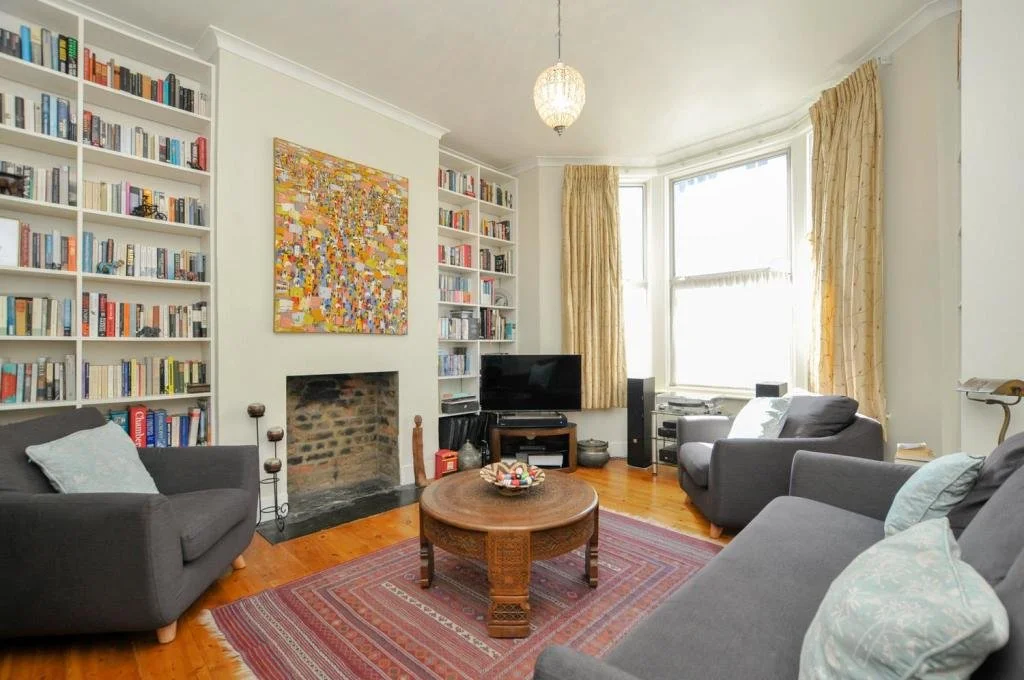
Living Room - Before
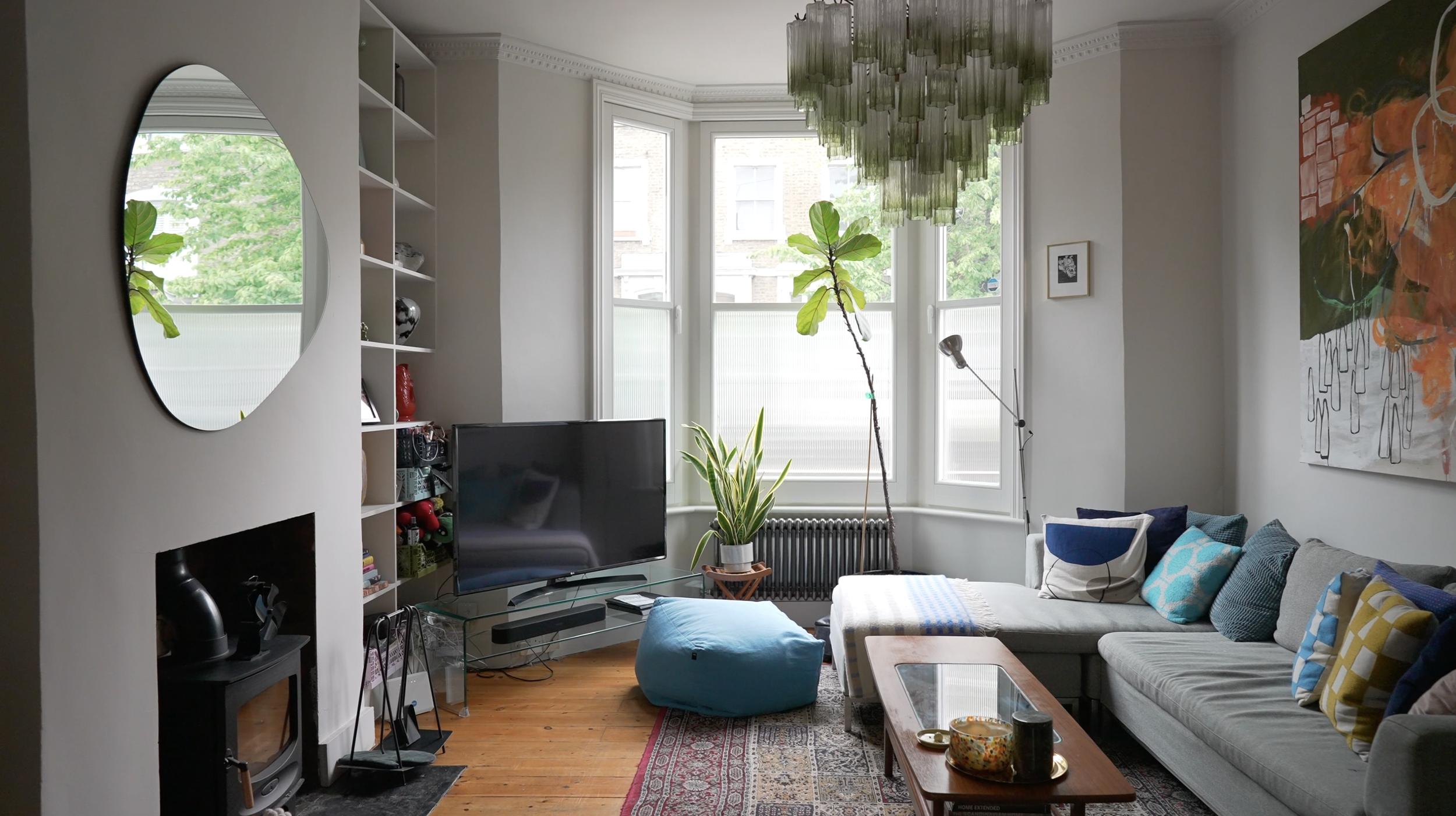
Living Room - After
The Ground Floor: Front Rooms and Original Character
The Living Room: Light, High Ceilings and a Chandelier Disaster
The front living room was the couple's favourite room before any work began, prized for its high ceilings and the way it opened through to the dining room beyond. They kept the original cornicing in spirit but upgraded it throughout the house, adding a ceiling rose primed for a chandelier. The chandelier itself has a story attached. "The builders had only stuck on the ceiling rose as opposed to actually bolting it to the ceiling with screws," says Dan. When the 30kg chandelier was installed, it came down, smashing every pendant.
Soundproofing a Busy Road
Living on a main road came with a clear practical challenge, so the entire front of the house received new triple-glazed windows. "They do a pretty good job in keeping the noise out," says Dan. Fluted glass film was added to the lower panes for privacy and texture, a detail repeated elsewhere in the house.
The Podcast Room: From Dining Room to Library
What was once the dining room has since become what the couple's friends have nicknamed "the podcast room" — a darker, moodier space built around two reclaimed office chairs found online for £200 each. Painted in Truffle by Paint and Paper Library, the room leans into the kind of warm, enveloping darkness that recurs throughout the house. A mid-century sideboard, bought together nearly a decade before they moved in, anchors the space and now displays Reiss's DJ equipment.
The Kitchen and Extension: Stainless Steel, Glass and London Stock Brick
Planning Permission and a Smaller Footprint
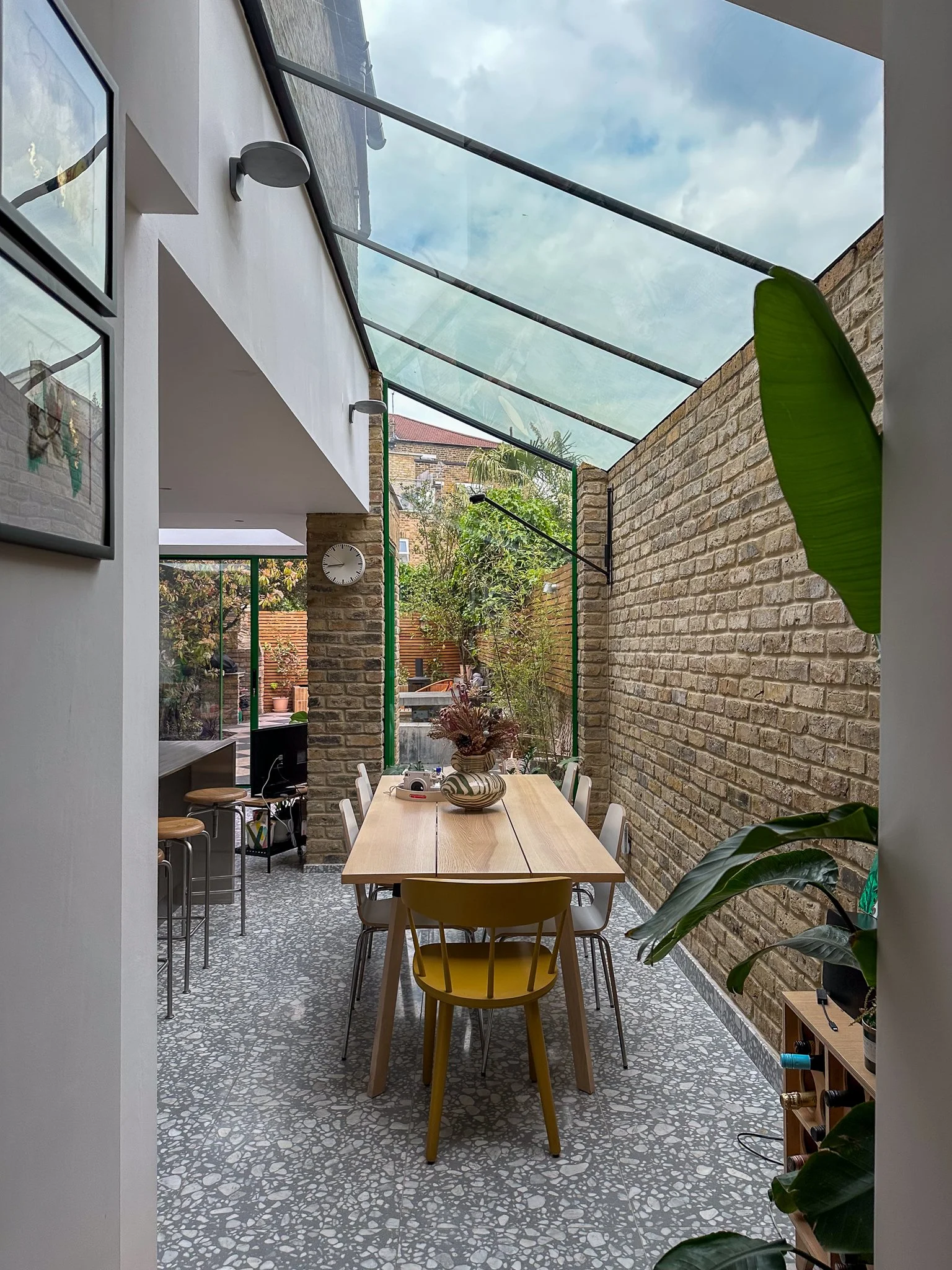
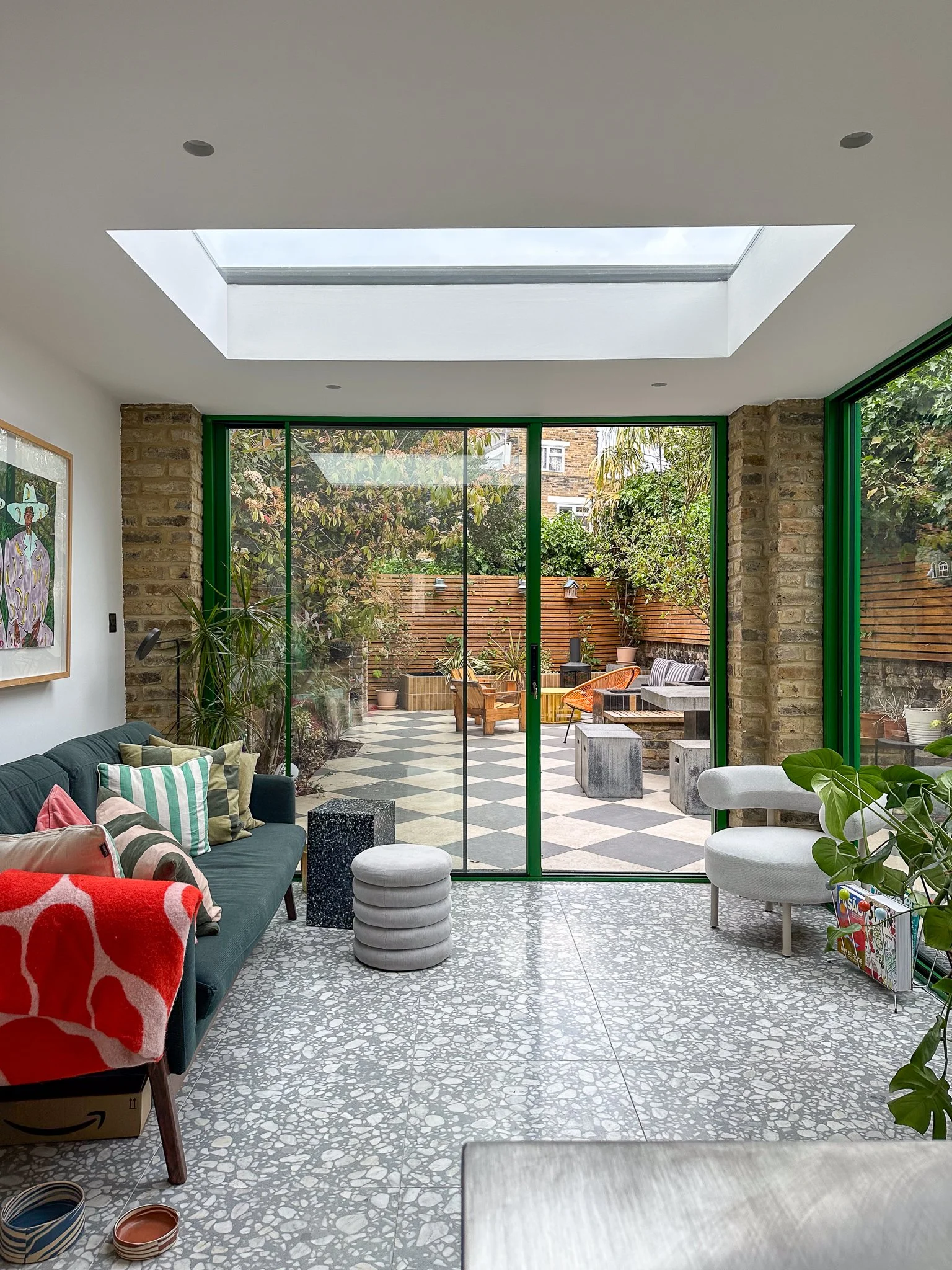
Getting the extension approved took far longer than expected. "We thought we'd be having builders on the ground within the first six months — it probably took us best part of two years," says Dan. A pre-planning application was submitted before the full planning application for both the extension and a loft conversion, with Hackney Council taking three months to respond with a single page of guidance. The couple's original ambition — a full wraparound extension — was rejected, and they were limited to filling in the side return with a more modest rear extension instead. In hindsight, they believe the smaller footprint actually improved the design. "I think the actual footprint adds a bit more interest to the extension rather than having one big open space," says Dan. The finished design leans heavily on contrast and light: a fully glazed roof across the new extension, a large glass panel at the rear that creates a genuine indoor-outdoor feel, and large sliding doors chosen over bifolds specifically to avoid the visible frame breaks of a multi-panel bifold setup.
The Stainless Steel Island and a Six-Person Lift
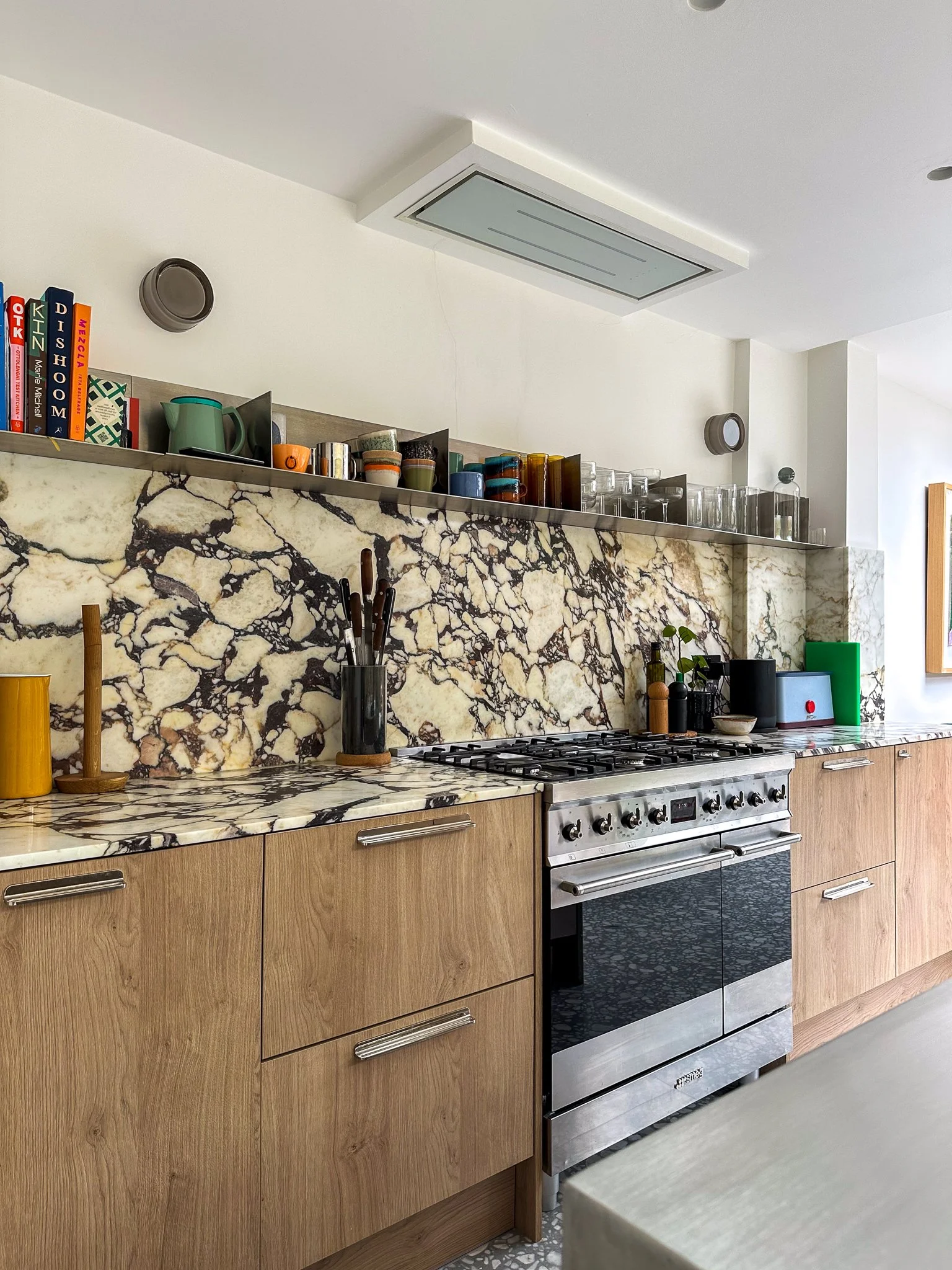
The kitchen's centrepiece is a custom stainless steel island with an integrated sink, sourced from a specialist fabricator after the couple abandoned an earlier plan for a brightly coloured resin block. Without rear access to the property, the one-piece island had to be lifted over two sets of neighbouring fences and through the new sliding doors by six people. "It was quite a kind of operation to get the island in place," says Dan, "but once it was, it really made the kitchen." Around it, the room leans into colour and texture rather than restraint — colourful edge detailing on the cabinet doors instead of conventional black, a bold terrazzo floor chosen early due to long lead times, and an exposed London stock brick wall left by the project's brick layer partway through the build. "I think an exposed brick wall is very cliché, but particularly with the London stock brick that we went with, we really like it," says Dan. Green sliding doors set the tone for a green theme that now runs through cupboards, sofa and artwork throughout the room.
The Garden, Downstairs Loo and Original Staircase
A Garden Reclaimed and Zoned
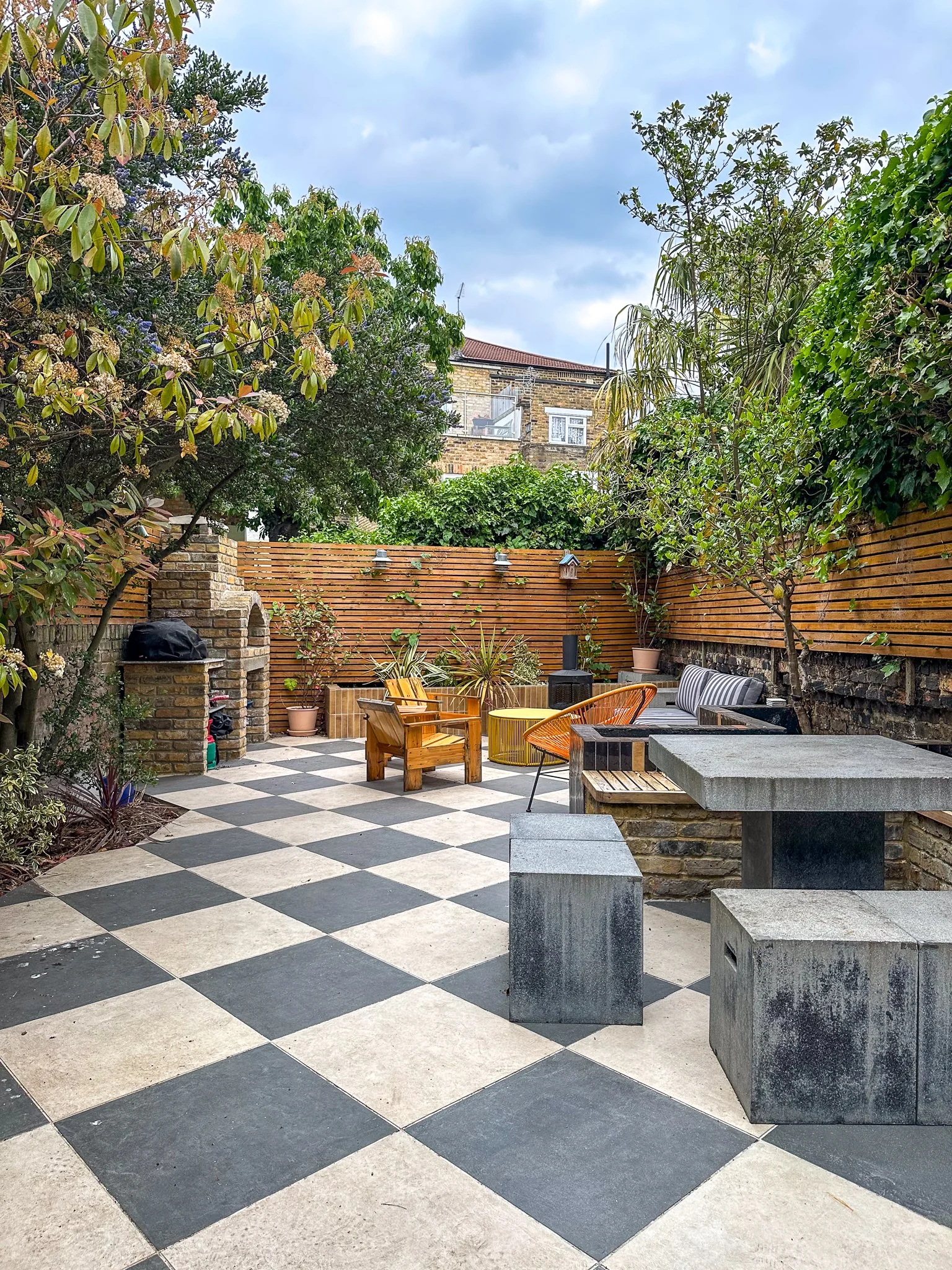
The garden had previously been segmented by an old pond and overgrown shrubbery, leaving little usable space despite its generous size. Once the extension was complete, Reiss and Dan zoned the garden into distinct areas — a dining and seating space around a concrete table left behind by the previous owners, a small coffee nook beside the extension, and a larger lounge area at the rear complete with a chiminea for cooler evenings. Mature trees retained from the original garden now create a secluded, leafy feel despite the property's central Hackney location. Towards the end of the build, the couple also asked their builder to add a barbecue, expecting something modest. "He's like, 'Yeah, yeah, yeah, I can do it,'" recalls Dan — the result was considerably larger than anticipated, but one they now use often and have grown fond of.
The Downstairs Loo and Original Features
A trip to a shop in Stoke Newington produced a set of bright orange tiles that became the starting point for the downstairs WC, finished with a sliding door to maximise the small space and deliberately uncut tiling to preserve the pattern. Throughout the rest of the ground floor and hallway, Reiss and Dan preserved what was already there wherever possible — the staircase and original floorboards were repainted rather than replaced, giving the rest of the house a consistent, grounding thread between old and new.
HomeInspire Downloads
Download Our Complete Renovation Handbook
A step-by-step guide to planning, designing, and delivering your dream home.
Planning your first renovation doesn’t have to be overwhelming. This 62-page step-by-step eBook guides you through every stage - from budgeting and planning to design, permissions, and finishing touches. Packed with expert advice, checklists, and cost guides, it helps you avoid mistakes, stay on track, and bring your dream home to life.
Upper Floors: Bathroom, Study and Bedroom
A Vaulted Bathroom and a Reimagined Study
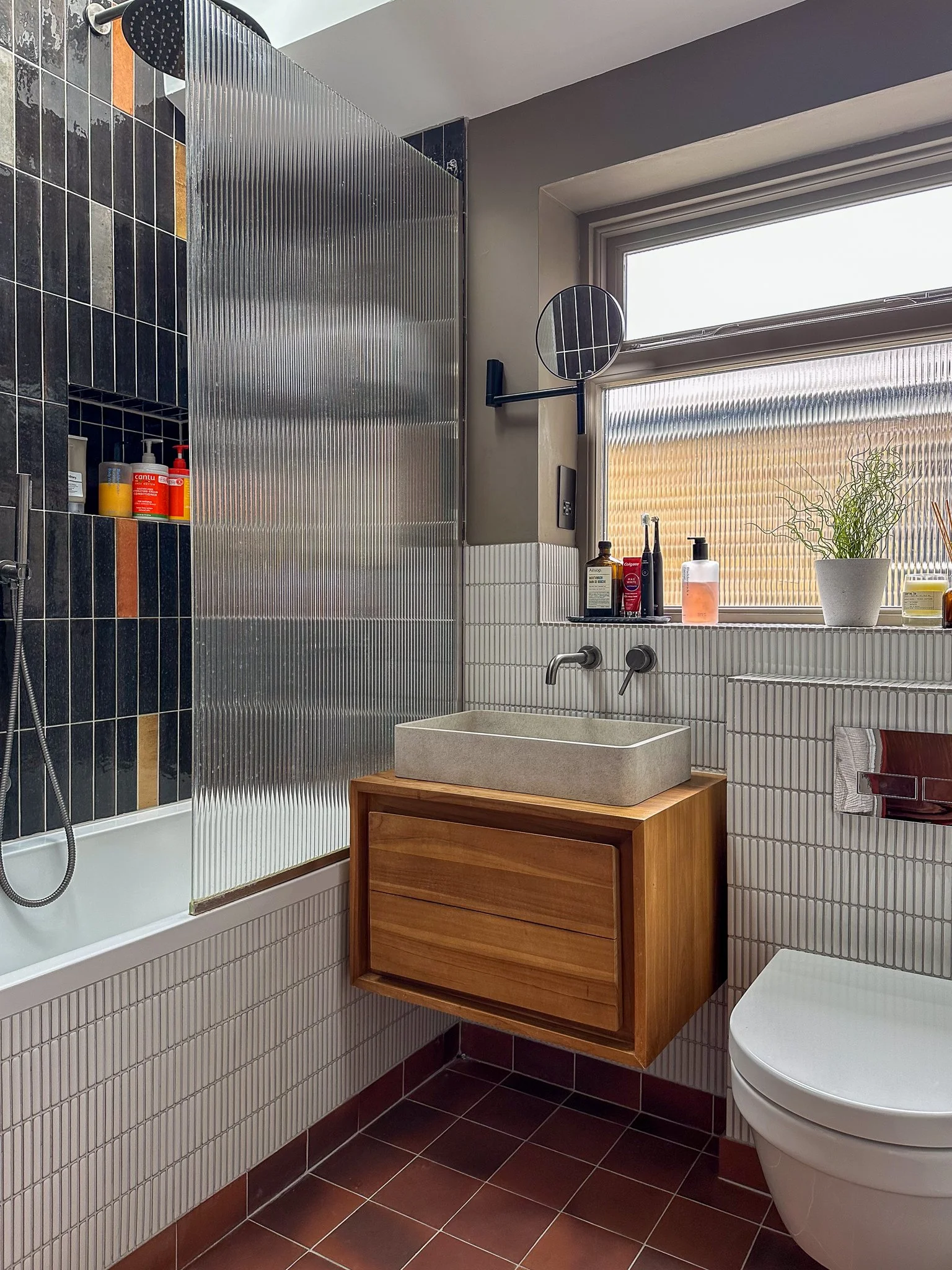
The family bathroom was transformed by vaulting what had previously been a low, cramped ceiling, immediately making the small room feel larger, with a skylight positioned directly above the shower creating a natural rainforest effect each morning. A fluted glass shower screen ties the room back to the front windows downstairs, while a deliberately random mix of orange and grey tiling — the result of considerable back-and-forth with the tiler over exact placement — gives the room its distinct character. The same vaulting technique, originally an idea suggested by the build team partway through the project, was then applied to what had been a low-ceilinged box room used as a study. A large Velux window was added at the same time. "As soon as we did it, we realised how much more open the space became," says Dan, and the room now looks out over a leafy run of neighbouring gardens, transformed from a cramped afterthought into one of the most-used rooms in the house.
A Confident, Dark Bedroom
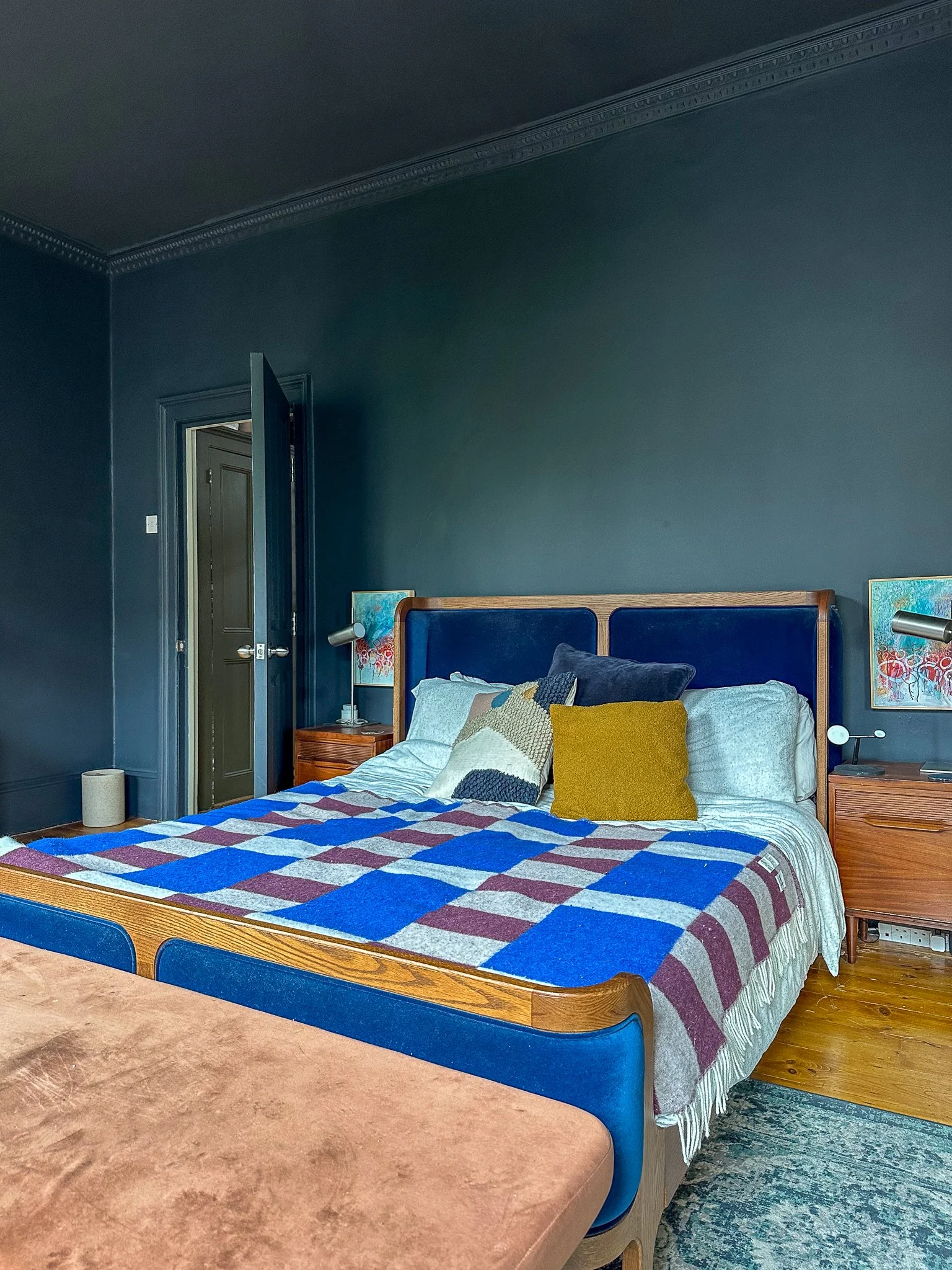
Upstairs, the bedroom received the same considered colour philosophy found throughout the house — walls, ceiling, door and window frames all painted in one dark, enveloping tone. "We thought it was a bit of a risk, but as soon as we did it, we realised how much we really love it," says Dan, describing the cocoon-like effect the colour creates without making the room feel smaller. Two birch ply built-in wardrobes, commissioned from a joiner before the main renovation began, provide a deliberate material contrast to the rest of the room, standing out precisely because they're so different from everything around them.
A Home Built on Colour, Confidence and Original Character
What makes this renovation stand out is the way Reiss and Dan have balanced bold, contemporary choices with a clear respect for the house's original fabric. From the stainless steel kitchen island to the terrazzo floor and exposed brick, every new addition sits comfortably alongside floorboards, cornicing and a staircase that have barely changed since the house was built. It is a renovation built by two first-time buyers who took the time to live in their home before changing it — and who, three years on, wouldn't change a thing about the smaller, more considered extension they ended up with instead of the one they originally planned.
Project Info
Location: East London
Filmed & Produced by HomeInspire
Written by Dan Burge | Founder of HomeInspire
Share This Story
Get in touch if you’d like to be featured on HomeInspire.
FAQs - Victorian Terrace Renovations
-
In many cases a side return extension can fall under permitted development, but combining it with a rear extension, as Reiss and Dan did, often pushes a project beyond those limits and into a full planning application. Local authorities vary significantly in how quickly they respond and how restrictive they are — Hackney Council took three months to provide initial feedback on this project. It's worth submitting a pre-planning application first to understand what's realistically achievable before committing to a final design.
-
Reiss and Dan deliberately bought a property they could live in for a period before starting work, specifically so they could understand how the space functioned before making permanent decisions. This isn't necessary for every renovation, but for first-time renovators in particular, it can prevent costly mistakes and clarify priorities that aren't obvious from a single viewing.
-
It depends on the look and feel you're after. Sliding doors, as used here, avoid the visible frame breaks that come with multiple bifold panels, which can support a cleaner, more uninterrupted view onto the garden. Bifolds offer more flexibility in how much of the opening can be used at once. Both are popular choices for Victorian terrace extensions, and the right option usually comes down to the proportions of the opening and personal preference.
-
Where the roof structure allows it, vaulting a ceiling — as Reiss and Dan did in both their bathroom and study — can make a real difference to how a small room feels, often more so than reconfiguring the floor plan. It does add cost and complexity, particularly around insulation and any rooflights involved, so it's worth discussing feasibility with a structural engineer or architect early in the design process.


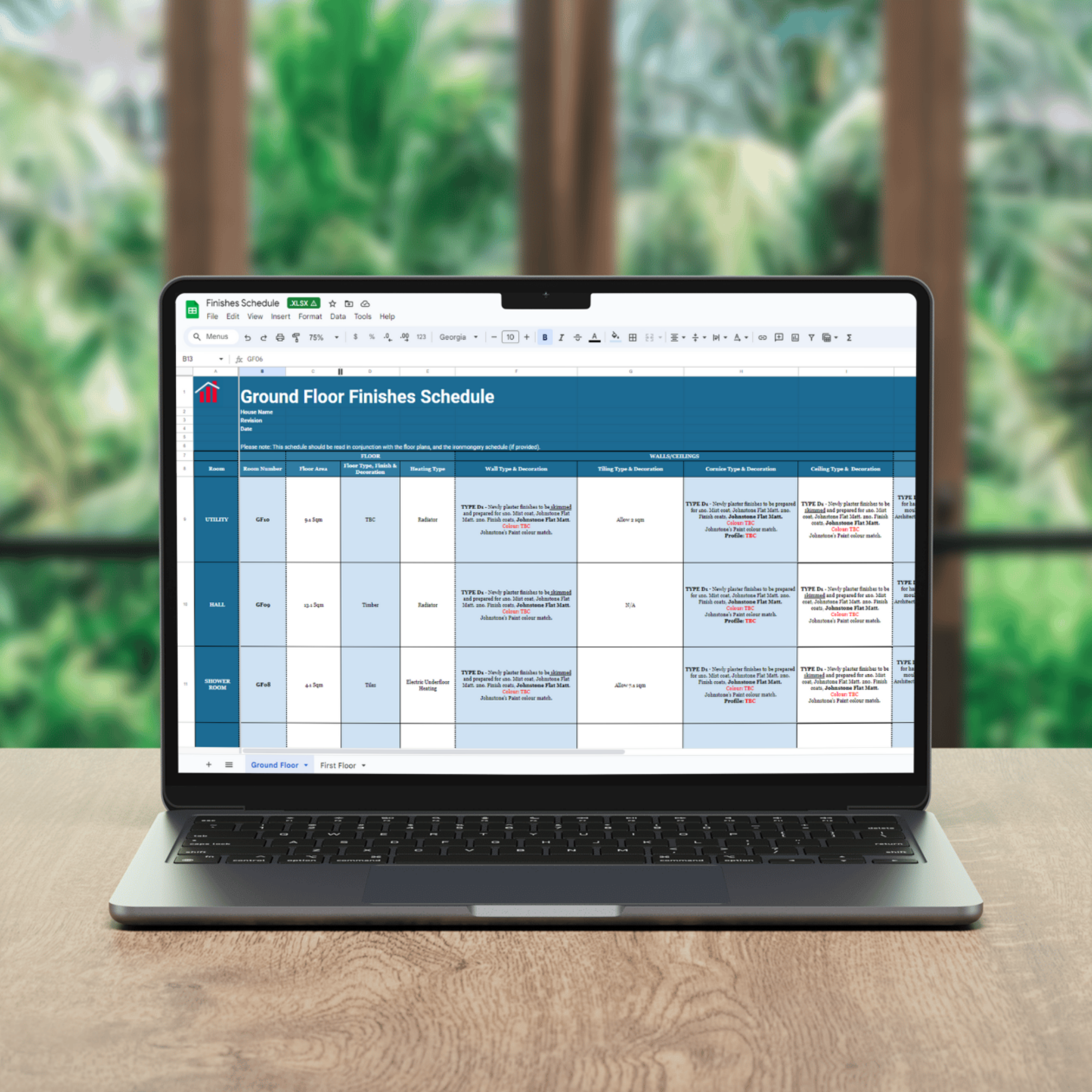
The Ultimate Home Renovation Planner is an all-in-one tool to estimate costs, track progress, and manage every detail of your renovation. Designed by a UK architect, this downloadable Google Sheet includes nine structured tabs to help you stay organised, compare builder quotes, and budget effectively.