
Wandsworth Renovation: Inside Lucy's Renovated Three-Storey Victorian Home
Produced & Written by Dan Burge | 25 January 2026
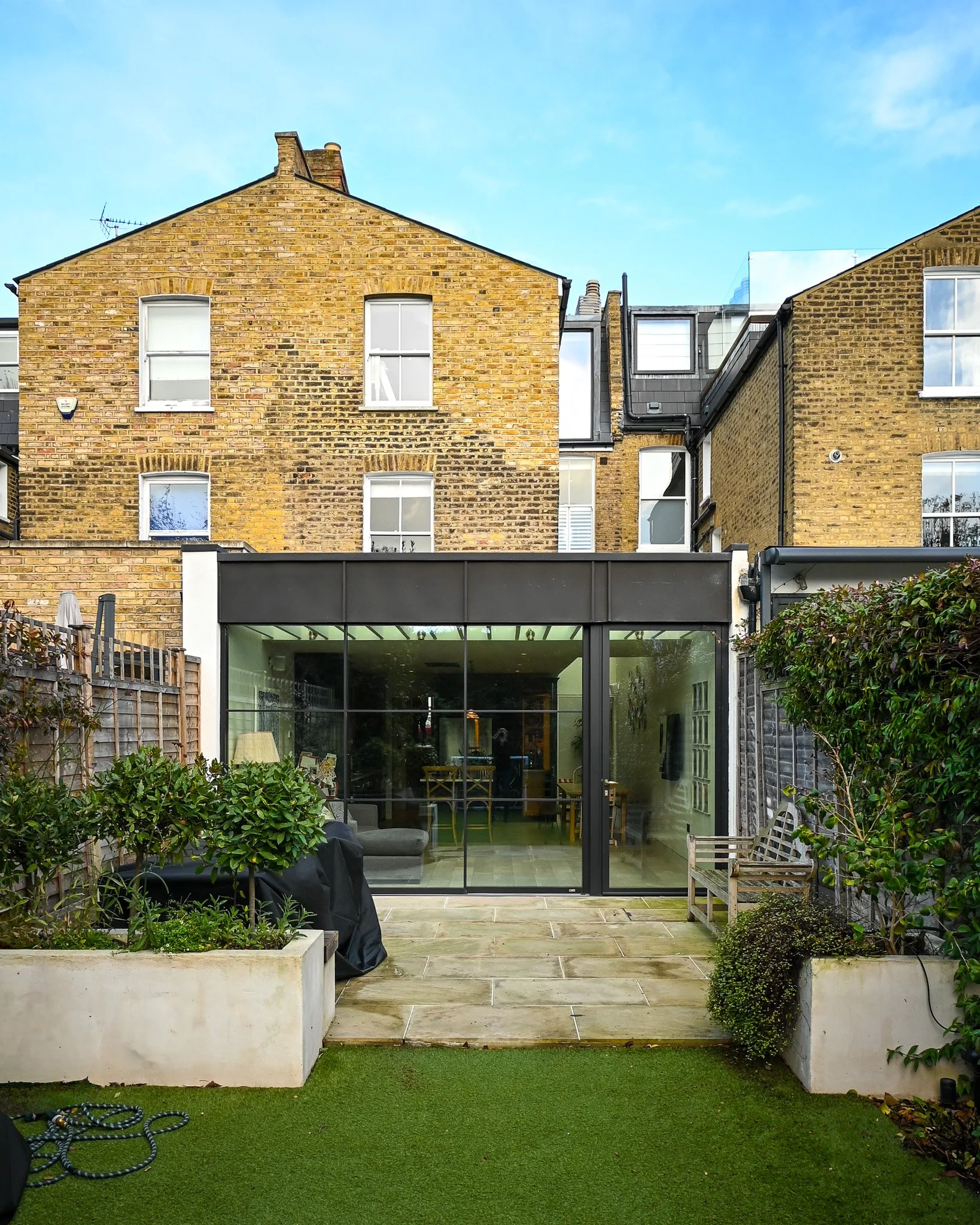
HomeInspire visited Lucy’s renovated and extended South London home to film & feature her complete transformation of a dated period property into a bright, functional family house. Their brief was simple but ambitious: modernise a neglected home, extend for space and light, and create interiors that balance character with practicality for family living.
Project Overview and Vision
From Dated House to Family Home
When Lucy and her family purchased the property in September 2019, it required extensive work. The house had no heating, no gas supply, and only a small lead pipe for water. Internally, it was heavily dated with worn finishes and little in the way of modern infrastructure. It was clear the property could not be lived in without significant renovation.
Rather than rushing into construction, the family spent months working with Will Gamble Architects to design a thoughtful renovation and extension strategy. The goal was to retain period character while delivering a home suited to modern life.
Working with Architects
The collaboration with Will focused on spatial planning and light. Instead of altering the historic structure beyond recognition, the design enhanced what was already there -reintroducing period details, improving flow, and extending at the rear and side to create a larger, more usable ground floor. This careful approach ensured the property retained its original charm while gaining the functionality of a contemporary family home.
Ground Floor Transformation
Sitting Room and Period Features
Originally a double reception room typical of Victorian properties, the sitting room had been stripped of its historic features and filled with mismatched furniture and heavy wallpaper. The renovation began by removing everything back to bare walls and floors. For the construction works, they appointed Bloom Builders.
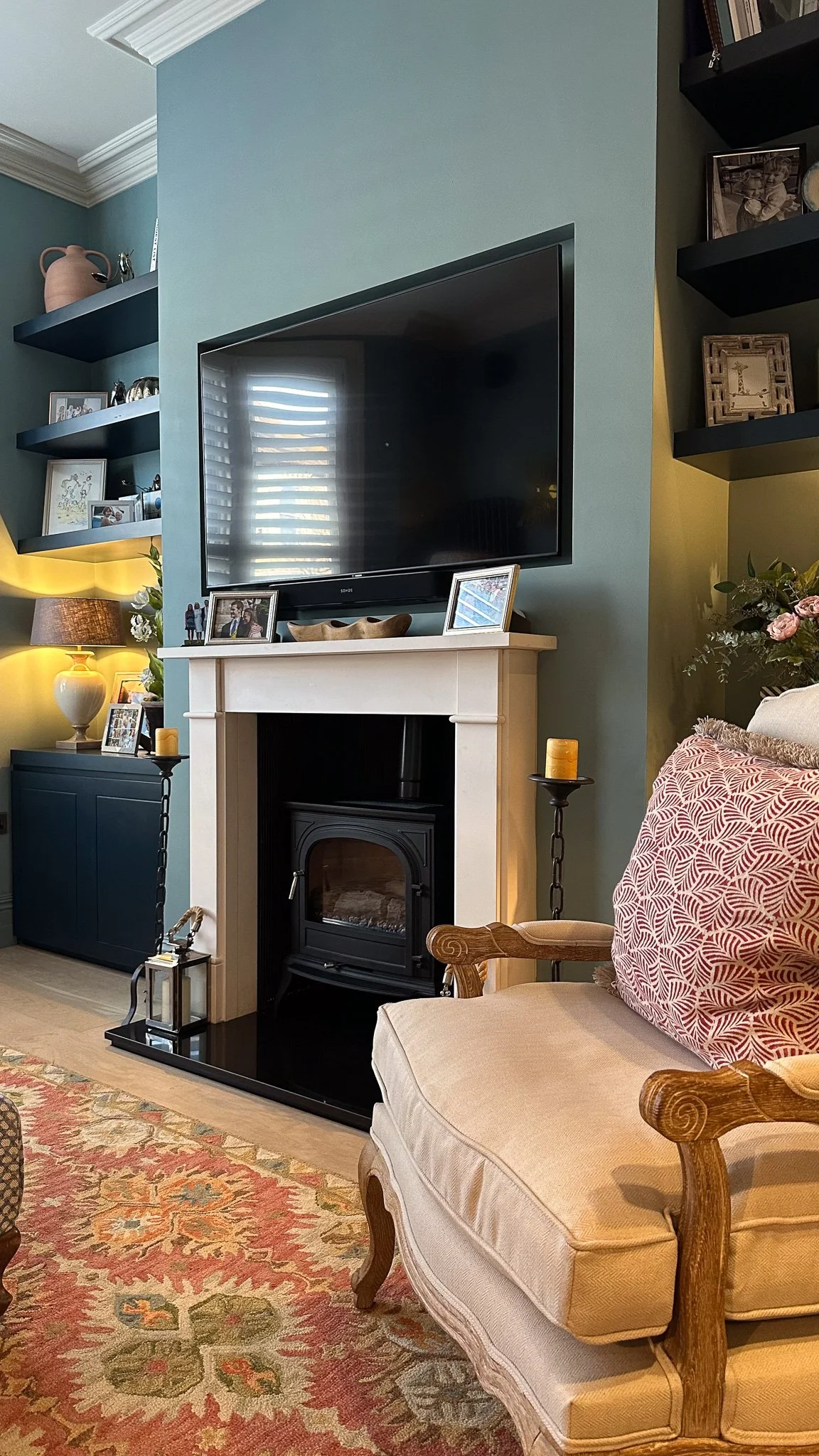
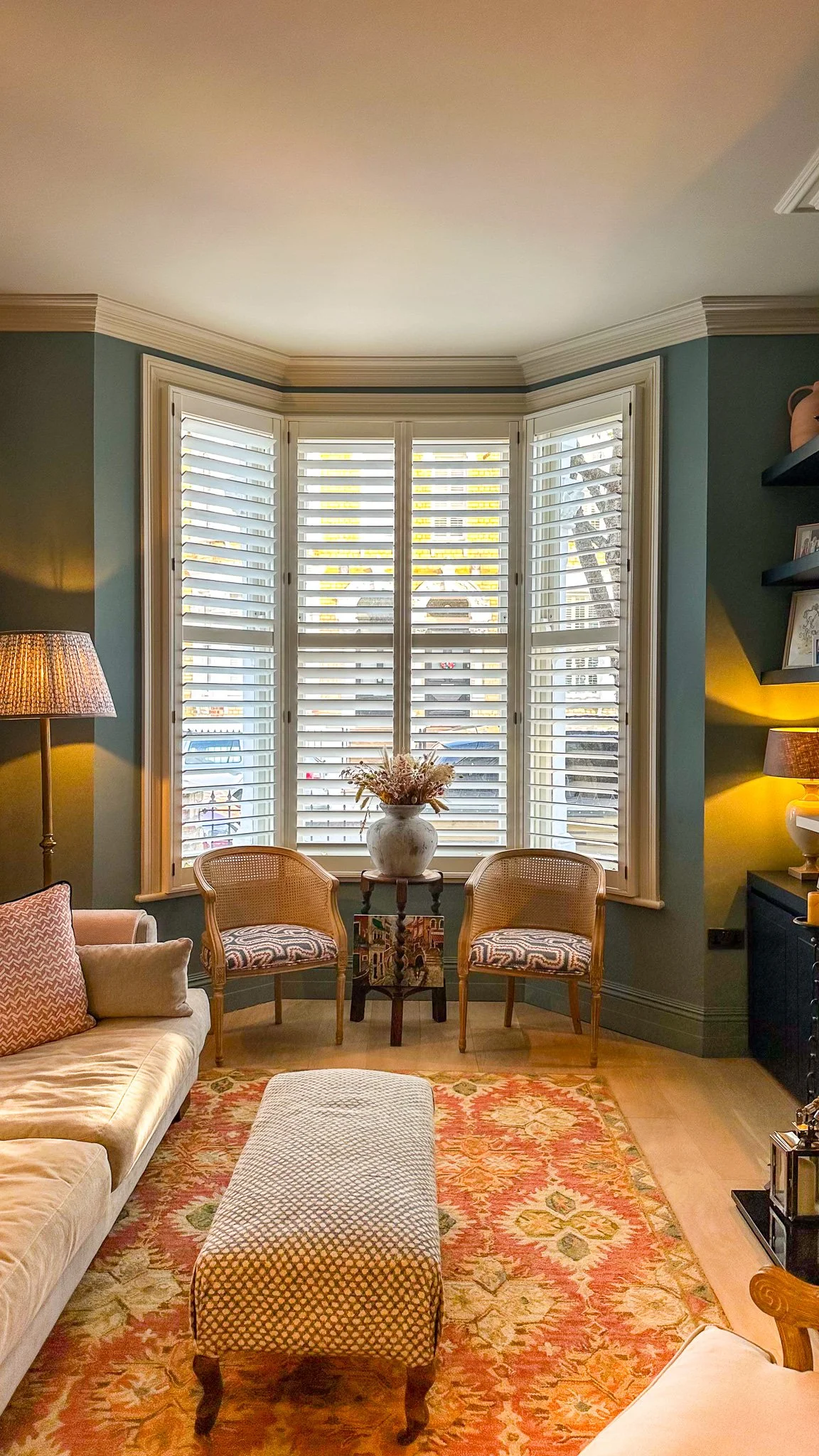
Period details such as corner mouldings and architraves were reinstated to reference the home’s heritage. New shutters were added to maximise light control and privacy while maintaining brightness. A gas fireplace was chosen instead of a full chimney flue to preserve valuable cupboard space in the bedroom above—an example of practical decision-making guiding design.
Materials and textures were carefully layered to create warmth: soft cushions, varied fabrics, and considered colour selections. The result is a room that functions as both a relaxed family space and an office, thanks to bespoke joinery designed with the architect. Integrated shelving and storage accommodate books and children’s items while keeping surfaces clear.
Paint colours were matched to Farrow & Ball, using Over and Blue on the walls and Hague Blue on joinery, with Schoolhouse White on ceilings for a soft, off-white finish. This cohesive palette runs throughout the house, tying rooms together without feeling repetitive.
Utility and Downstairs WC
Part of the original double reception room was reconfigured into a utility space and downstairs WC. Behind concealed doors, laundry appliances are hidden so the room remains tidy when entertaining guests. This dual-purpose design ensures practicality without compromising aesthetics.
Fixtures and fittings were sourced from CP Hart, blending rustic and modern elements. Gold and antique brass finishes were chosen over silver to create warmth and richness. Wall-mounted lighting from Pooky frames mirrors and highlights the sink area, demonstrating how thoughtful lighting elevates functional spaces.
Hallway Storage and Flow
To improve organisation, the hallway includes extensive storage cupboards for coats and shoes - essential in a family home. A mirror and display space for photographs add personality while reflecting light, making the corridor feel larger and more welcoming. These small interventions enhance day-to-day usability and contribute to the home’s overall sense of order.
Kitchen and Extension
Design and Materials
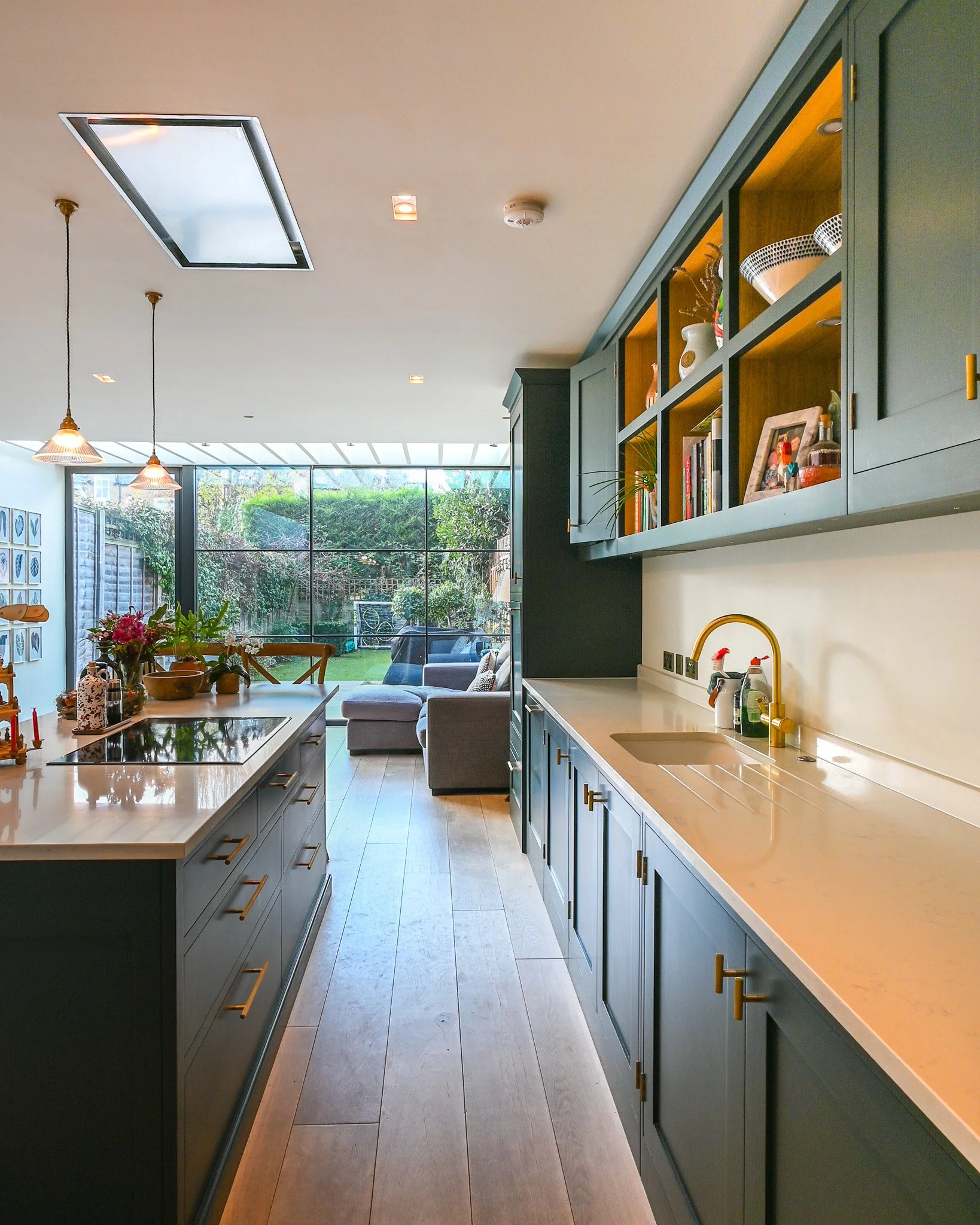
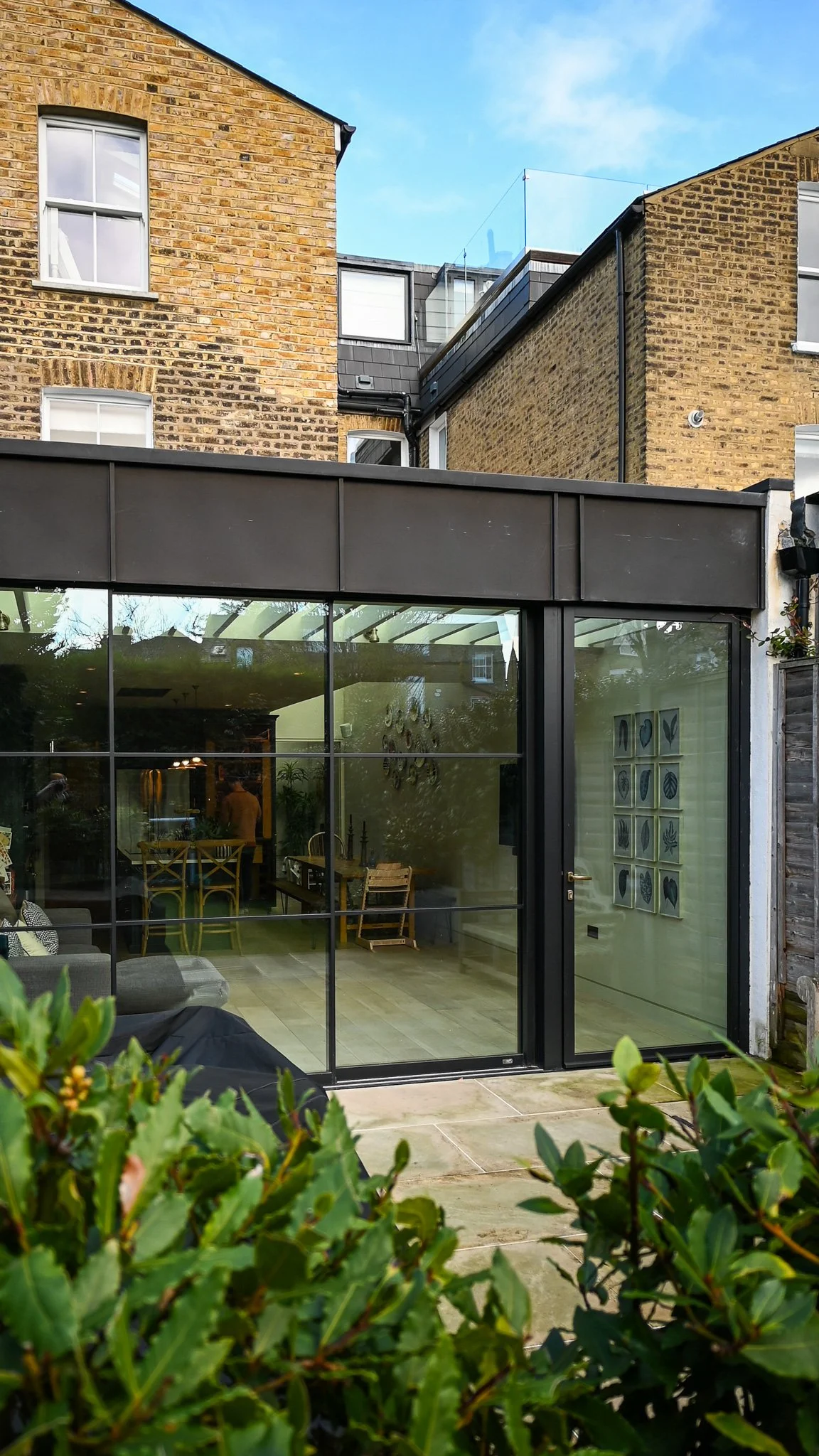
The kitchen, designed with Higham Kitchens, represents the heart of the extension. Dark green cabinetry contrasts with lighter walls (again finished in Schoolhouse White) and granite worktops. Crittall-style doors from Maxlight introduce industrial character while maximising light and visual connection to the garden.
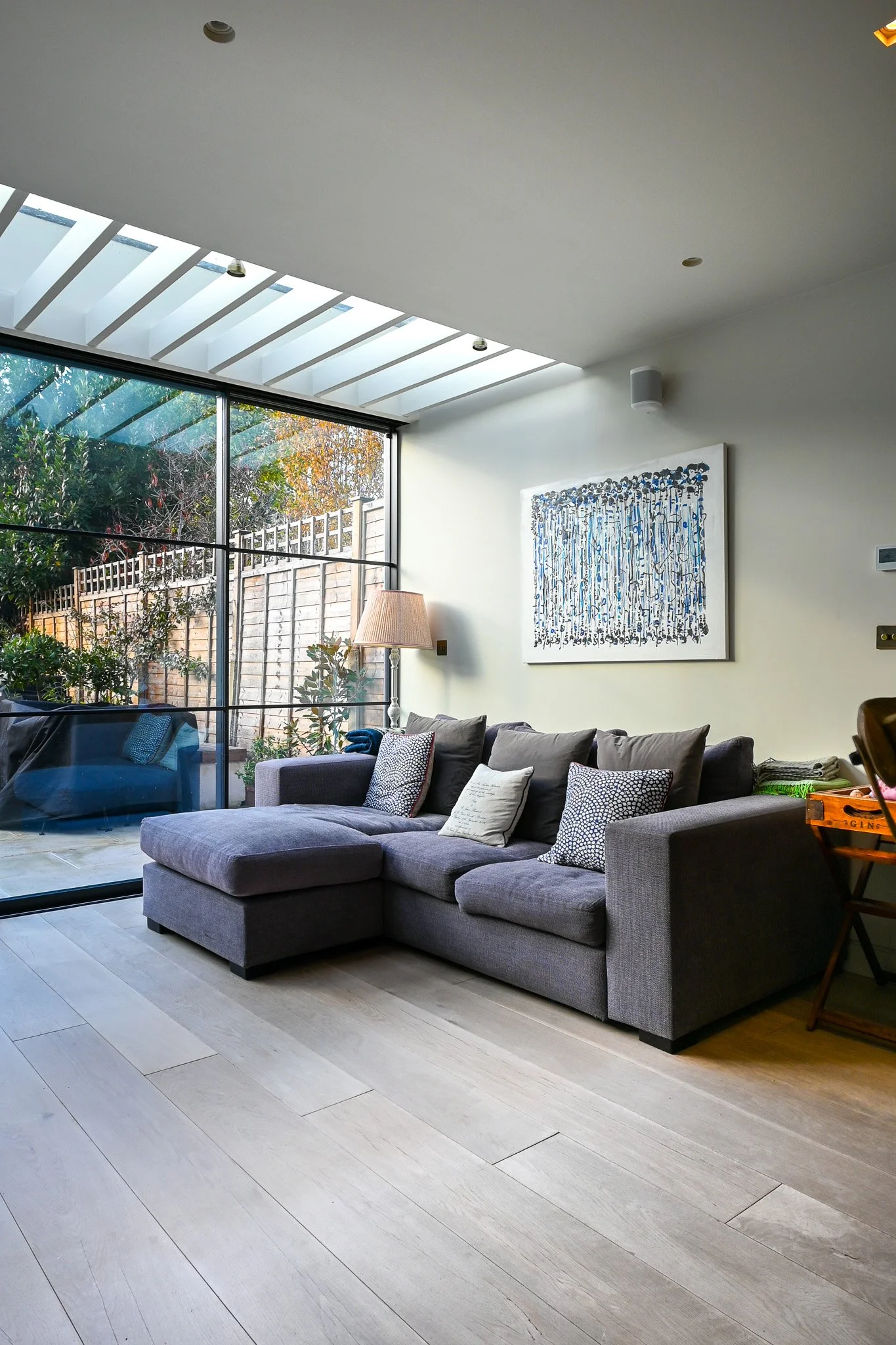
Natural materials were prioritised, including Reeve Wood Flooring across the ground floor. This continuous flooring flow helps the space feel unified and spacious. An island was incorporated despite the narrow terrace layout, providing workspace and informal dining without sacrificing circulation.
The family opted for a large fridge-freezer from Fisher & Paykel, a double oven for entertaining, and a hot water and filtered tap—features that prioritise convenience in everyday life.
Light and Spatial Planning
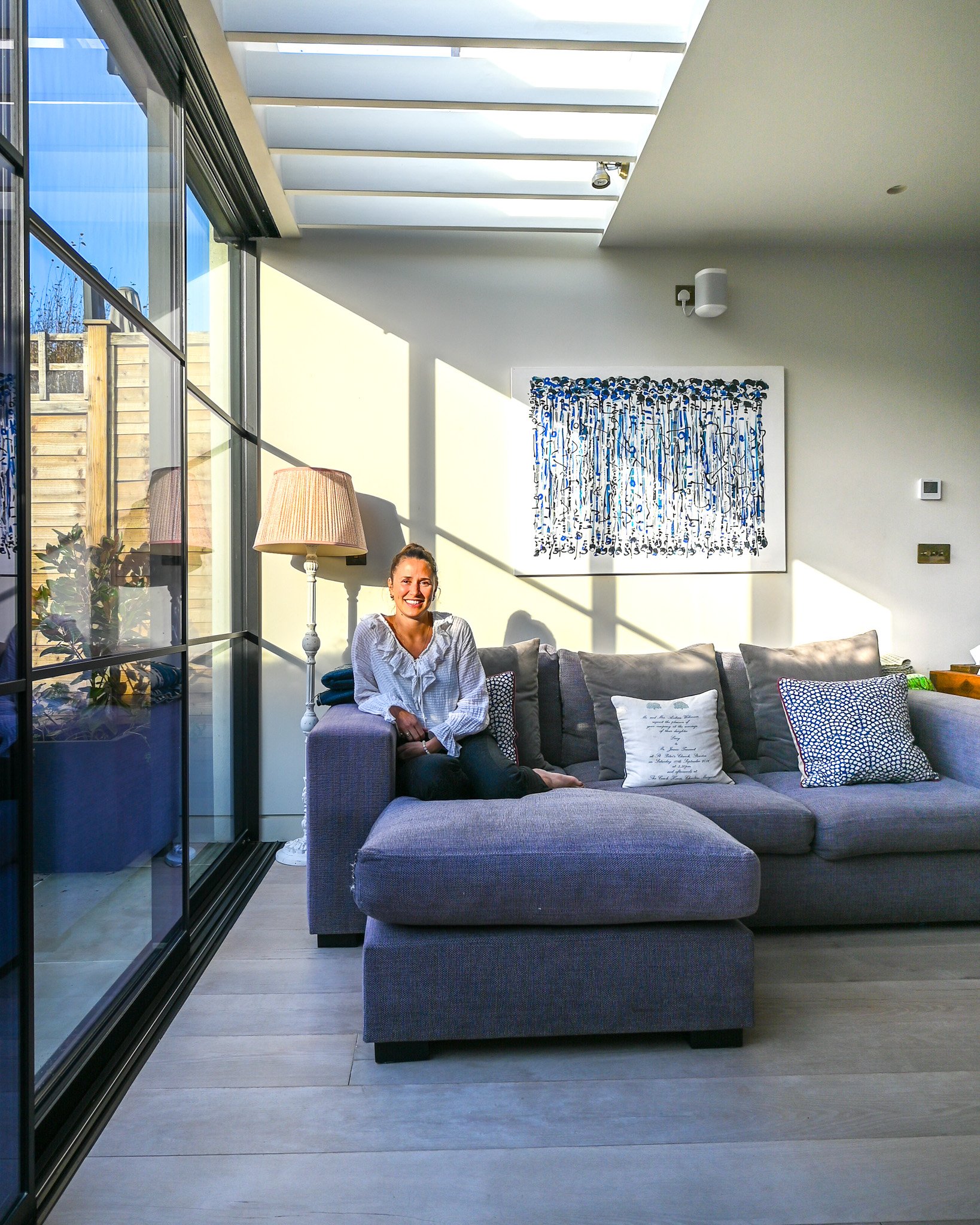
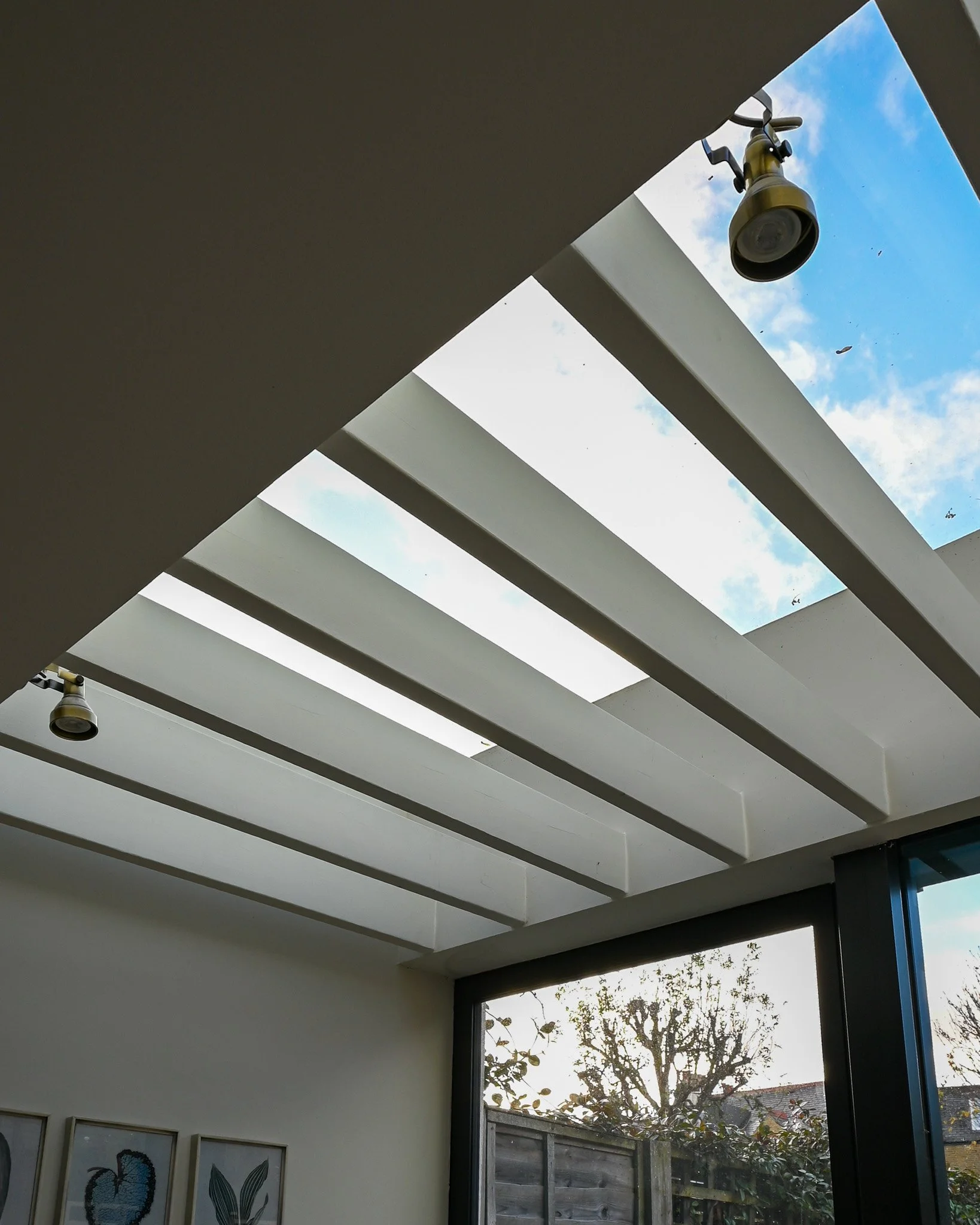
A key challenge of Victorian homes is limited natural light. The extension addresses this through rooflights, floor-to-ceiling glazing, and a flat roof design that avoids traditional pitched structures. Joists were introduced across the rooflight to add visual interest and depth.
The extractor fan solution also demonstrates problem-solving: instead of an intrusive ceiling-hung unit or hob-integrated extractor (which would reduce island space), a flush ceiling extractor was selected. This maintains the clean aesthetic of the kitchen while delivering effective ventilation.
Garden Connection
Large sliding doors from Maxlight connect the kitchen to the patio and garden, creating seamless indoor-outdoor living. Exterior finishes mirror interior tones so the transition feels natural, particularly in summer when doors remain open. A side extension replaced an outdated external WC, adding utility connections for outdoor convenience.
Related Articles
Victorian Terrace Reimagined: Inside Interior Architect Emily Pun's Beautifully Renovated Home in London
Copeland Road: A Reimagined Victorian Terrace Featuring an Innovative Three-Storey Timber Extension.
Lothair Road: A Full Restoration and Extension to this Victorian Property Located in Finsbury Park, North London.
Bedrooms and Bathrooms
Children’s Rooms
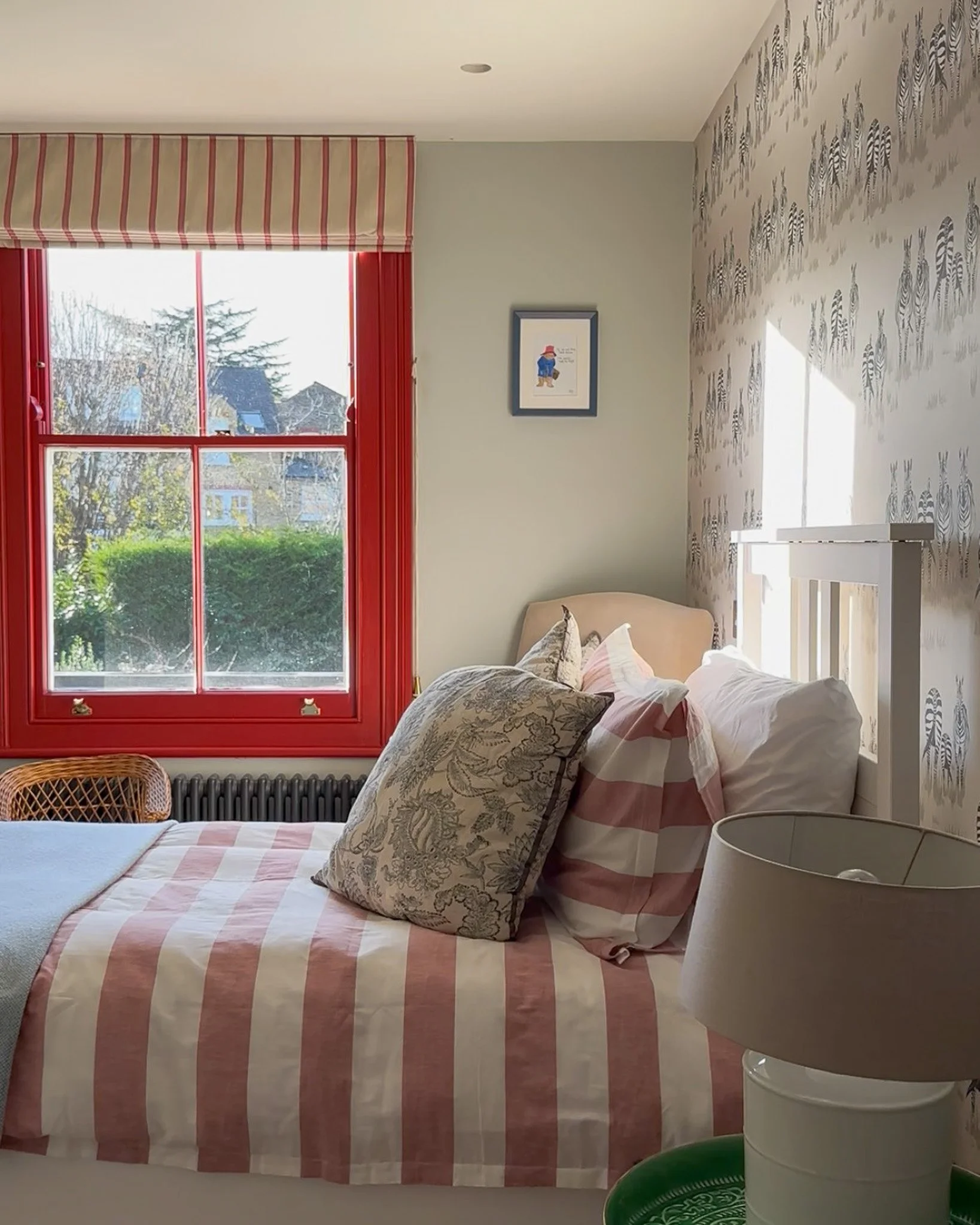
The children’s bedrooms required minimal structural changes. New carpets and decorating refreshed the spaces, while durable flooring resembling sisal (made from recycled plastic) was installed for practicality and easy cleaning.
Beautiful wallpapers from Juliet Travers with playful patterns add personality without overwhelming the rooms. In the bathrooms, patterned tiles from Bert & May contrast with simpler wall finishes—a design strategy that balances interest and longevity. Storage solutions, including ottoman beds, maximise space in line with typical London property constraints.
Bathrooms and Finishes
Bathrooms were finished using fittings from CP Hart and tiles from Bert & May, with gold and antique brass fixtures providing warmth. The family avoided excessive silver tones, opting instead for materials that complement the home’s broader colour scheme.
The downstairs WC combines modern sanitaryware with rustic touches, demonstrating how utility spaces can be both practical and stylish. Mirrors and layered lighting enhance perceived space - an important consideration in smaller rooms.
Principal Suite
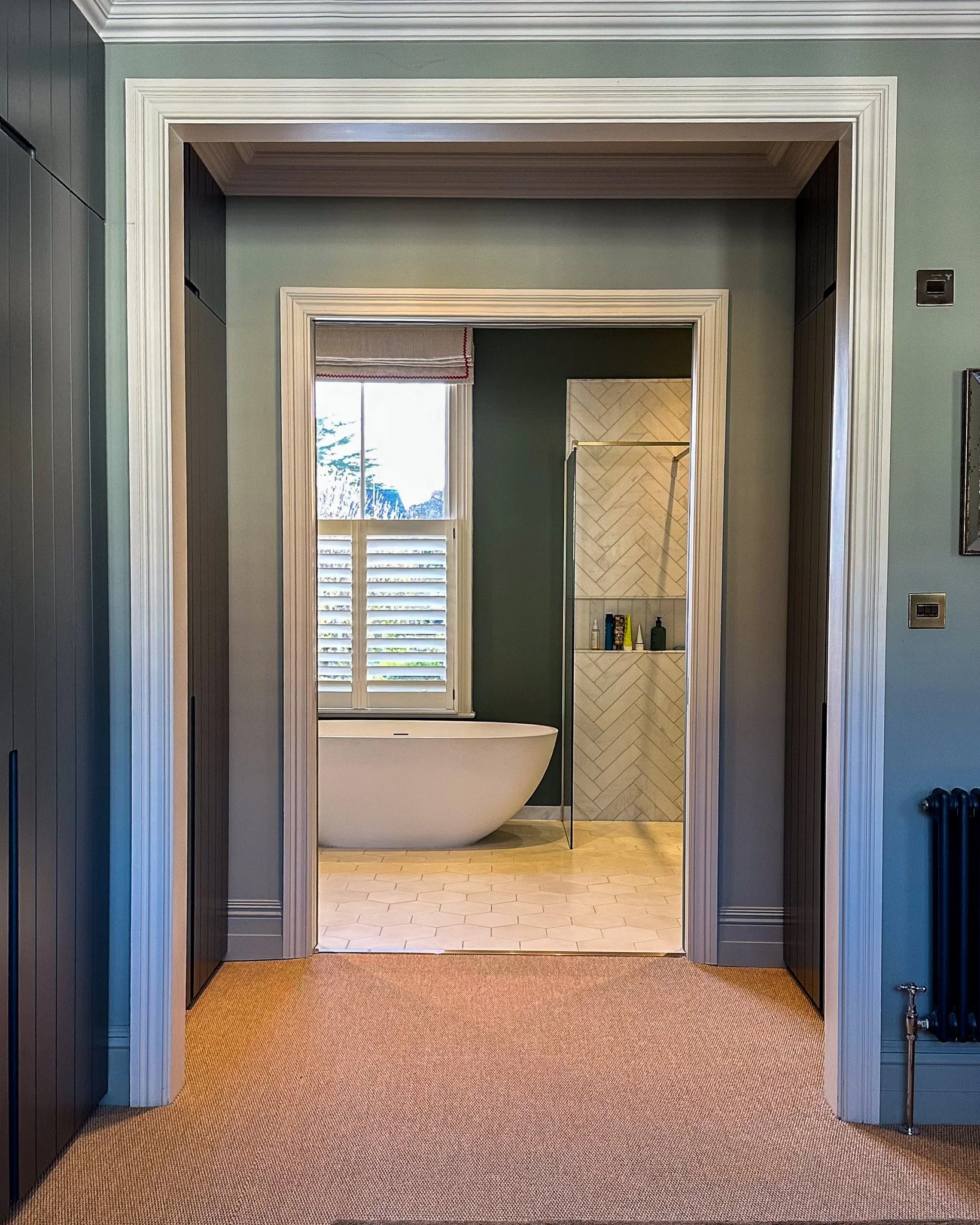
Two original bedrooms were combined to create a larger principal suite with an ensuite bathroom. Period features such as architraves were retained, preserving character while improving proportions.
Because the room is north-facing, lighter finishes and shutters were used to maximise brightness. Bespoke cabinetry provides extensive storage, supporting the family’s preference for minimal clutter. A bench seat within the joinery adds functionality and texture, illustrating how furniture design can shape room ambience.
The ensuite combines a freestanding bathtub with niche shelving and marble-style tiles. A mix of modern and rustic finishes creates visual contrast, while mirrors enhance light and depth.
HomeInspire Downloads
Download Our Complete Renovation Handbook
A step-by-step guide to planning, designing, and delivering your dream home.
Planning your first renovation doesn’t have to be overwhelming. This 62-page step-by-step eBook guides you through every stage - from budgeting and planning to design, permissions, and finishing touches. Packed with expert advice, checklists, and cost guides, it helps you avoid mistakes, stay on track, and bring your dream home to life.
Loft Extension and Roof Terrace
Creating Space and Light
The loft extension adds valuable living space and demonstrates how vertical expansion can transform a London home. Rooflights and vaulted ceilings increase head height and natural light, making the room feel larger than its footprint suggests.
A floor-to-ceiling window overlooks the garden, allowing views from the bed and reinforcing the connection between interior and exterior spaces. This design choice enhances the sense of openness despite the loft’s compact size.
Bar Area and Terrace
A small bar area with refrigeration and storage was included so the family can enjoy the roof terrace without repeatedly returning downstairs. This practical feature encourages outdoor living and reflects lessons learned from previous homes.
The terrace itself serves as a tranquil retreat. Rather than adding an additional bedroom (a common choice in London extensions), the family prioritised open space for relaxation. Southwest-facing orientation and surrounding greenery create a sense of privacy and escape from urban life.
A Tranquil Retreat
The loft and terrace illustrate how extensions can do more than increase floor area - they can improve quality of life. By balancing functional space with leisure areas, the design supports both family routines and personal relaxation.

Exterior Restoration
Brickwork and Period Details
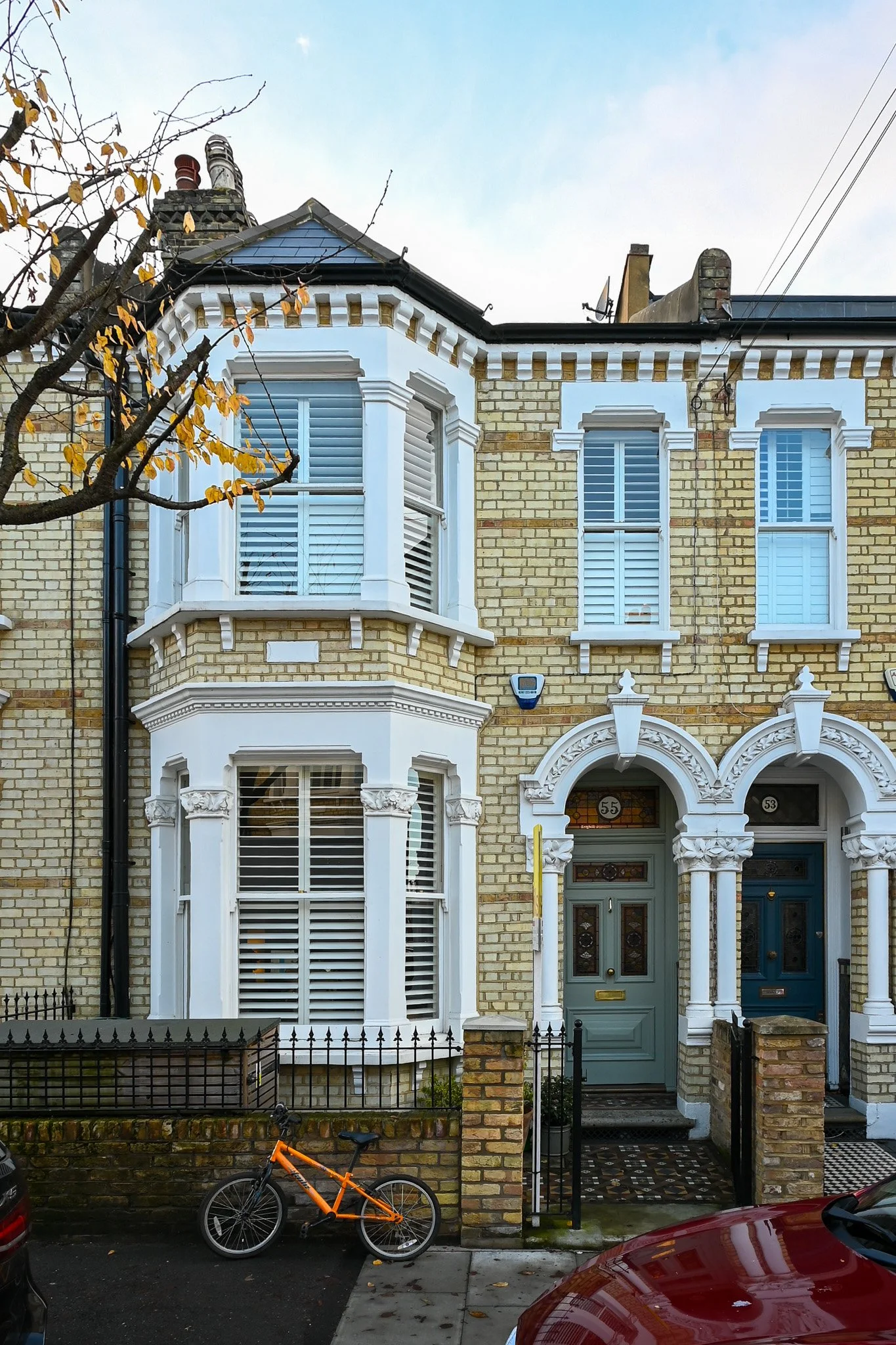
The property’s exterior was originally painted grey. To restore its heritage character, the paint was removed and brickwork repointed. Period features such as window sills and frames were carefully restored, giving the façade a refreshed but authentic appearance.
This approach highlights the value of respecting original materials in period properties. Rather than masking history, the renovation celebrates it - an ethos that runs throughout the project.
First Impressions
The restored façade now complements the interior transformation. Clean brickwork and detailed finishes create strong curb appeal while referencing the building’s Victorian origins. It demonstrates that exterior restoration is as important as interior design in delivering a cohesive home.
Project Info
Location: Wandsworth, London.
Designed by Will Gamble Architects
Contractor: Bloom Builders
Kitchen Supplier: Higham
Glazing Supplier: Maxlight
Bedroom Wallpaper: Juliet Travers
Filmed & Produced by HomeInspire
Photography by InspireMedia
Written by Dan Burge | Founder of HomeInspire
Video Statistics
YouTube Views: 100,000 +
YouTube Impressions: 1,300,000 +
Instagram & TikTok Views: 300,000 +
To see more, watch our full project tour on our YouTube channel!
Share This Story
Get in touch if you’d like to be featured on HomeInspire.
FAQs – Victorian Home Renovations
-
Timelines vary depending on the scale of work, but most extensions and renovations take between 6–18 months. Factors such as planning permissions, material availability, and weather can also impact schedules.
-
Not all extensions require planning permission. Many fall under permitted development rights, but larger or more complex changes may need approval. It’s always best to consult your local planning authority or an architect early in the process.
-
Costs depend on size, specification, and location. Extensions can range widely, so budgeting with contingency funds is sensible. Working with designers and builders early helps to define realistic budgets.
-
It depends on the scale of the project. Some families remain in the property during works (as in this project), while others move out for comfort and safety. Living on-site can reduce costs but requires flexibility.
-
Extensions, improved layouts, and high-quality finishes typically add value. Functional improvements—such as additional bedrooms, bathrooms, or better living spaces—are often attractive to future buyers.
You May Also Be Interested In:
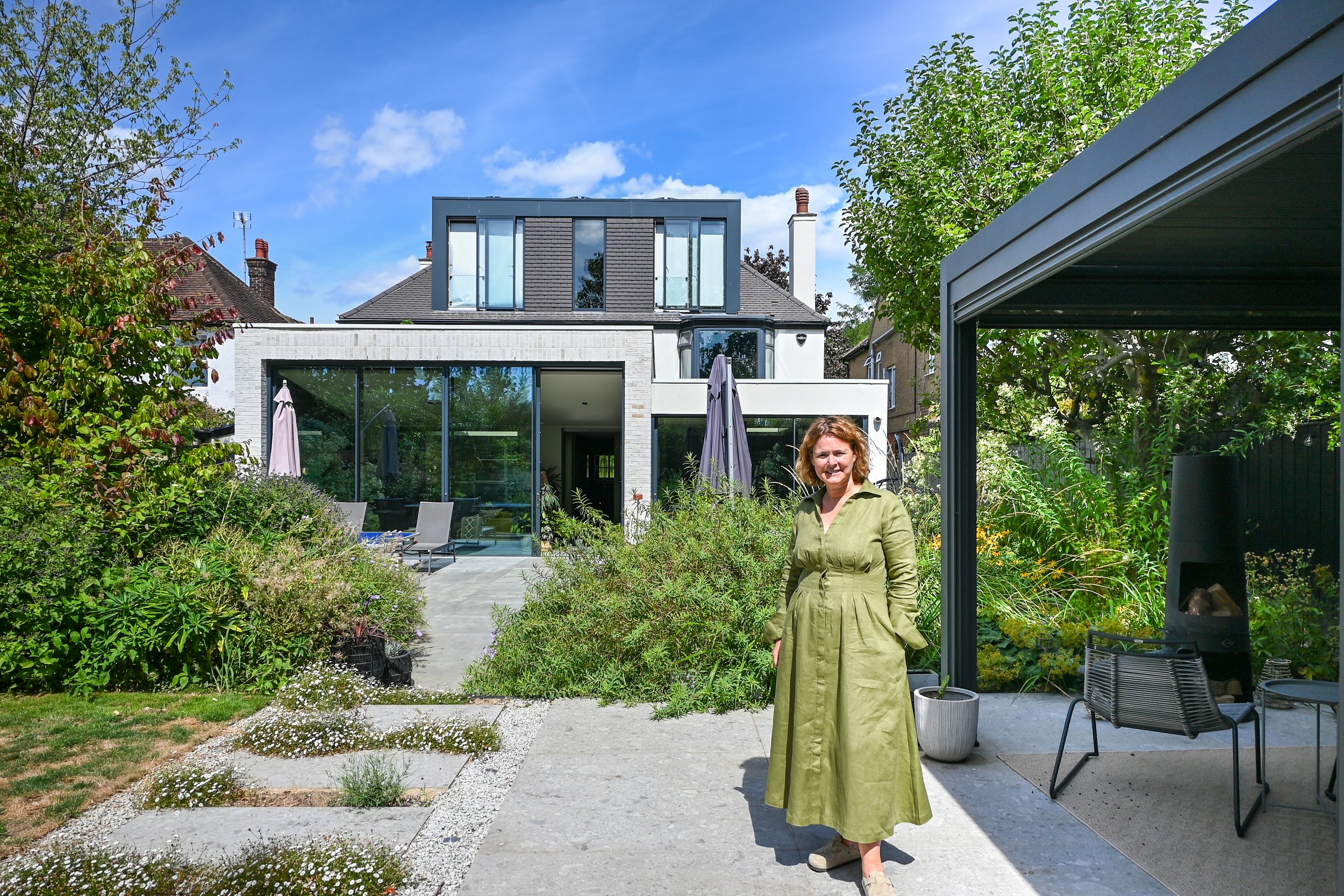
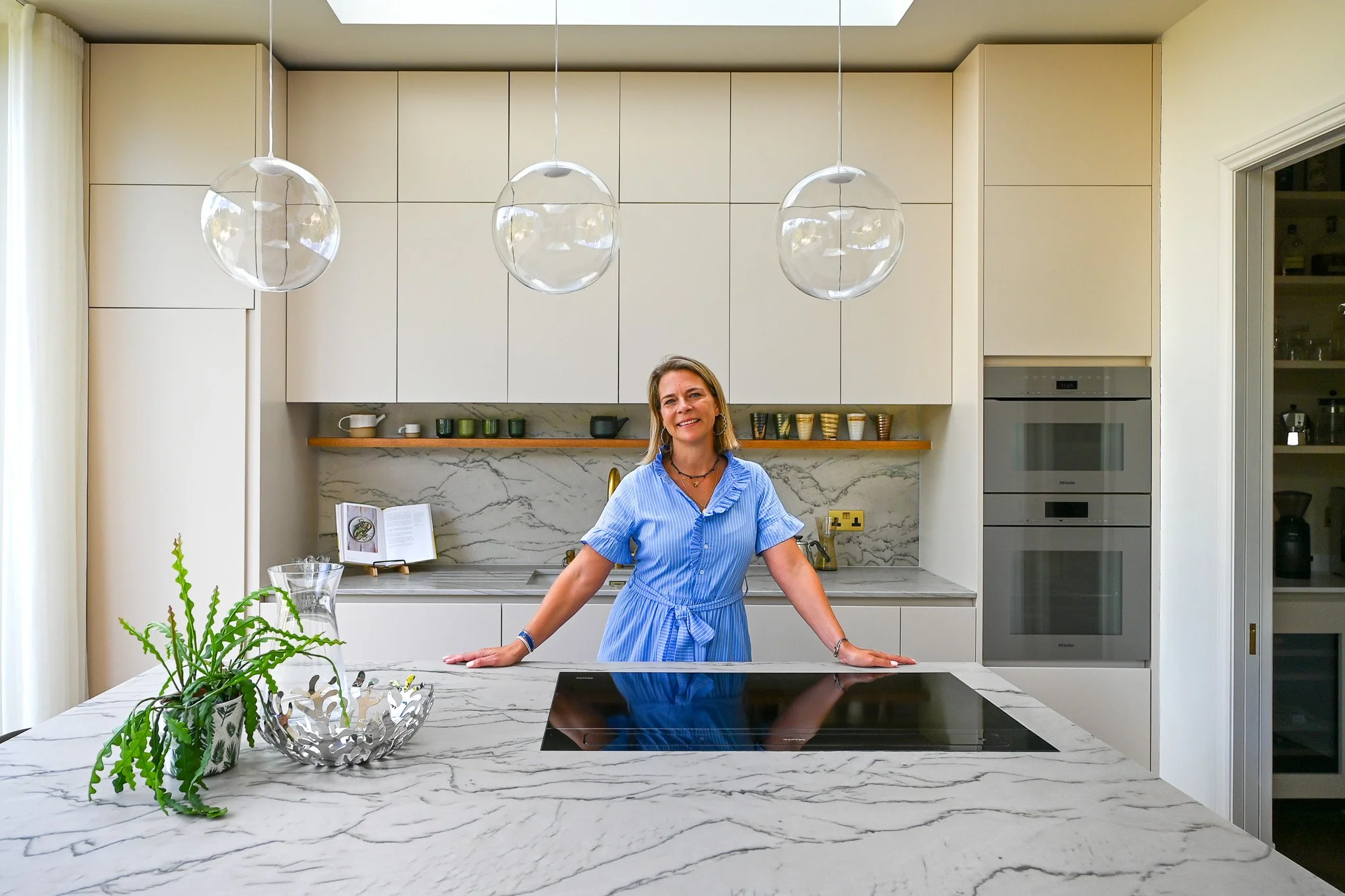


HomeInspire visited interior designer Natasha and her own home in Walthamstow, East London - a Victorian house she bought 26 years ago for £125,000, extended by 6 m along the side return and dug down for extra ceiling height, then colour blocked across walls, shutters, ceiling and floor. With shutters made from scaffolding boards, a yellow rubber kitchen floor and a copper pipe light inspired by the Tube map, the renovation has been built up room by room, turning a cold, run-down house into a home shaped by how Natasha actually lives in it.