
Tonwell Tower: A Conversion of a 1960s Brutalist Water Tower into a Family Home in Hertfordshire.
Produced & Written by Dan Burge | 4 January 2026
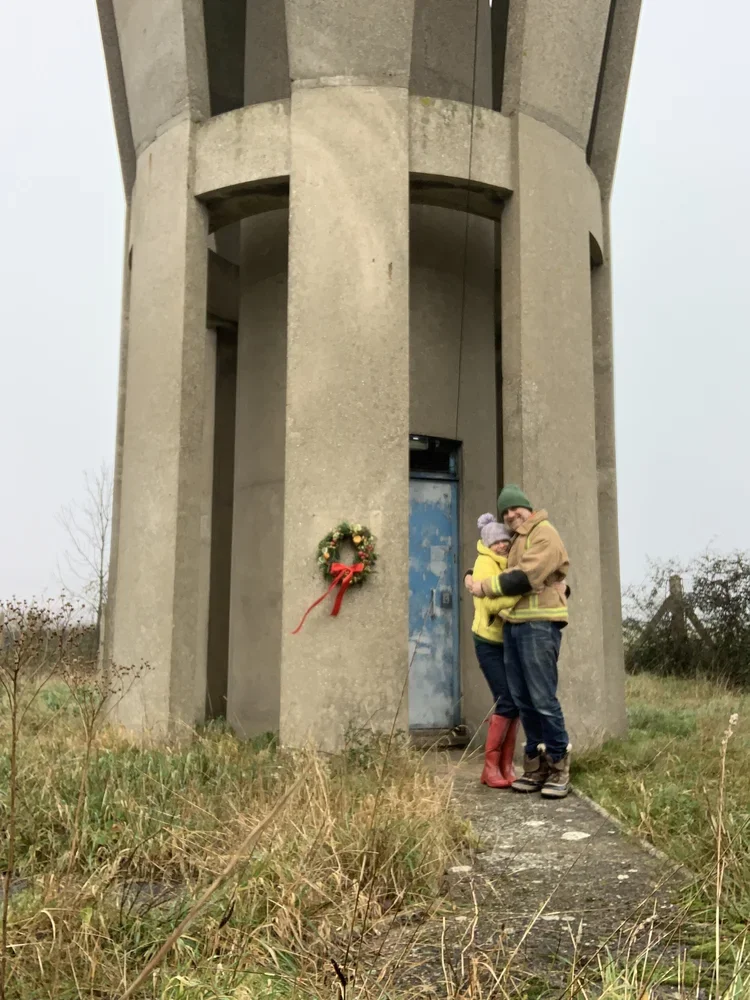
We were invited by Industrial Designer Matt, to film & feature his water tower conversion back in September 2025. Matt and his wife Alli converted this brutalist 1960s water tower in late 2024 after four years of design and construction.
In this HomeInspire project tour, we take you inside an extraordinary example of adaptive reuse: a former 1964 concrete water tower, designed by architect Edmund Percy, reimagined as a vertical family home and holiday retreat.
Purchased sight-unseen and already carrying planning consent from the previous owners, the tower presented a rare opportunity and a formidable challenge. From access and logistics to conservation constraints and structural interventions, every part of the build demanded careful thought and inventive problem-solving.
“We bought it essentially blind,” Matt explains. “We’d never been inside it. But we’d spent ten years renovating our previous home, so when this opportunity came up, we felt we had the skills, and the appetite, to take it on.”

From 1960s Water Tower to Modern Hertfordshire Home
From Infrastructure to Inhabitable Space
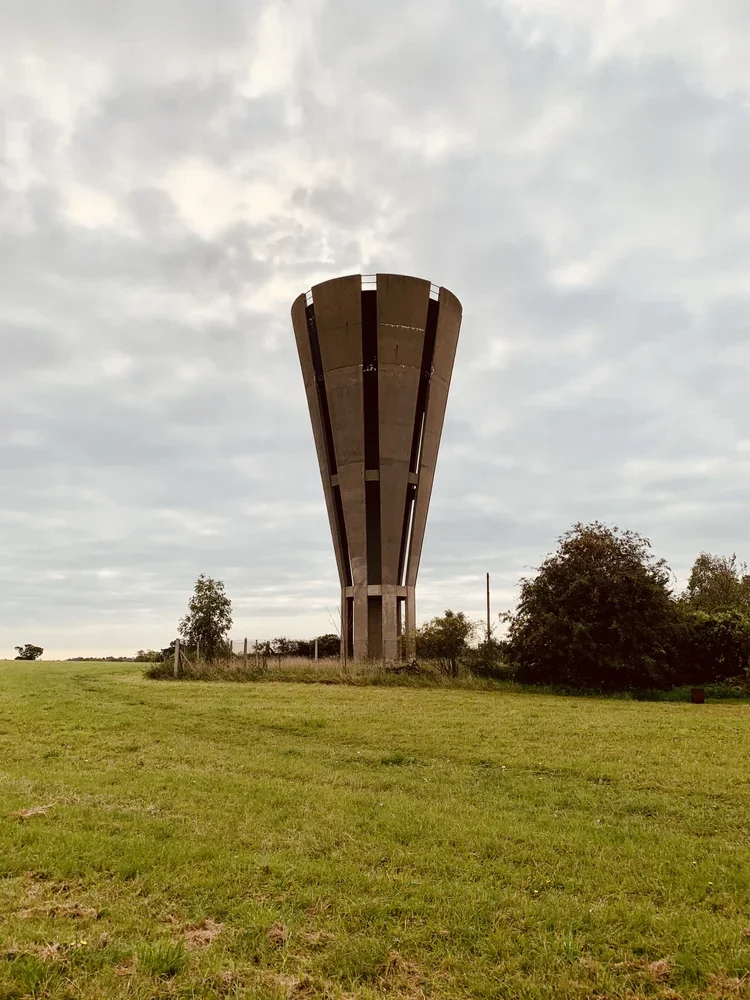
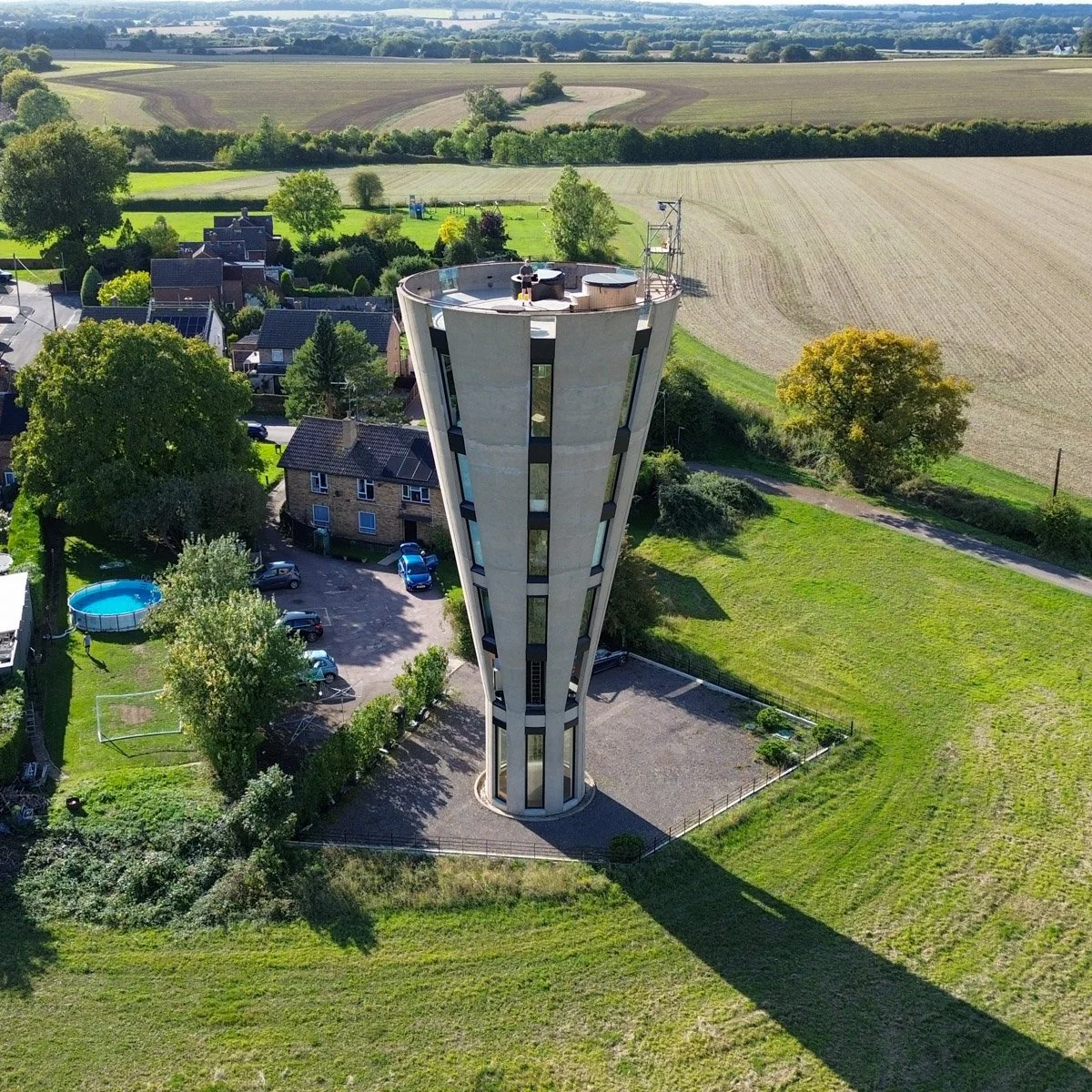
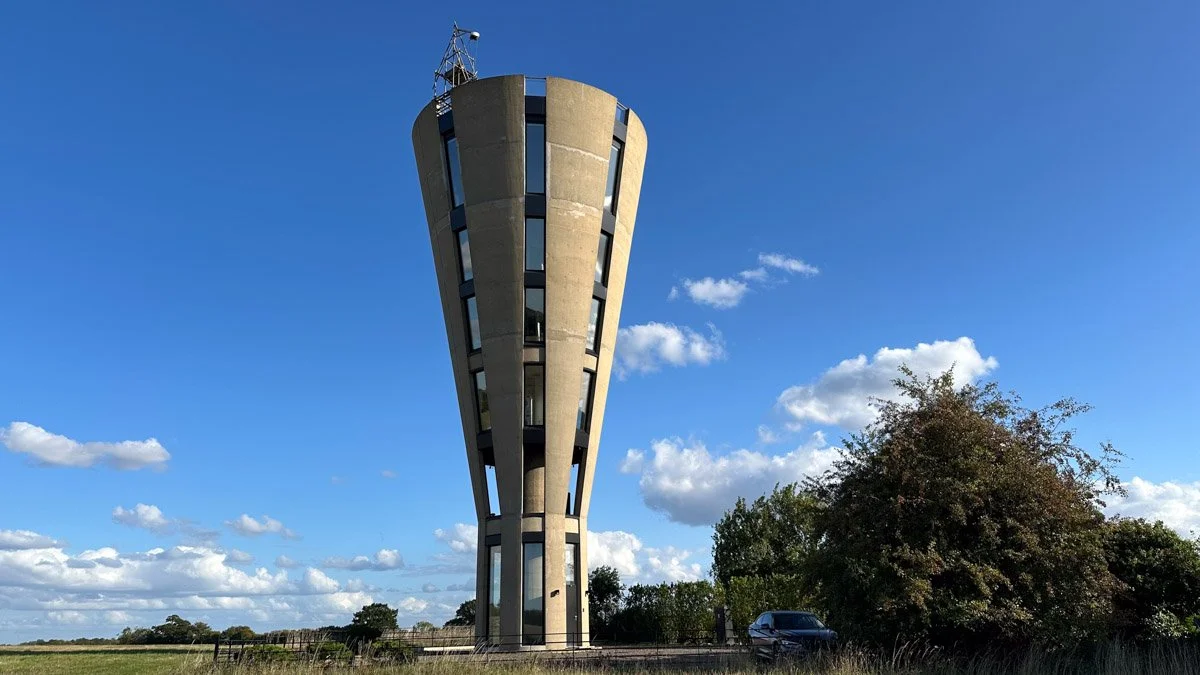
Originally built to serve the surrounding villages and parkland, the water tower’s role was simple: store large volumes of water at height to provide pressure during peak demand. Standing 23 metres tall, its toroidal tank, concrete fins, and central access shaft formed a piece of robust, unapologetic infrastructure.
Rather than fight the building’s geometry, Matt embraced it. “If Percy had designed this to be converted one day, he couldn’t have done a better job,” he says. The spacing of the concrete fins aligned perfectly with new windows and doors, while the ring beams between levels allowed new floors to slot naturally into place.
Crucially, the tower’s external silhouette remains unchanged. Plant rooms, services, and even the heat pump are all contained within the original profile, preserving the building’s presence in the landscape and respecting its architectural integrity.
Designing a Vertical Family Home Inside a Brutalist Structure
Designing from the Top Down
The guiding principle behind the layout was simple: the reason you come to a water tower is the view. As a result, the main living space sits at the very top, within the former water tank, with two levels of bedrooms stacked below and utility spaces at the base.
“We designed it from the top down,” Matt explains. “The views, the peace, the sense of elevation - that’s what makes this place special.” The result is a home that unfolds vertically, with each level carefully programmed to minimise unnecessary trips up and down the stairs.
In total, the tower contains four double bedrooms, all en-suite, alongside plant rooms, a utility level, and a rooftop viewing platform. The journey upward becomes a central part of the experience, culminating in a dramatic reveal at the top.
Staircase Design and Fire Safety in a 23-Metre Tower Conversion
A Vertical Circulation Core
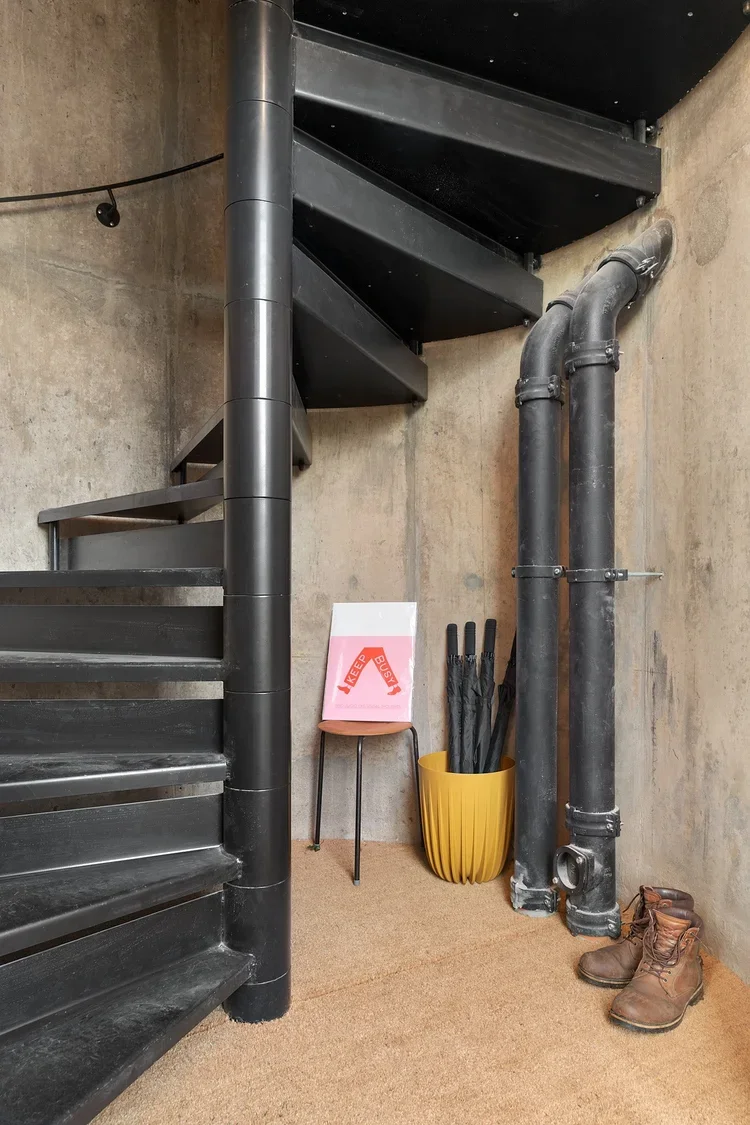
At the heart of the building is the original access shaft, now transformed into a sculptural circulation space. Originally accessed only by ladder, the shaft now contains a bespoke staircase system designed and assembled by Matt himself.
Each stair section was laser-cut, folded, welded, powder-coated, and then installed piece by piece on site. “It was incredibly hard work,” he admits, “but also deeply satisfying - like building a giant Lego set.”
Fire safety was a major consideration in a 23-metre-tall building with a single escape route. Every door and wall is fire-rated, the building is fully sprinklered, and the shaft itself acts as a protected refuge, ensuring a safe route out from every level.
Bedroom Design Inside a Circular Water Tower
Bedrooms in the Round
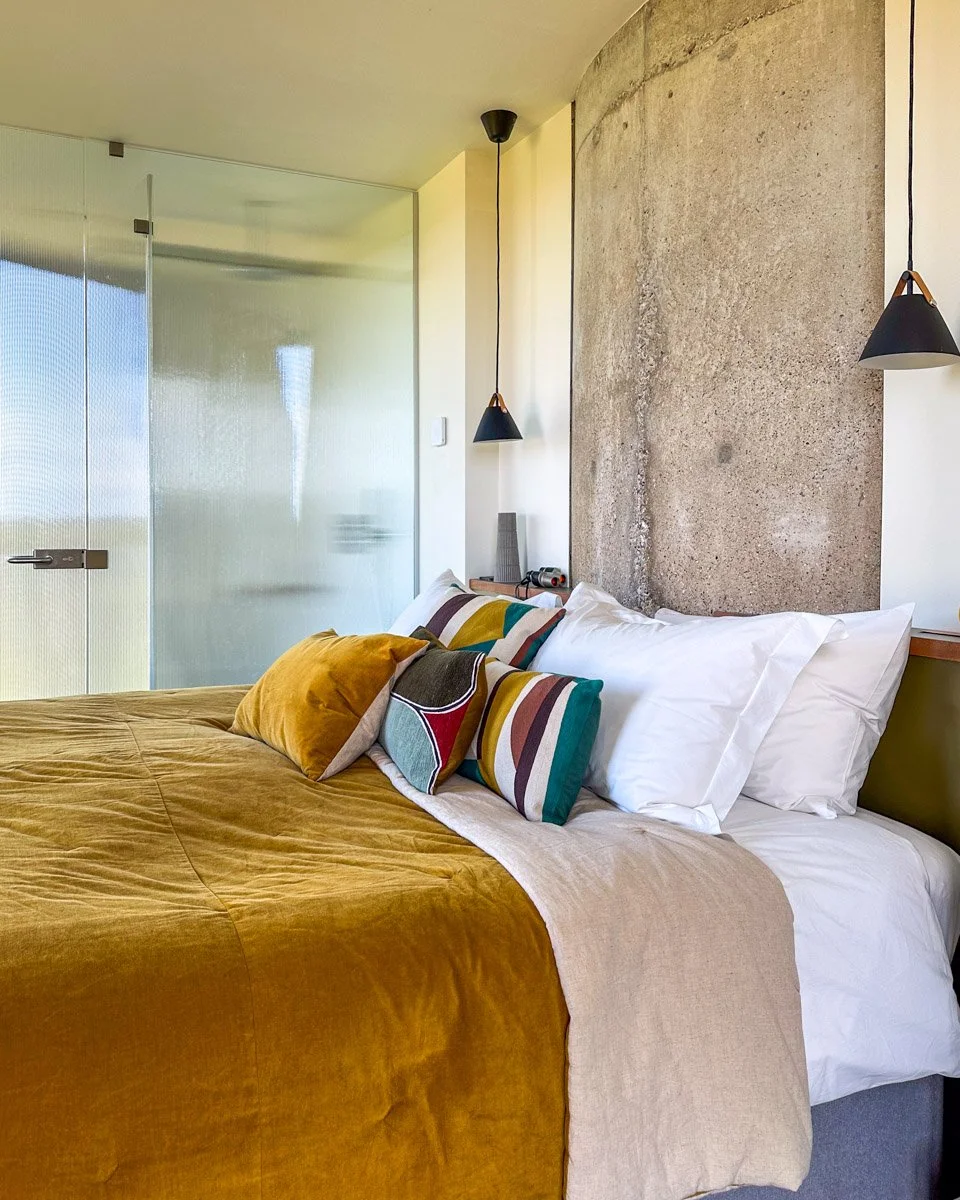
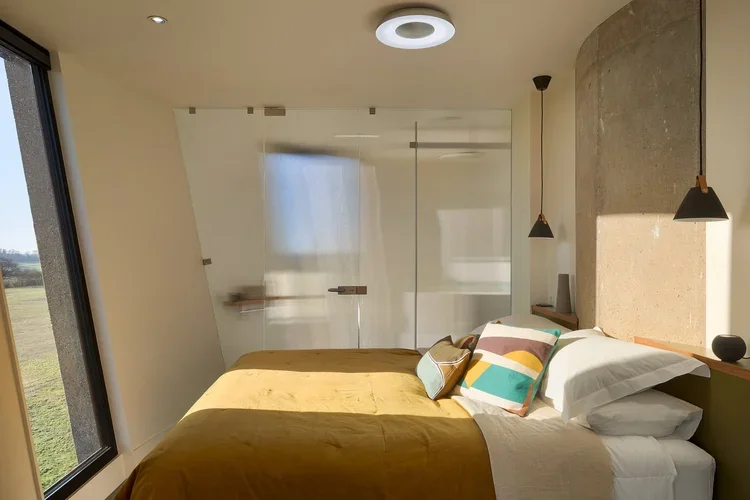
The first two bedroom levels sit within the narrowing diameter of the tower, creating intimate yet light-filled spaces. Despite their compact footprints, each room comfortably accommodates double or king-size beds, with en-suite bathrooms separated only by reeded glass walls.
Mid-century influences run throughout. Canary yellow accents, hardwood trims, and period-appropriate furniture nod to the tower’s 1960s origins, while resin floors provide a seamless, durable surface well suited to the building’s curved geometry.
“The tower is all about light,” Matt explains. “It felt wrong to block any of it off.” Glass partitions allow daylight to flow freely through bedrooms and bathrooms alike, reinforcing the sense of openness despite the building’s solid concrete origins.
Living with Exposed Concrete and Modern Insulation
Living with Concrete
Concrete plays a defining role in the building’s character, but exposing it internally required restraint. While the exterior structure remains proudly brutalist, the internal living spaces are carefully insulated to avoid condensation and heat loss.
Sections of the central shaft are left exposed within the bedrooms, offering tactile reminders of the building’s industrial past. Elsewhere, the concrete is softened by timber, textiles, and warm colour palettes, striking a careful balance between heritage and comfort.
Smart lighting and home automation further enhance daily life. Every light is programmable, with scene settings tailored to different times of day - including nighttime routes that gently guide occupants without disturbing others.
The Circular Kitchen and Living Space Inside the Former Water Tank
The Tank
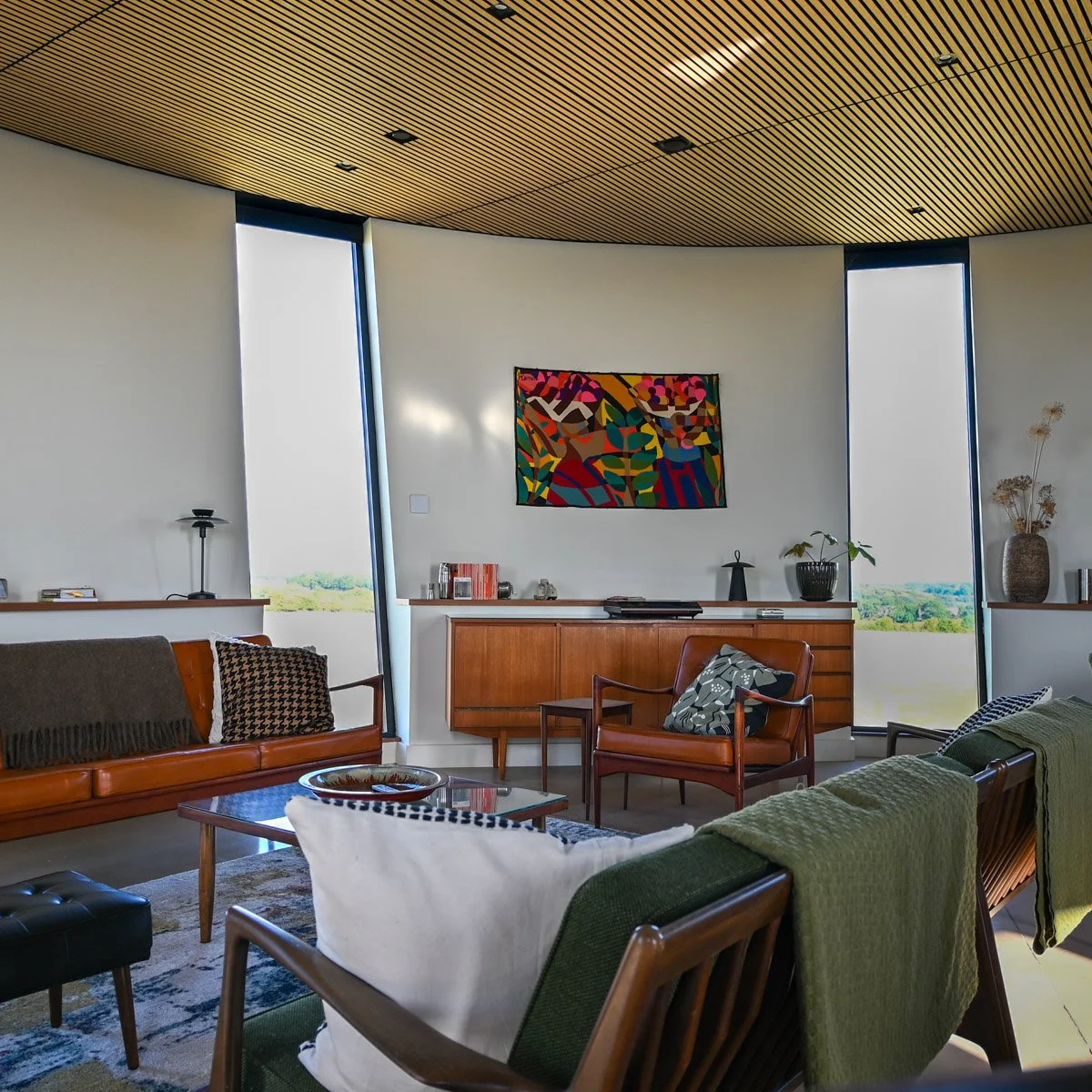
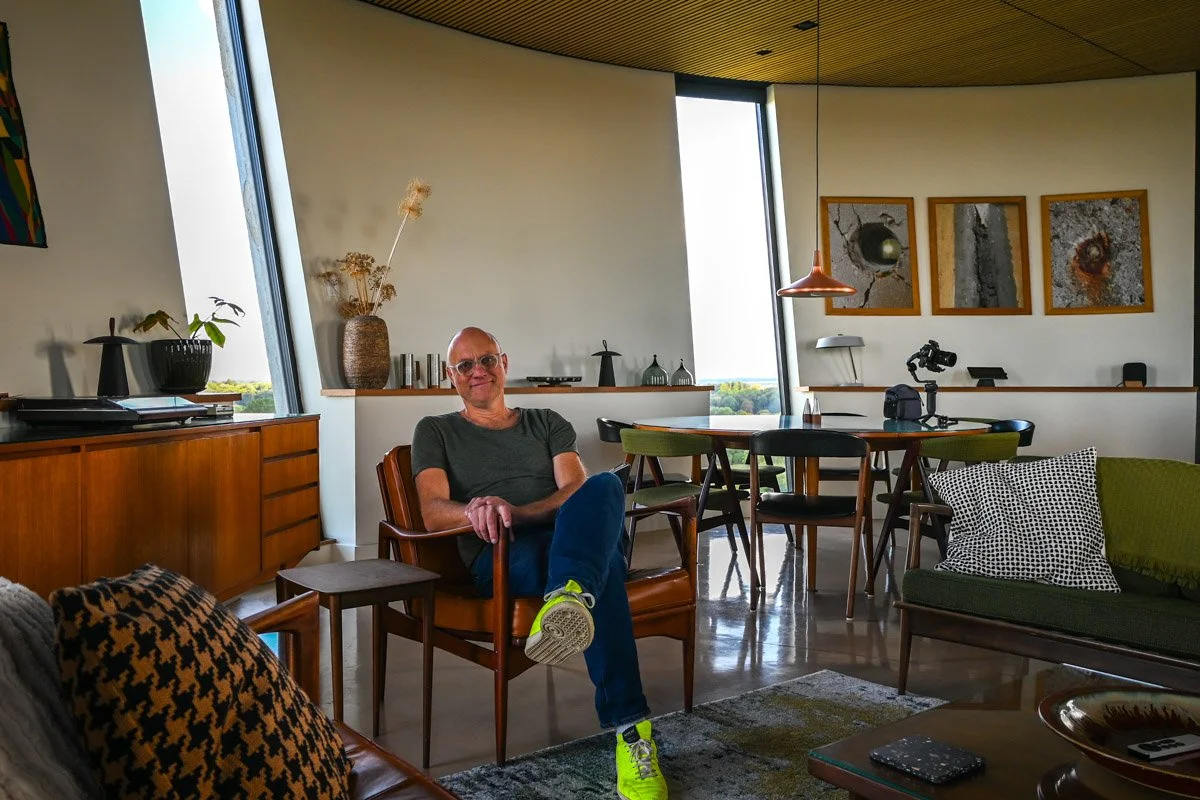
A Circular Living Space At the top of the tower, the former water tank has been completely transformed into an open-plan kitchen, dining, and living space. Measuring around 10 metres in diameter, it comfortably hosts eight for dinner or many more for drinks and gatherings.
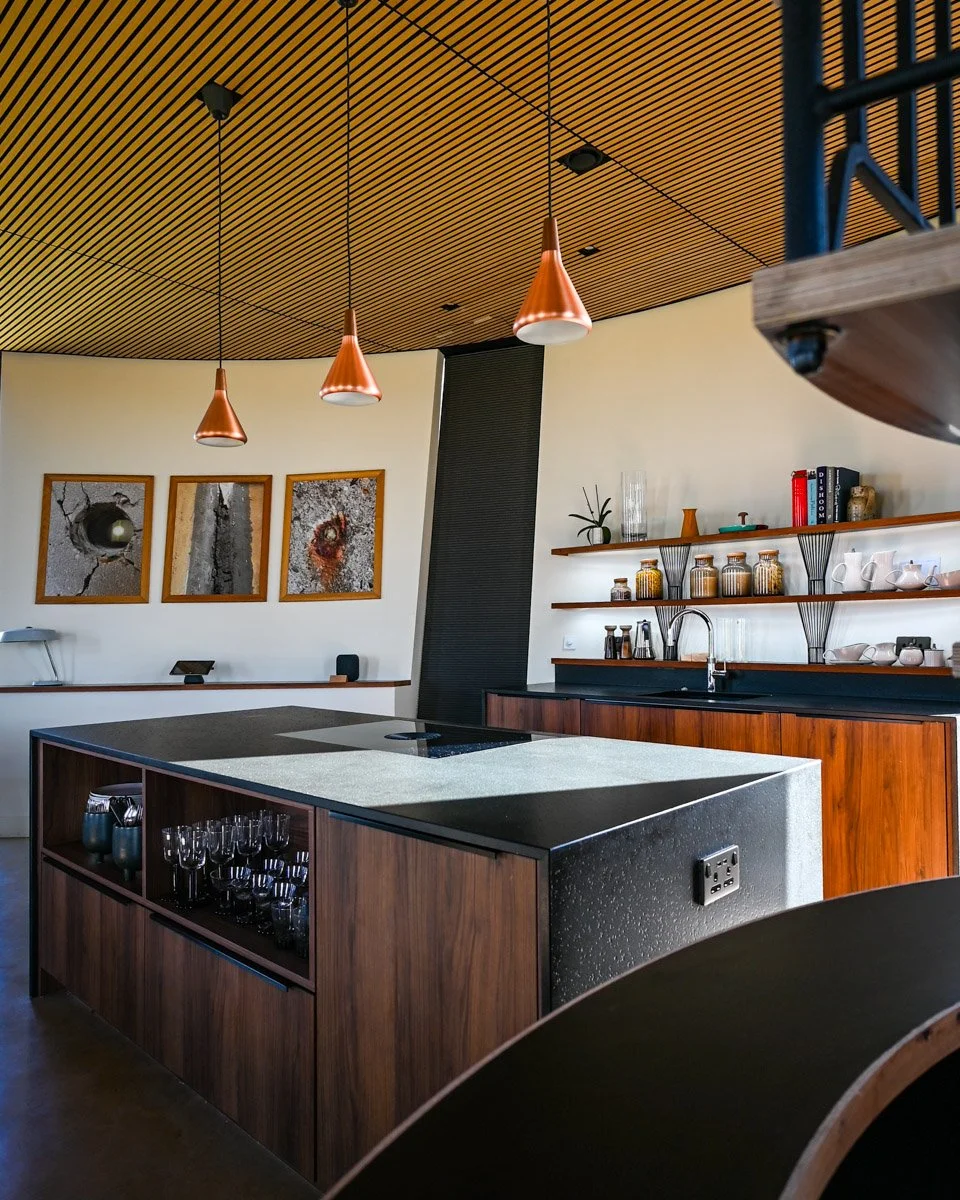
The compact kitchen, designed with Tower Kitchens, includes induction cooking, integrated appliances, and carefully planned storage, all finished in walnut cabinetry and black granite worktops inspired by the era of the building.
Acoustics were a key challenge in a circular room with hard surfaces. A specially designed ceiling helps absorb sound, preventing echoes and making the space comfortable for conversation, even when full.
Sustainable Retrofit: Heating and Energy Efficiency in a Water Tower Conversion
Sustainability and Comfort at Height
Underfloor heating powered by a high-efficiency Daikin heat pump keeps the tower warm throughout winter, delivering impressive energy performance. Automated blinds respond to temperature and sunlight, helping to manage thermal gain across the extensive glazing.
Lighting design considers not just the interior but the tower’s appearance from afar. Smart bulbs allow the building to subtly change character for different occasions, while blackout blinds ensure it never becomes an eyesore for neighbours or wildlife.
“It suddenly hit me that we weren’t just designing lighting for ourselves,” Matt says. “We were designing lighting for the landscape as well.”
HomeInspire Downloads
Download Our Complete Renovation Handbook
A step-by-step guide to planning, designing, and delivering your dream home.
Planning your first renovation doesn’t have to be overwhelming. This 62-page step-by-step eBook guides you through every stage - from budgeting and planning to design, permissions, and finishing touches. Packed with expert advice, checklists, and cost guides, it helps you avoid mistakes, stay on track, and bring your dream home to life.
Adaptive Reuse in the UK: From Industrial Infrastructure to Holiday Let
A Building That Gives Back
Now completed, the tower is rented out as a holiday let, allowing others to experience life inside this extraordinary structure. For Matt, the project has been as much about learning as it has about making.
“It’s been more than cooperative,” he says. “The building has contributed ideas back to us. Its geometry has guided the design at every stage.”
From industrial infrastructure to inhabitable sculpture, the water tower stands as a powerful example of what’s possible when imagination, patience, and respect for architecture come together.
Project Info
Location: Tonwell, North London
Kitchen Designer: Tower Kitchens
Sanitaryware: ROCA
Filmed & Produced by HomeInspire
Photography by InspireMedia
Written by Dan Burge | Founder of HomeInspire
Video Statistics
YouTube Views: 950,000 +
YouTube Impressions: 15,000,000 +
Instagram & TikTok Views: 250,000 +
To see more, watch our full project tour on our YouTube channel!
Share This Story
Get in touch if you’d like to be featured on HomeInspire.
You May Also Be Interested In:
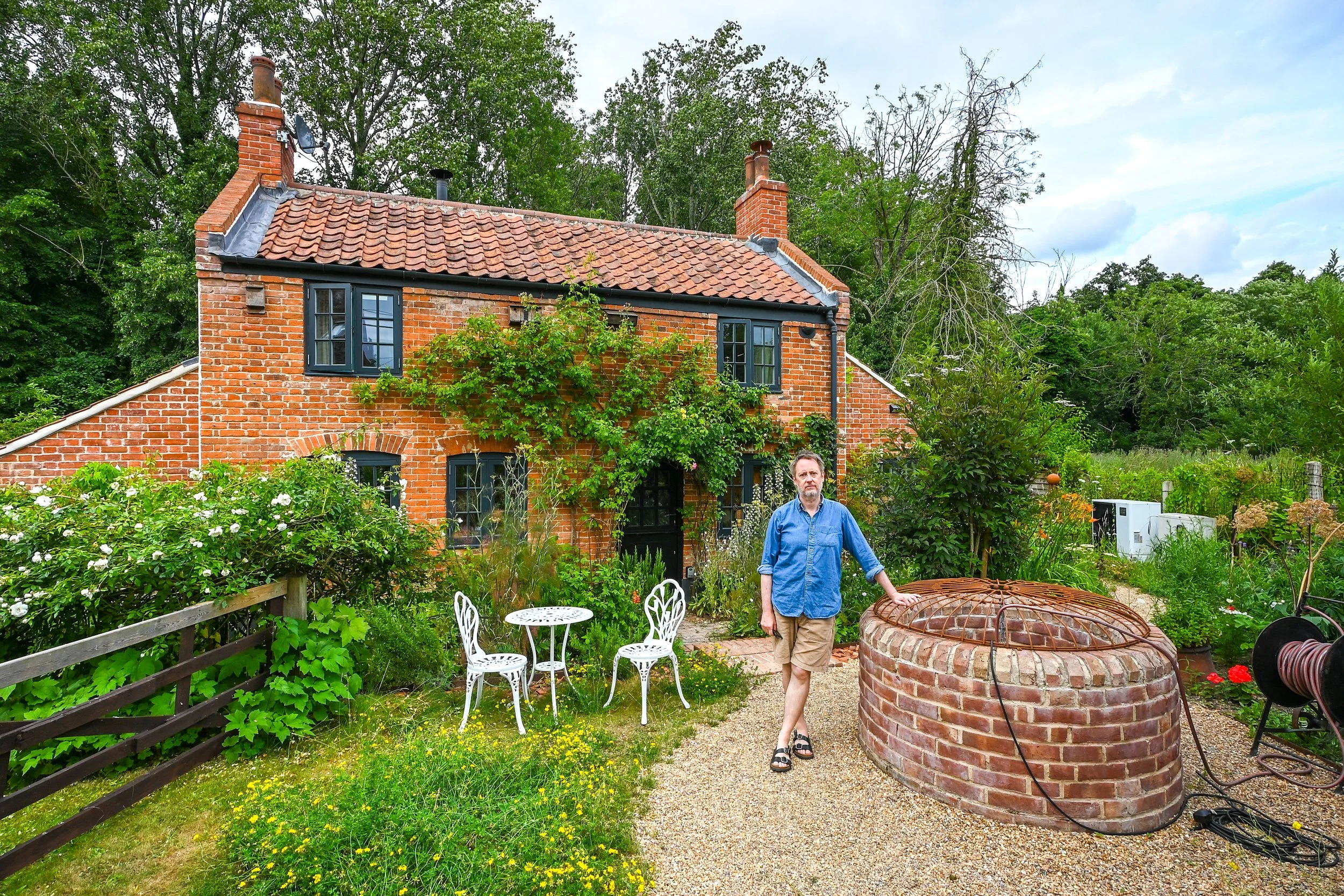
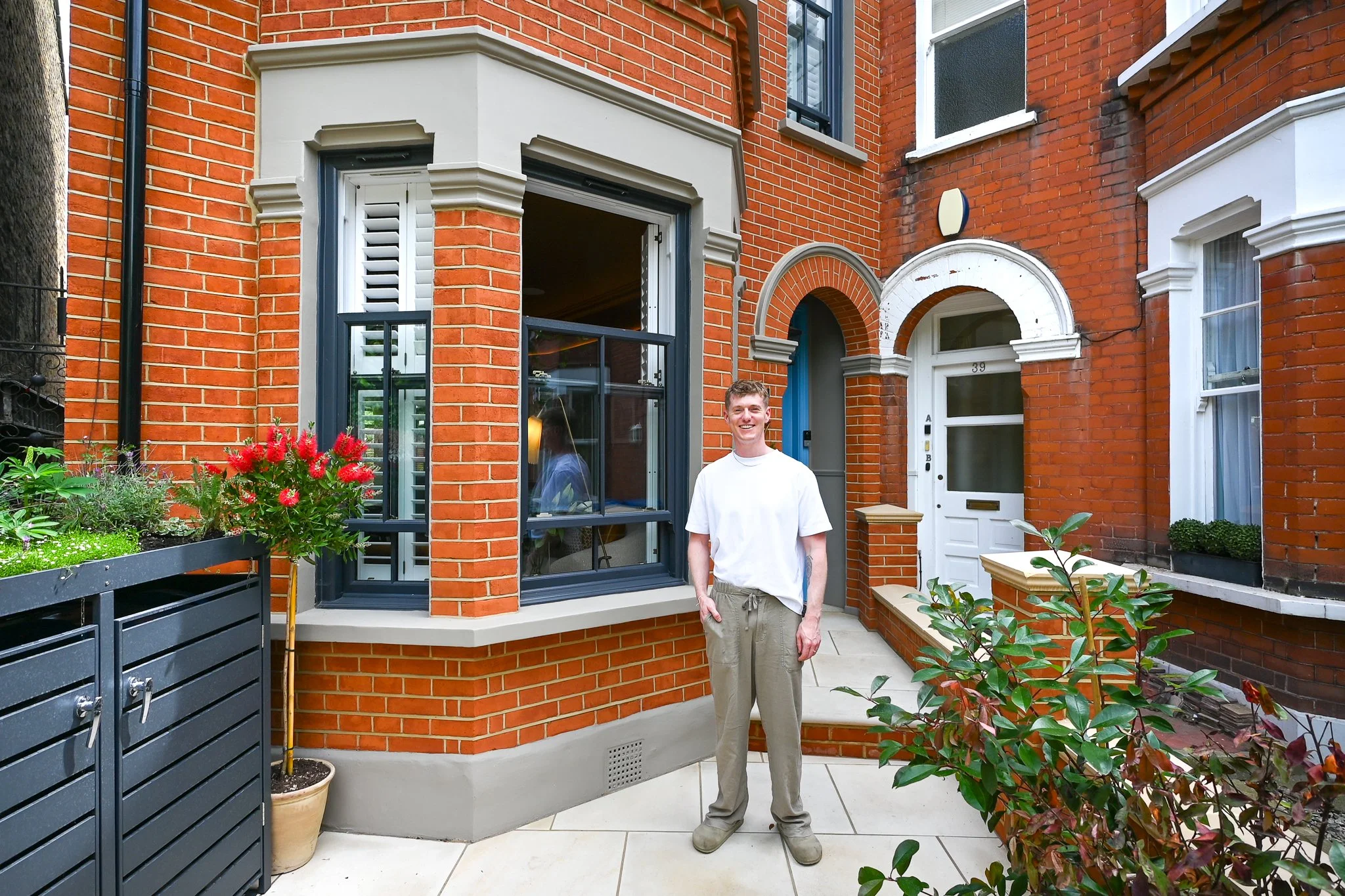


HomeInspire visited The Windmill in Suffolk, where Natalie and Steve took on a derelict 1891 mill and spent years converting it into a five-storey holiday home - solving problems nobody had faced before, from a hand-folded zinc roof to a bath winched up a curved staircase.