
Meadowbank: A Contemporary Addition to an Arts and Crafts Home in Manchester by Guy Taylor Associates
Produced & Written by Dan Burge | 11 January 2026
We filmed this project with Chris Rogers from Guy Taylor Associates, an award-winning architectural design studio with offices in Manchester, Newark, and Derby, in South Manchester.
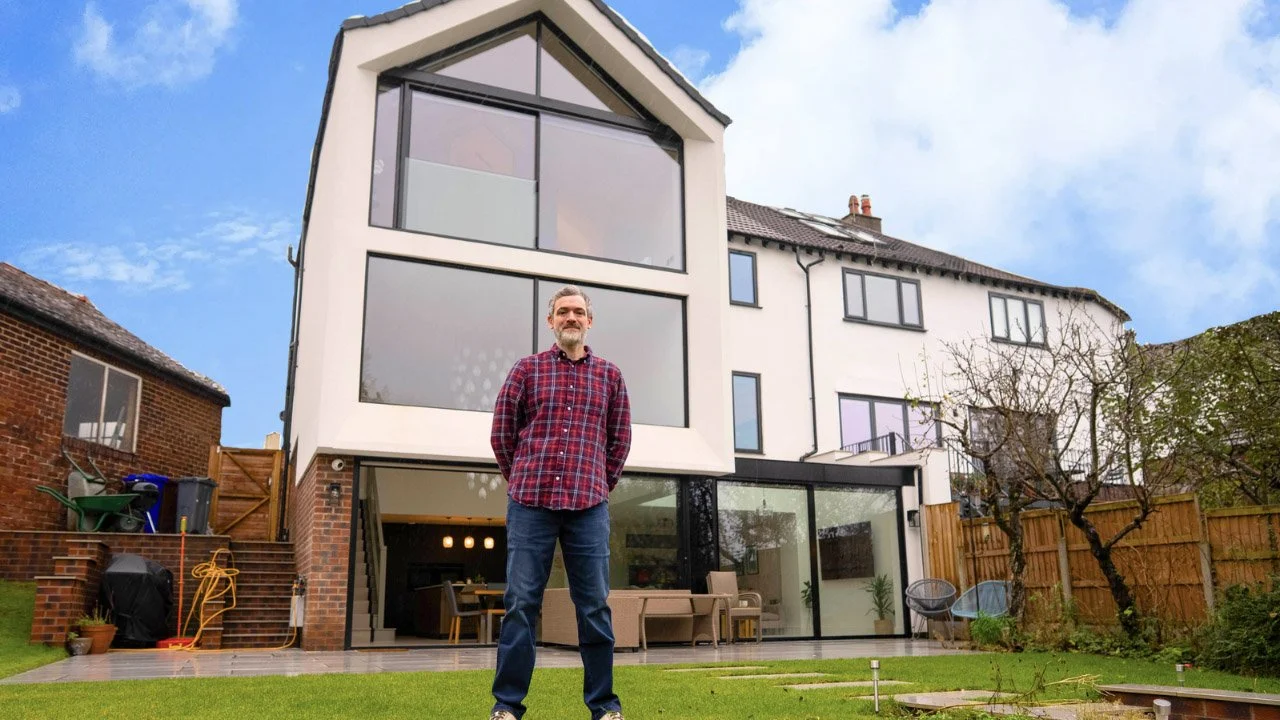
In this project tour, we take you inside a beautifully restored and extended Arts and Crafts home located within a Conservation Area in South Manchester. Built around 1910 as part of an estate inspired by the Garden Village movement, the property had fallen into disrepair and lost many of its original character features. Guy Taylor Associates were commissioned to restore and reinstate those details, while adding a bold, contemporary three-storey extension that transforms how the family lives in the home.
The result is a house of two distinct halves — a painstakingly restored period exterior that looks entirely at home on its leafy estate, and a dramatic, light-filled modern addition that opens up entirely new ways of living. The project adds large open-plan living spaces, a principal bedroom suite with dressing room and ensuite, a study, gym, and utility room across a newly unlocked lower ground floor.
In this tour, we walk through the entire house with Chris, hearing his insights into the architectural thinking behind both the restoration and the extension — from the philosophy of old meets new, to the technical challenges of lowering an entire basement level, to the clever detailing that makes the house feel connected at every level.
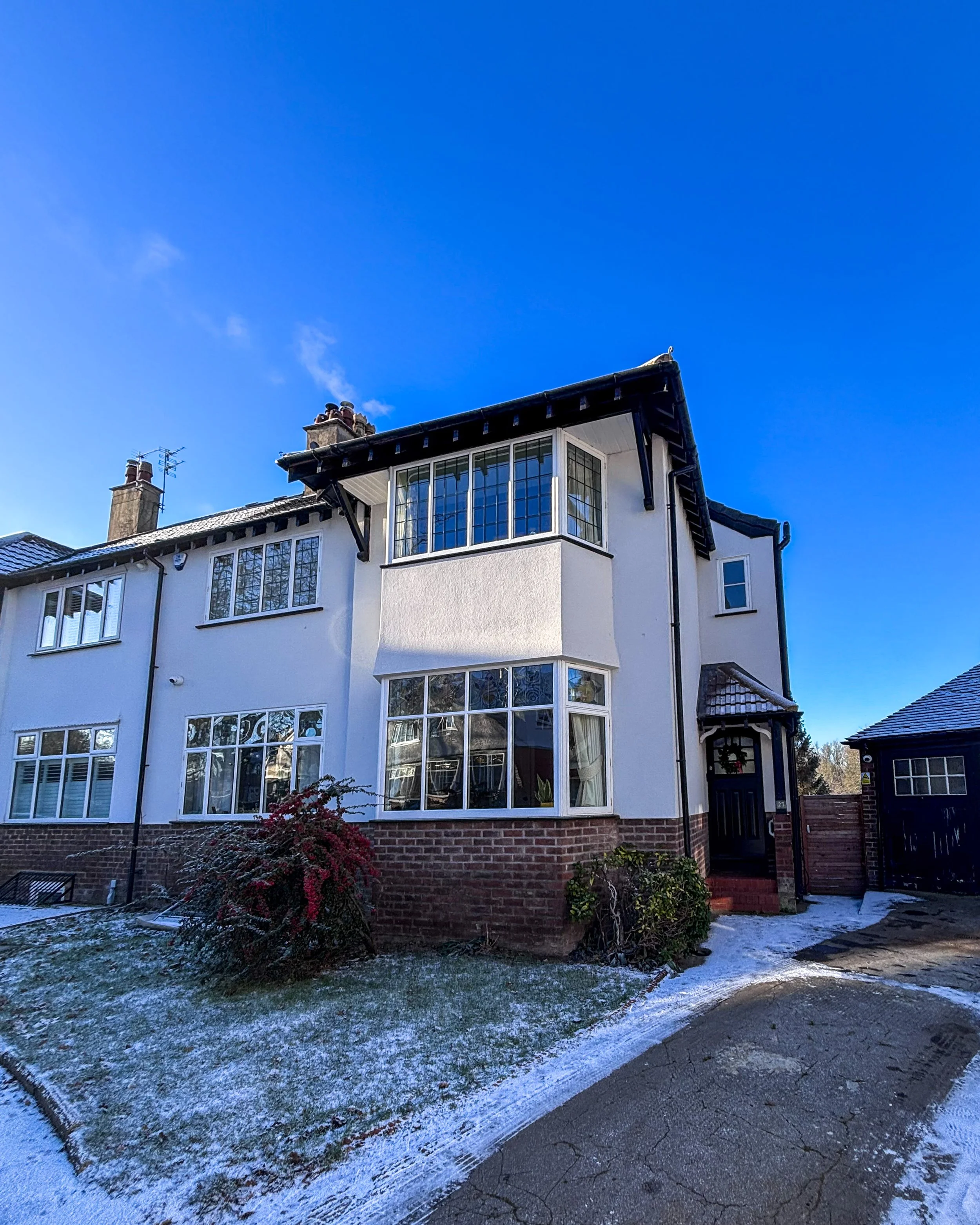
"One of the really exciting aspects of the house is that it really does look like all the other houses from outside," Chris explains. "The modern intervention is not really understood until you walk through the front door."
Restoring a Garden Village Home
A Clear Boundary Between Old and New
The original property sits within a Conservation Area estate that draws on the principles of the Garden Village movement — a rich mix of architectural styles, variation across the streetscape, and generous green spaces. Guy Taylor Associates were deliberate in their approach to the existing building, establishing a clear boundary between the old and the new rather than attempting a seamless blend.
As Chris explains, this decision was rooted in respect for the building's history: "Our intervention was to have a distinct boundary between the old and new — really just to preserve the timeline of the building and to enhance and preserve the original architecture."
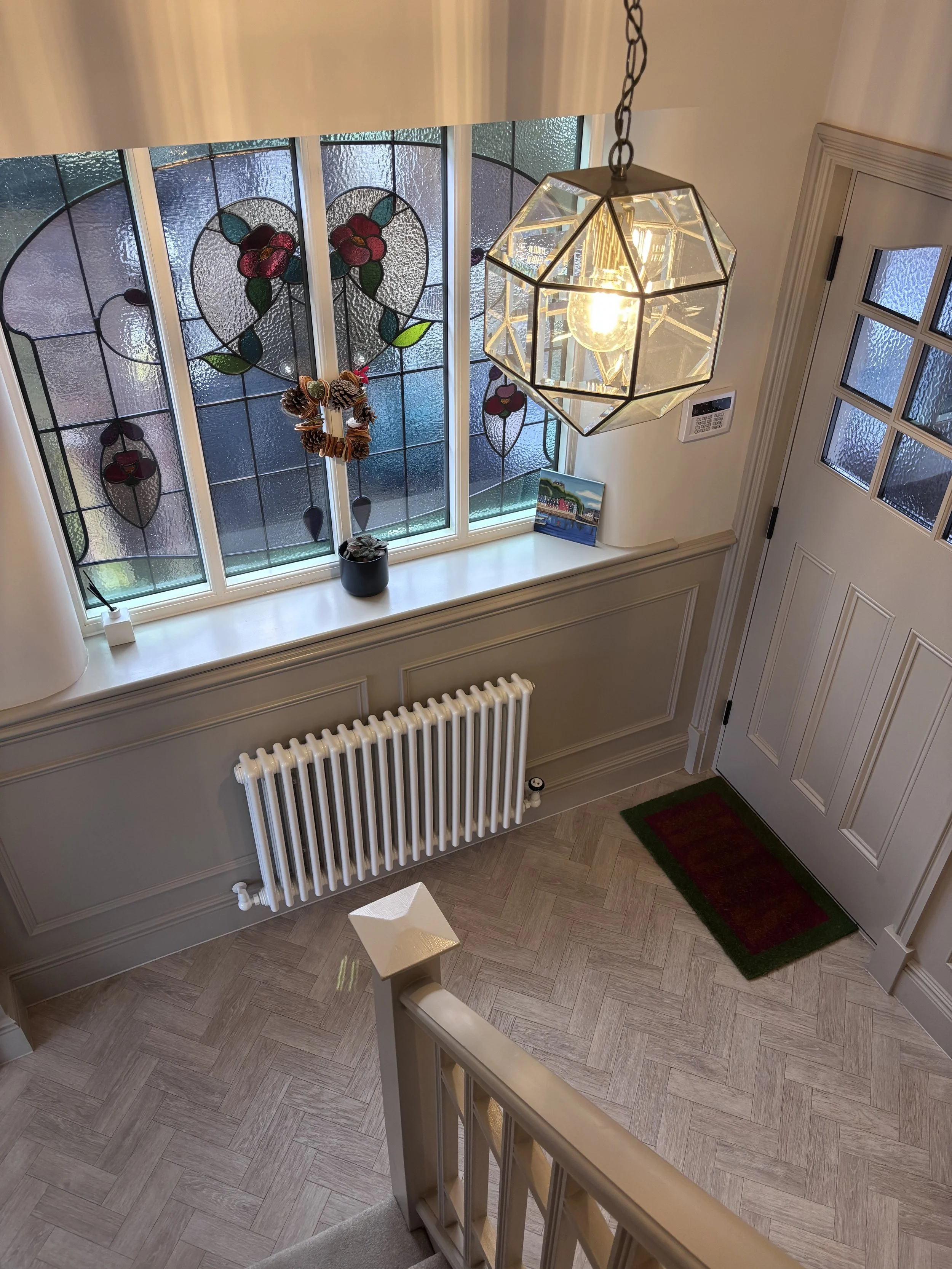
Before any extension work could begin, the existing house required significant restoration. The property had lost many of its period features over the decades, and reinstating them was central to the brief. This included repairing and encapsulating the original stained glass within new triple glazing, reinstating the staircase and spindles that had been lost entirely, restoring the coving and panelling, and applying an insulated render externally to improve the building's thermal performance. Heritage windows with original lead glazing bars were retained on the front elevation, keeping the street presentation authentic to the period.
The contrast between front and rear is deliberate and striking. While the front of the house reads as a carefully preserved Edwardian Arts and Crafts home, the rear reveals the full extent of the contemporary addition — all slim-framed aluminium windows, clean lines, and expansive glazing.
The Extension: Unlocking a Hidden Floor
A Three-Storey Addition with a Surprising Secret
The extension adds 3.6 metres to the side of the property across three storeys, connected to the original house via a single-storey glazed link at lower ground floor level. But the most transformative element of the project isn't the extension itself — it's what happened beneath the existing building.
The original lower ground floor, which ran beneath the footprint of the house, was barely usable. As Chris recalls, "you could barely stand up in it — it was sort of 1.5 to 1.8 metres at best." The solution was to lower the entire basement slab by 80 centimetres, a technically demanding piece of work that required entirely new foundations even on this semi-detached property, and significant structural engineering input from Studio One, the Manchester-based structural engineers who collaborated on the project.
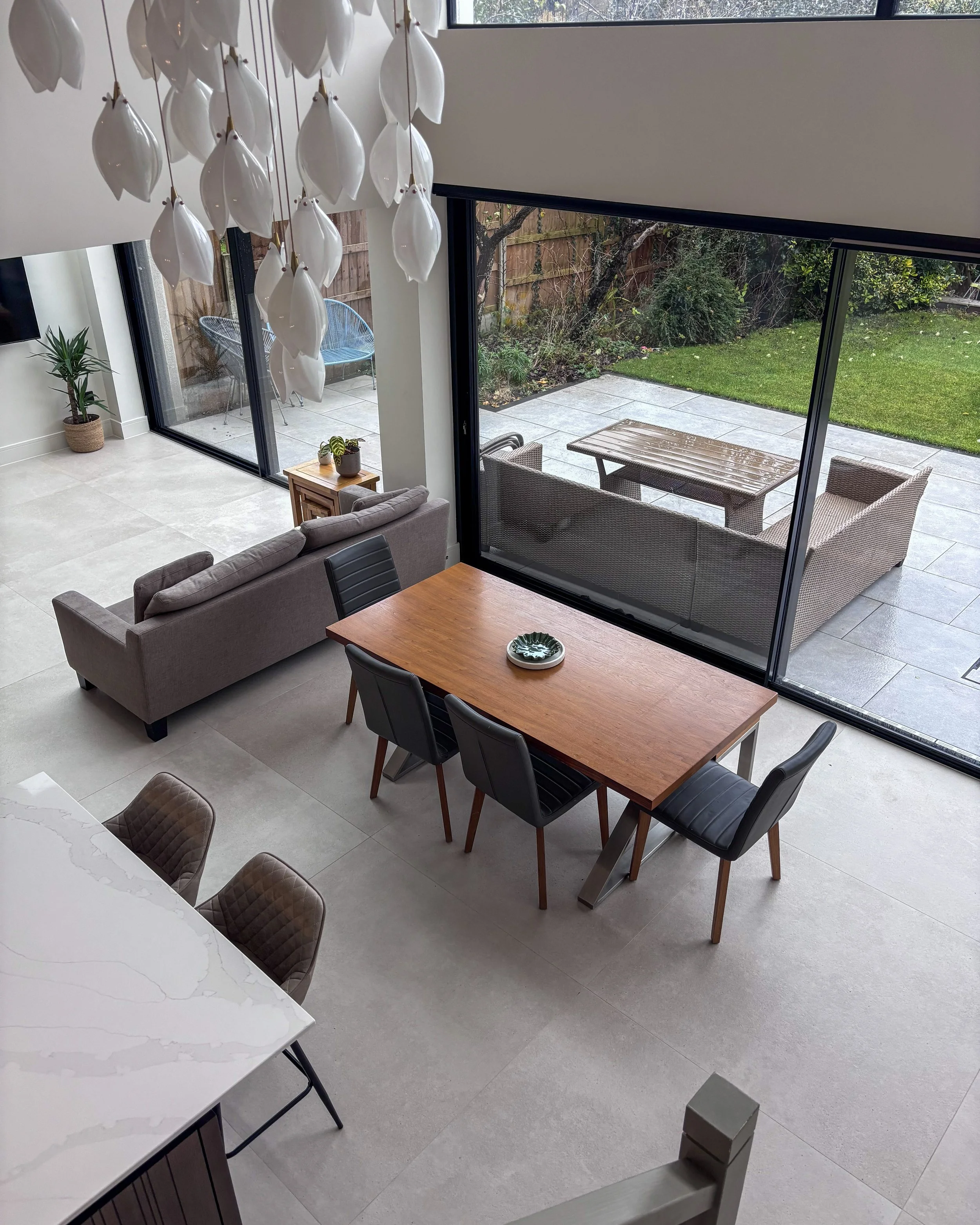
The result of that intervention is remarkable. What was previously a cramped, inaccessible void has become a full floor of living accommodation — a large open-plan kitchen, dining, and family space; a hidden utility room; a bathroom; and a gym with a lightwell and fire escape to the front. As Chris puts it, "in adding quite a modest extension in terms of floor space, by lowering the entire basement level, it's sort of unlocked a whole storey of floor space."
Light, Views, and Seamless Connection
Natural light and a connection to the landscape beyond were central to the design brief. The property sits adjacent to woodland and open fields — a remarkable outlook for a suburban home — and the extension is designed to make the most of it at every level.
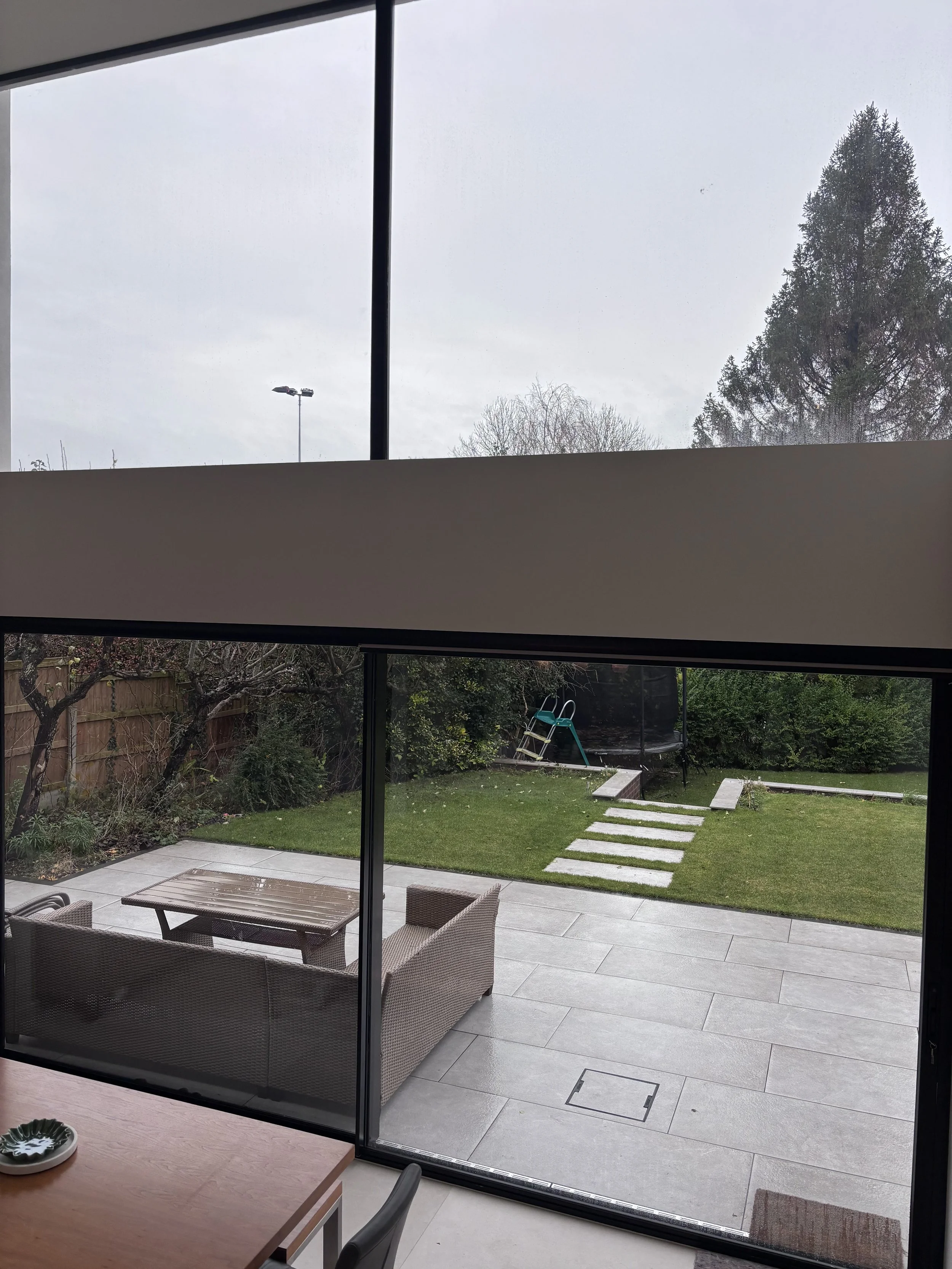
The new open-plan living space at lower ground floor level is fully glazed to the rear, with super-thin steel frames maximising the views into the garden and the green beyond. "One of the key criteria was to try and have that seamless indoor-outdoor connection," Chris explains, "as well as bringing in tons of natural light."
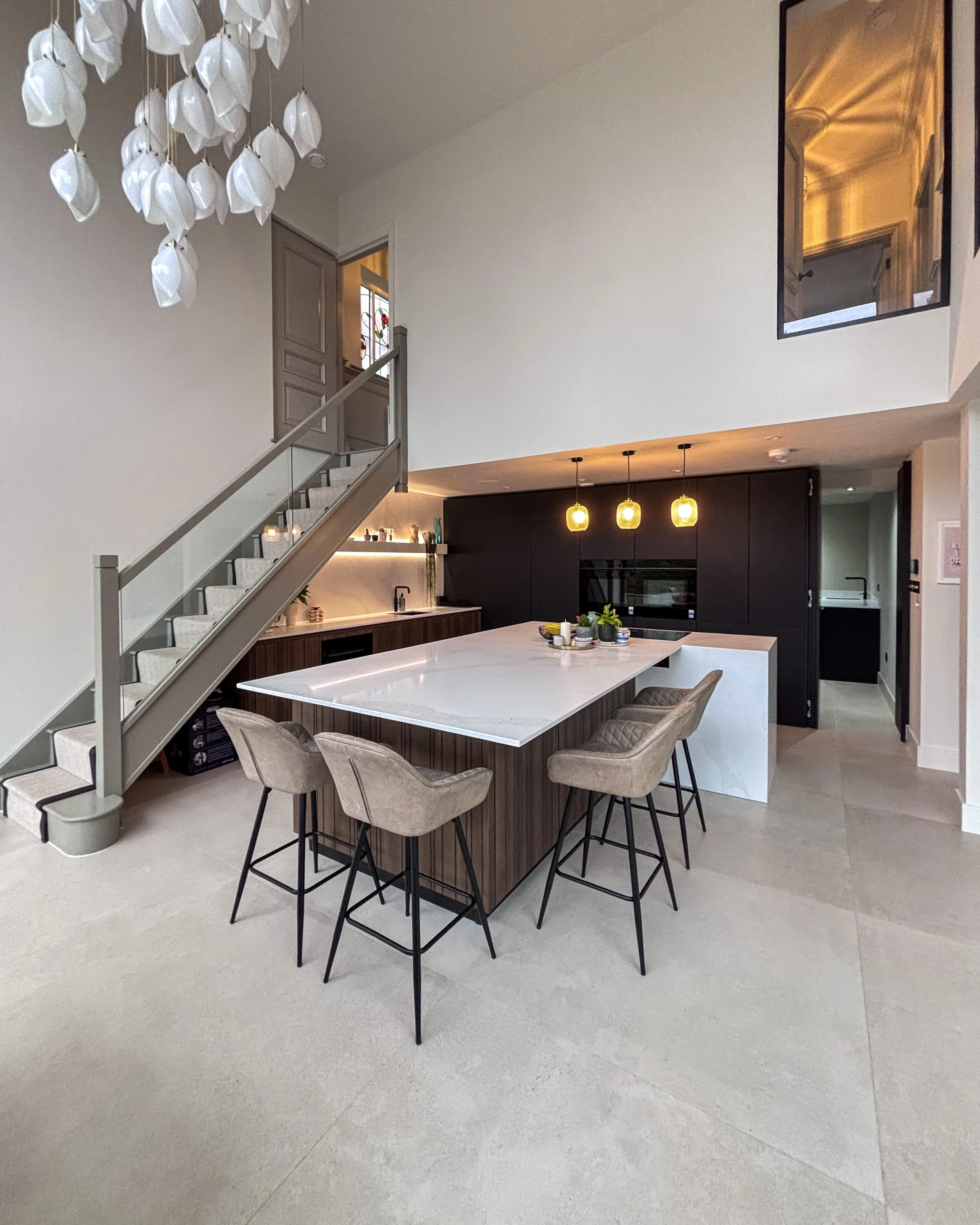
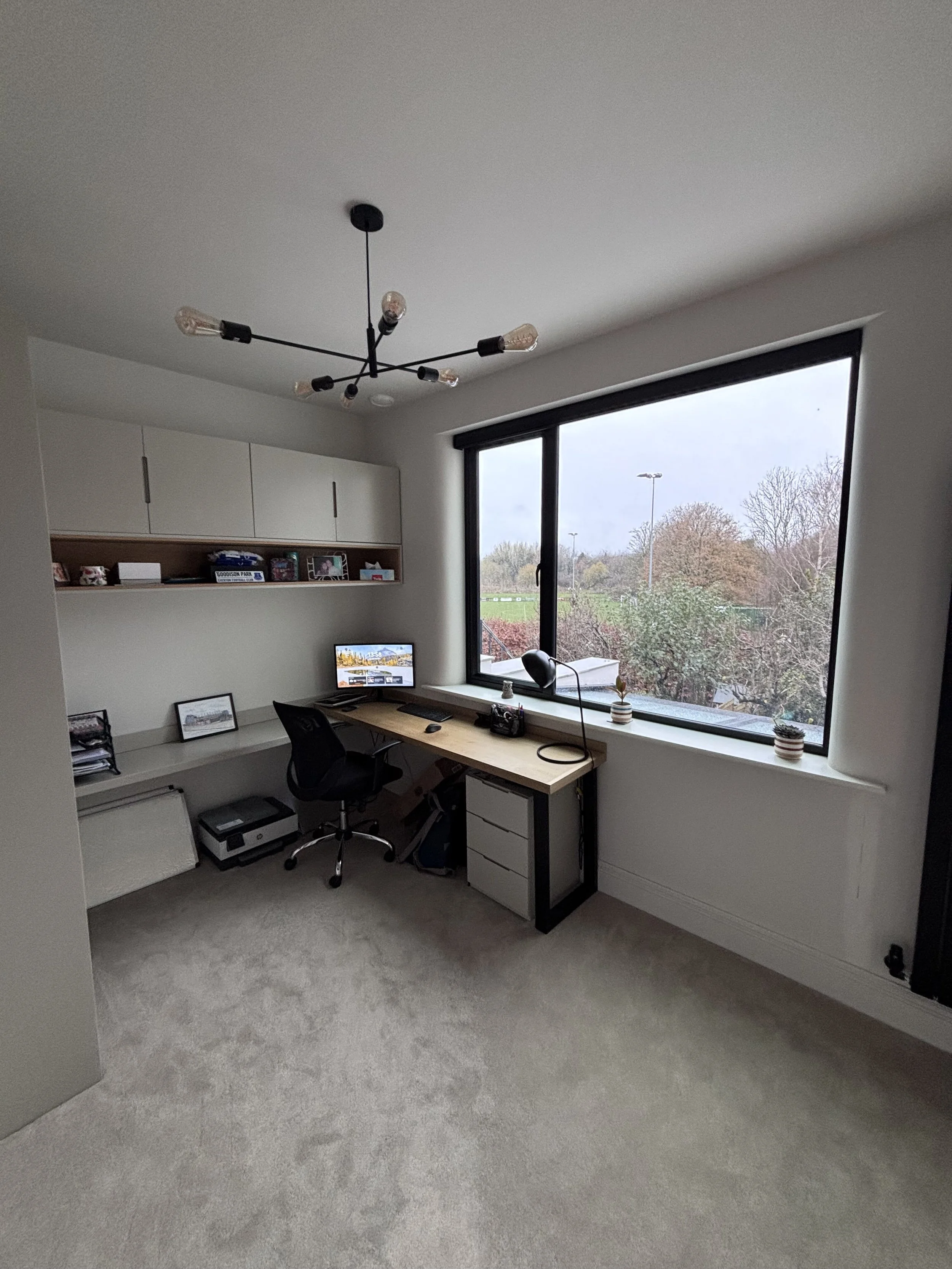
Internal windows between floors maintain visual and human connection throughout the house. Standing in the ground floor study — the room that used to be the small dining room served by the old kitchen — you can look down through an internal window directly into the double-height glazed space below. "You really feel connected with the rest of the house," Chris notes.
That double-height glazed volume is perhaps the single most dramatic moment in the project. Visible from the front door the moment it opens, it draws the eye instantly from the entrance all the way through to the garden and woodland beyond — an effect Chris was keen to create from the outset.
The Lower Ground Floor: A New Heart of the Home
Kitchen, Living, and Family Space
The new open-plan lower ground floor has become the hub of daily family life. It accommodates the kitchen and utility, a kids' play area, a TV and seating zone, and a bathroom, all within a generous, light-filled space that feels far removed from a conventional basement.
One particularly clever feature is the hidden utility room, tucked away behind the kitchen so that the visual clarity of the main space is preserved. The kitchen itself is practical and considered — the kind of space that works hard for a busy family without announcing its functionality.
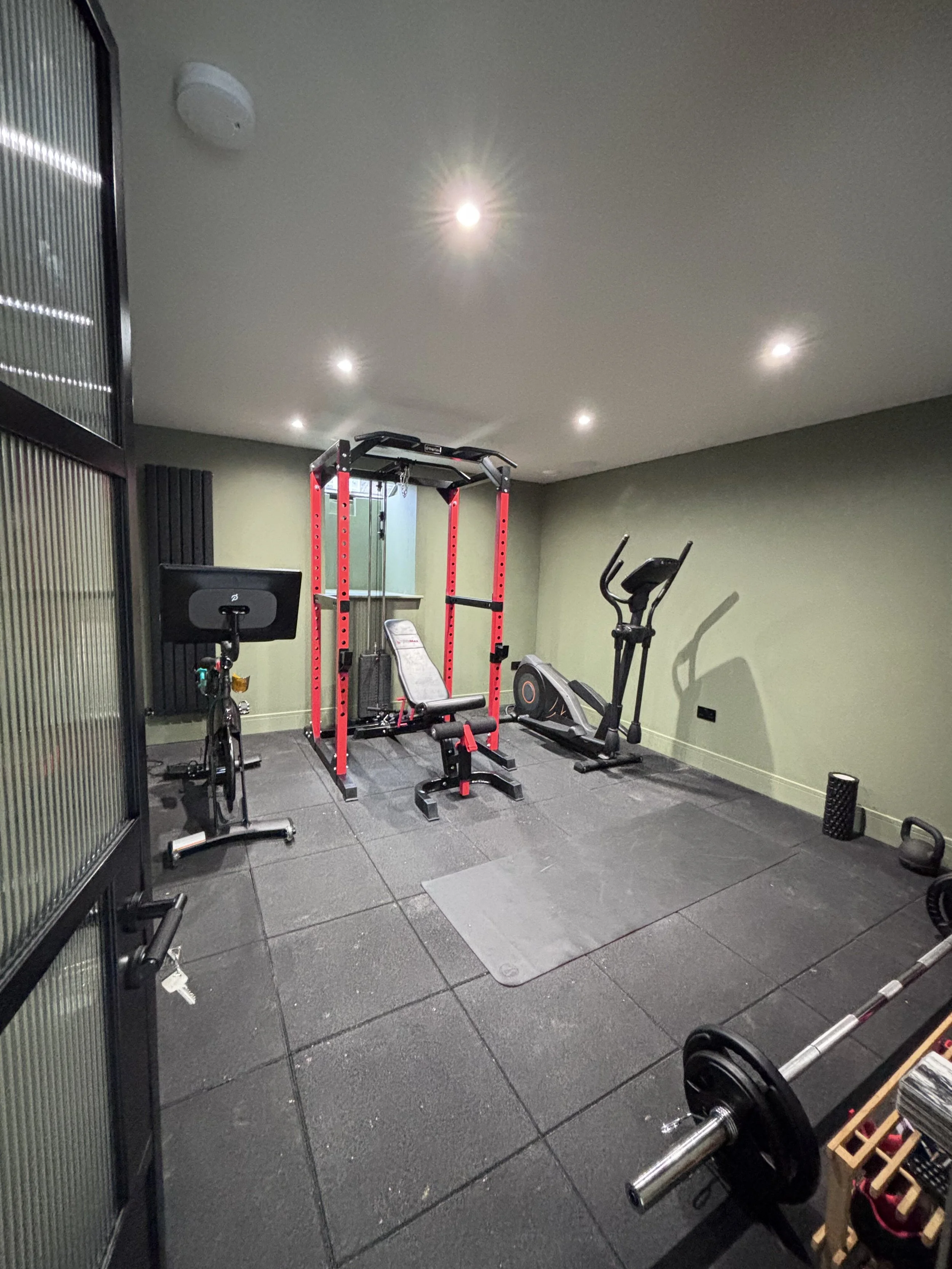
The gym, housed in the original basement footprint with its lowered floor and lightwell, completes the lower ground floor accommodation. Despite its compact footprint, it feels properly usable rather than an afterthought.
Family Spaces Designed Around Safety and Flow
Fire safety was carefully integrated into the design. The door separating the original house from the new extension is recessed into the wall and held open magnetically — if the fire alarm triggers, it closes automatically to ensure proper compartmentation. It's a detail that speaks to the thoroughness of the design process on a project where the old and new have been carefully stitched together.
Upper Floors: The Principal Suite and Children's Bedrooms
A Bedroom Designed Around the View
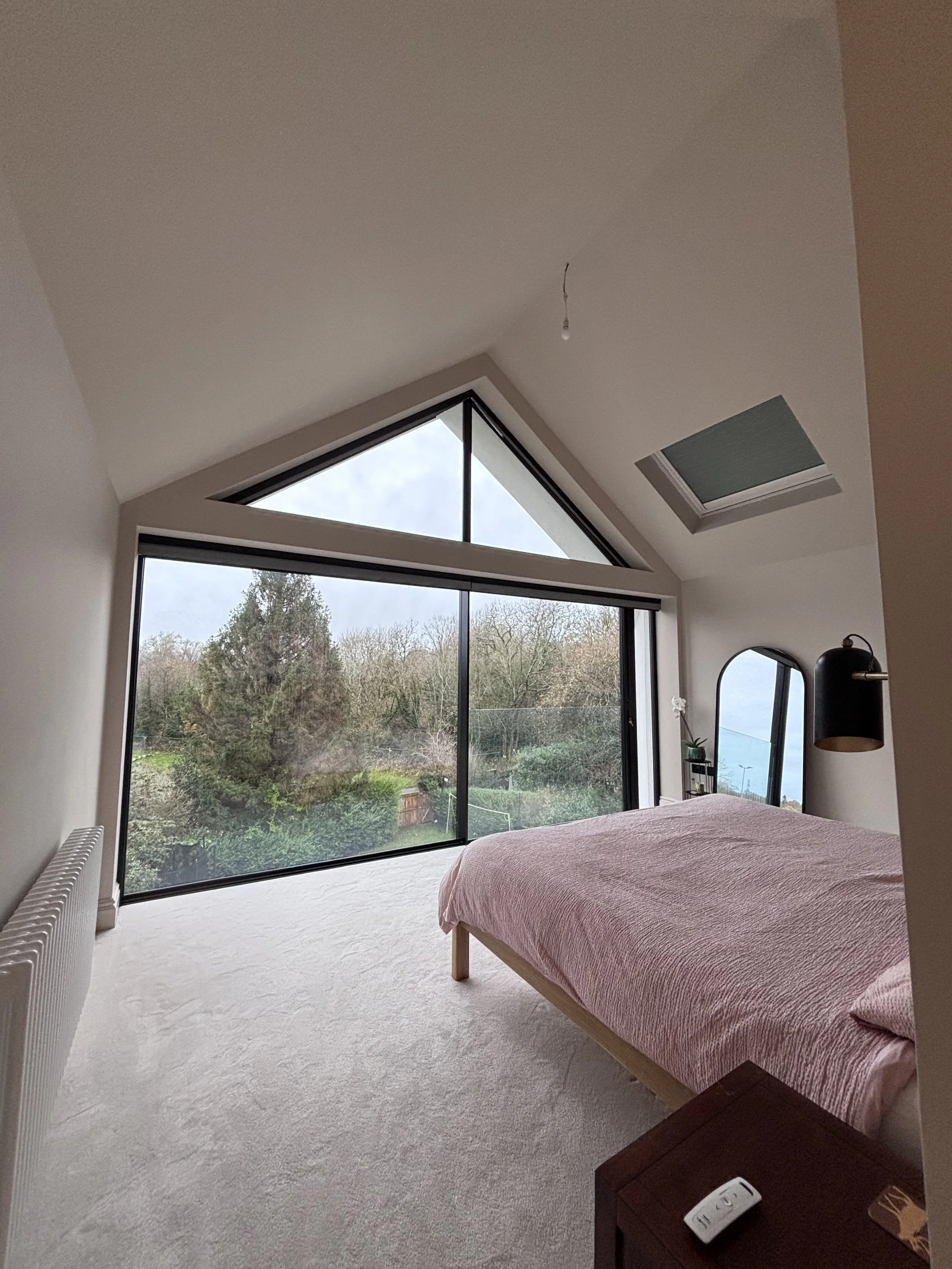
On the first floor, the extension creates a new principal bedroom suite that takes full advantage of the south-facing outlook over woodland. The glazed gable to the rear floods the room with light, while a Juliet balcony opens up the side elevation entirely. Originally, the rear bedroom on this floor was one of the smallest in the house, without any of the views that now define it.
The design involved creating the new bedroom entirely within the extension footprint, allowing the original rear bedroom to be repurposed as a walk-in dressing room and ensuite. A rendered overhang around the windows — deliberately oversized — addresses the challenge of overheating on a fully south-facing elevation, while a tapering detail at the edge of the extension creates a refined, thin frame that reads beautifully from the garden.
HomeInspire Downloads
Download Our Complete Renovation Handbook
A step-by-step guide to planning, designing, and delivering your dream home.
Planning your first renovation doesn’t have to be overwhelming. This 62-page step-by-step eBook guides you through every stage - from budgeting and planning to design, permissions, and finishing touches. Packed with expert advice, checklists, and cost guides, it helps you avoid mistakes, stay on track, and bring your dream home to life.
Bathrooms and Period Details
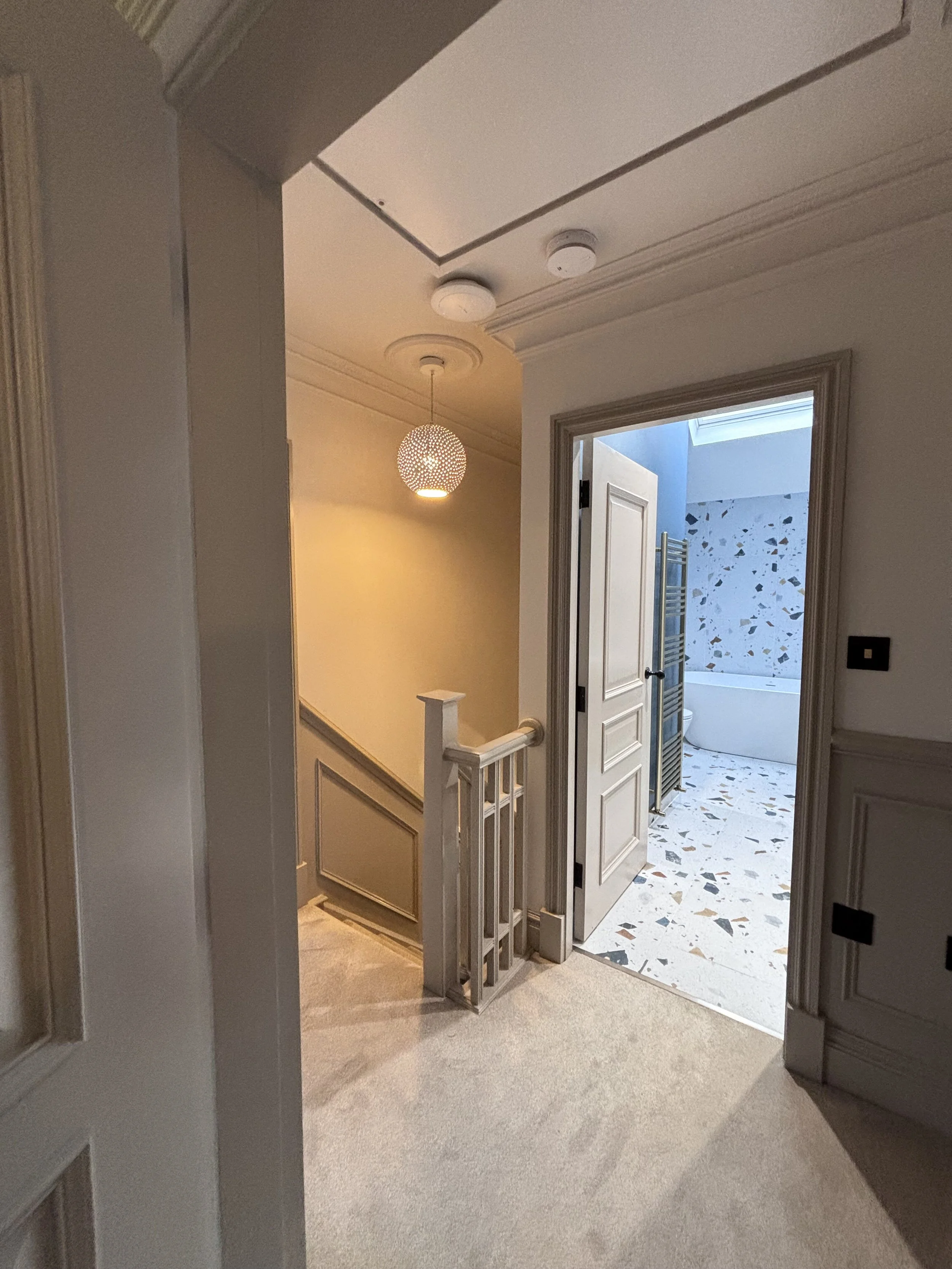
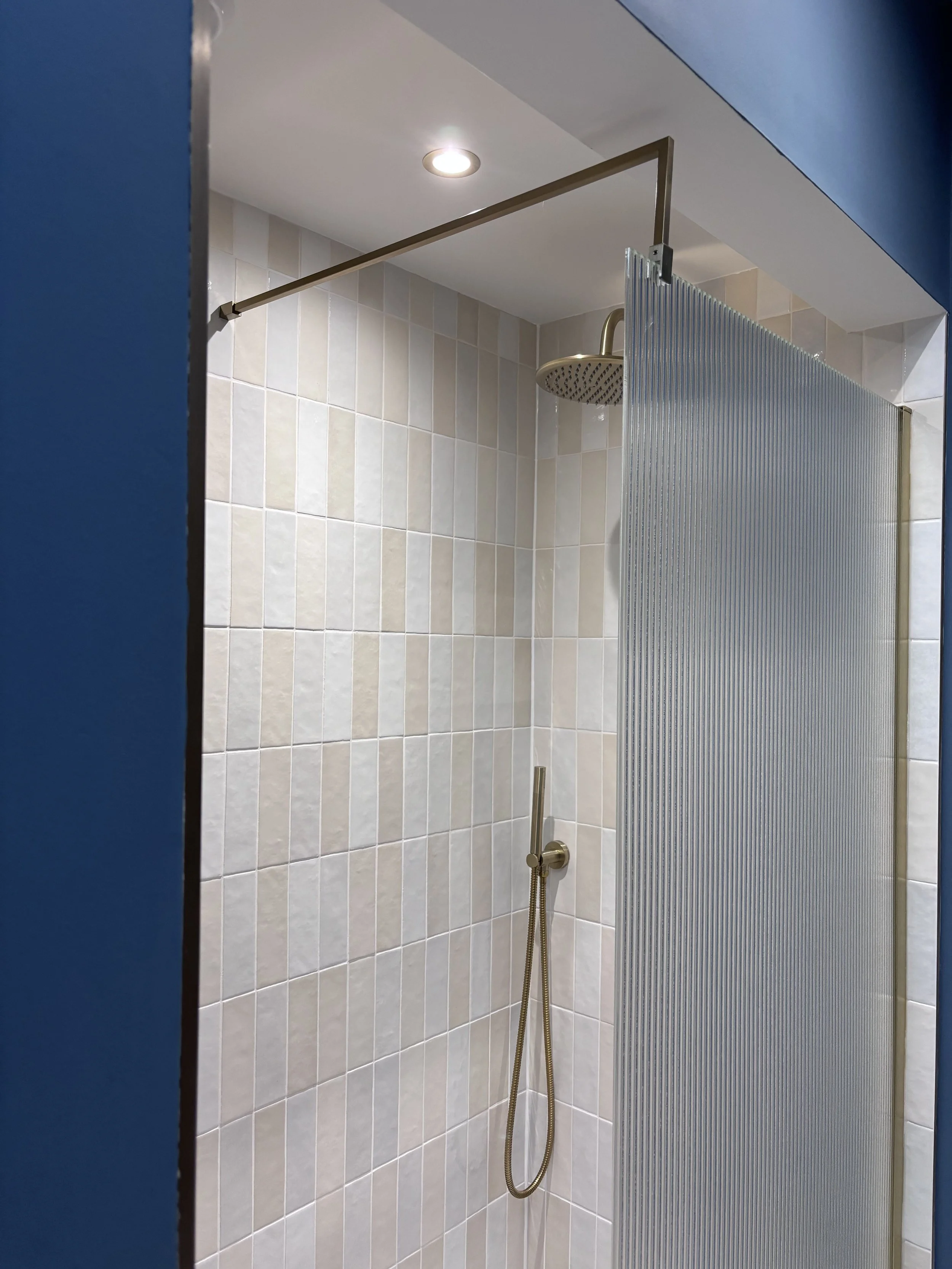
The main family bathroom was formed by combining two separate rooms — a bathroom and a WC — and extending into adjacent hallway space that was better used here. A generous rooflight fills the room with natural daylight, while the most memorable feature is the walk-in shower: carved out of the original chimney void, which was removed internally but preserved above roof level to maintain the Conservation Area streetscape.
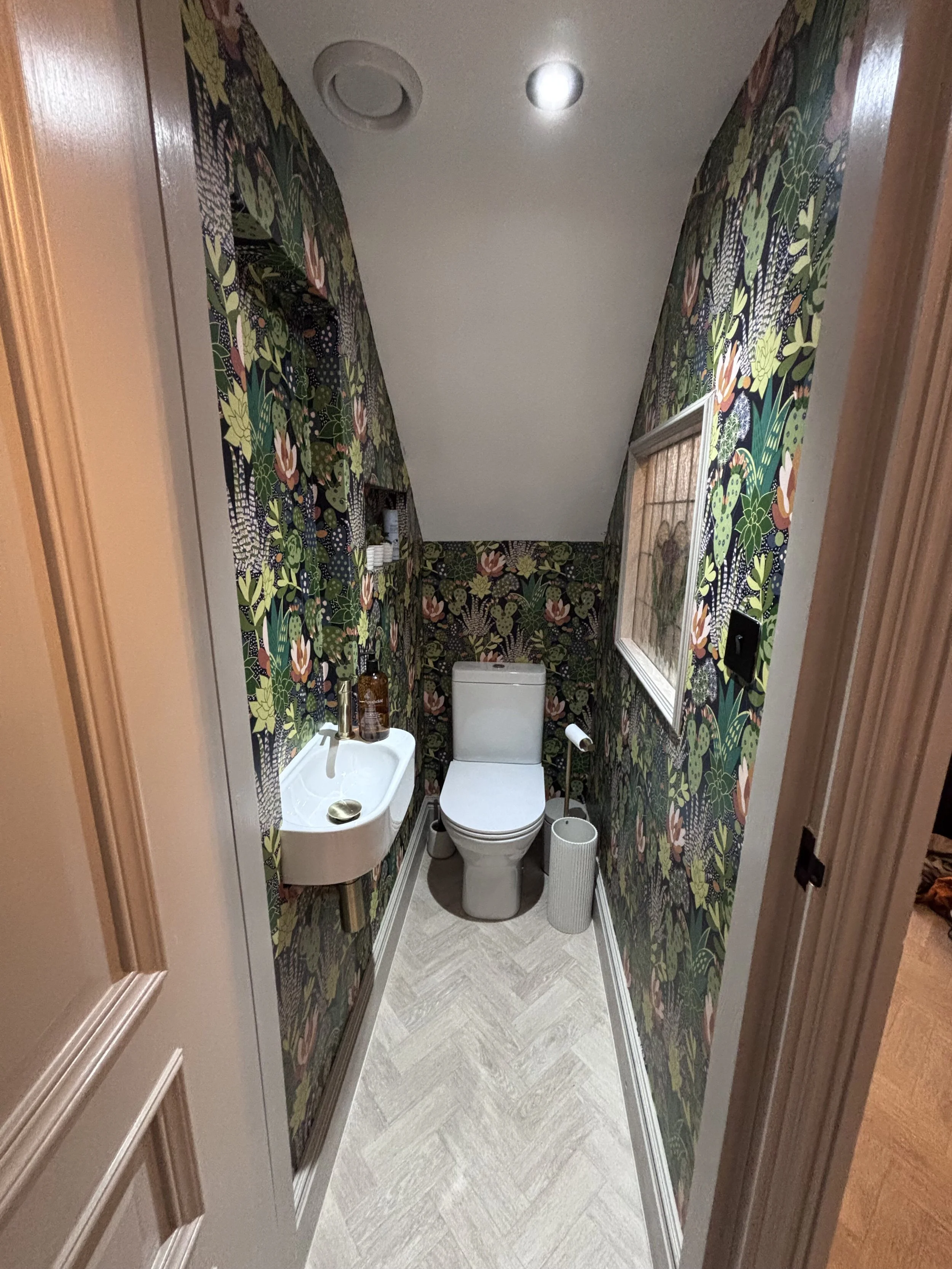
Original stained glass from across the house has been carefully redistributed where practical. In the understairs WC at ground floor level, for example, original stained glass panels have been incorporated into the new window — a small but considered gesture that weaves the building's history into every corner of the renovation.
The children's bedrooms in the original part of the house received a lighter-touch renovation: replastered walls, restored covings and architraves, and heritage windows with lead glazing bars on the front. At the rear, modern slim-framed aluminium windows maximise the view over forest and meadow — with glazing bars reduced to an absolute minimum to ensure the children's rooms enjoy as unobstructed an outlook as possible.
Performance, Sustainability, and the Estate Setting
Beyond the architecture, the project has taken a serious approach to energy performance. All windows throughout the house have been replaced, the extension is highly insulated, and the building has been made as airtight as possible. An MVHR (mechanical ventilation with heat recovery) system has been installed throughout to ensure the house breathes efficiently and maintains good air quality without heat loss.
From the outside, the house remains a quiet, considered presence on its Garden Village estate. The original front elevation has been respectfully restored, the roofline is unchanged, and nothing about the streetscape hints at what lies beyond the front door. It's only when you step inside — and the double-height glazed volume opens up before you, with woodland stretching away beyond the garden — that the full ambition of the project becomes clear.
A Contemporary Family Home Rooted in its Setting
This project by Guy Taylor Associates is a compelling example of how a sensitively handled restoration and a confident contemporary addition can coexist within a single building. By establishing a clear dialogue between old and new, unlocking a hidden floor of accommodation through a technically ambitious piece of structural engineering, and placing natural light and connection to landscape at the centre of every design decision, the practice has created a home that works brilliantly for modern family life without compromising the character of the estate it belongs to.
Project Info
Location: South Manchester
Architect: Guy Taylor Associates
Structural Engineer: Studio One, Manchester
Filmed & Produced by HomeInspire
Written by Dan Burge | Founder of HomeInspire
To see more, watch our full project tour on our YouTube channel!
Share This Story
Get in touch if you’d like to be featured on HomeInspire.
FAQs - Arts & Crafts Renovation
-
The cost of a three-storey side extension in the UK typically ranges from £150,000 to £400,000+, depending on size, specification, and location. Projects in Greater Manchester tend to sit at the lower end compared to London, but factors like Conservation Area requirements, structural complexity, and high-end glazing can push costs significantly higher. Always budget for a contingency of at least 10–15%.
-
Yes — extensions are possible within Conservation Areas, but permitted development rights are more restricted and planning permission is almost always required. The key consideration is that any addition must respect the character and appearance of the area. Designs that establish a clear distinction between old and new, as seen in this project, are often viewed favourably by planning authorities as they preserve the original building's integrity rather than attempting to replicate or disguise it.
-
Lowering an existing basement or undercroft can be an excellent alternative to a full basement excavation, particularly where there is already some void beneath the ground floor. As demonstrated in this project, lowering the slab by just 80cm transformed an unusable crawl space into a full floor of accommodation. Costs vary considerably depending on soil conditions, existing foundations, and party wall considerations, but it is often more cost-effective than moving to a larger property.
-
Arts and Crafts homes are a style of British residential architecture that emerged in the late 19th and early 20th centuries, characterised by craftsmanship, natural materials, steeply pitched roofs, and features like stained glass, decorative tiling, and intricate joinery. They can absolutely be modernised — the key is working with an architect experienced in heritage buildings who can sensitively restore original features while introducing contemporary additions that respect rather than compete with the existing character.
-
MVHR stands for Mechanical Ventilation with Heat Recovery. It works by extracting stale air from the home and passing it through a heat exchanger, which transfers the warmth to fresh incoming air before it's distributed through the house. It's particularly effective in well-insulated, airtight homes where traditional draughts no longer provide natural ventilation. For a whole-house renovation with high insulation standards, MVHR is widely considered best practice — it improves air quality, reduces heating bills, and helps the building perform as intended.
You May Also Be Interested In:
HomeInspire visited The Windmill in Suffolk, where Natalie and Steve took on a derelict 1891 mill and spent years converting it into a five-storey holiday home - solving problems nobody had faced before, from a hand-folded zinc roof to a bath winched up a curved staircase.