
Produced & Written by Dan Burge | 8 March 2026
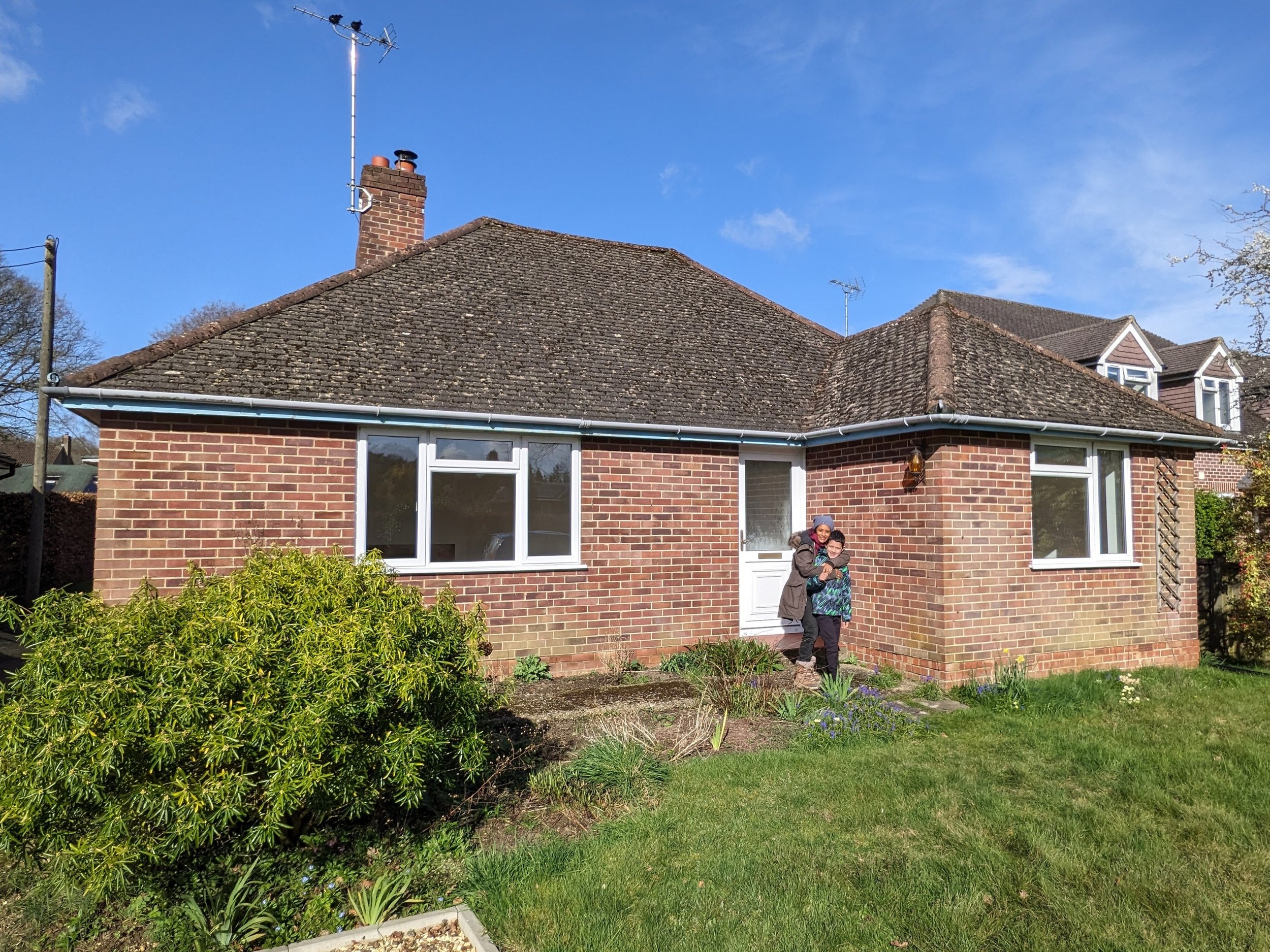
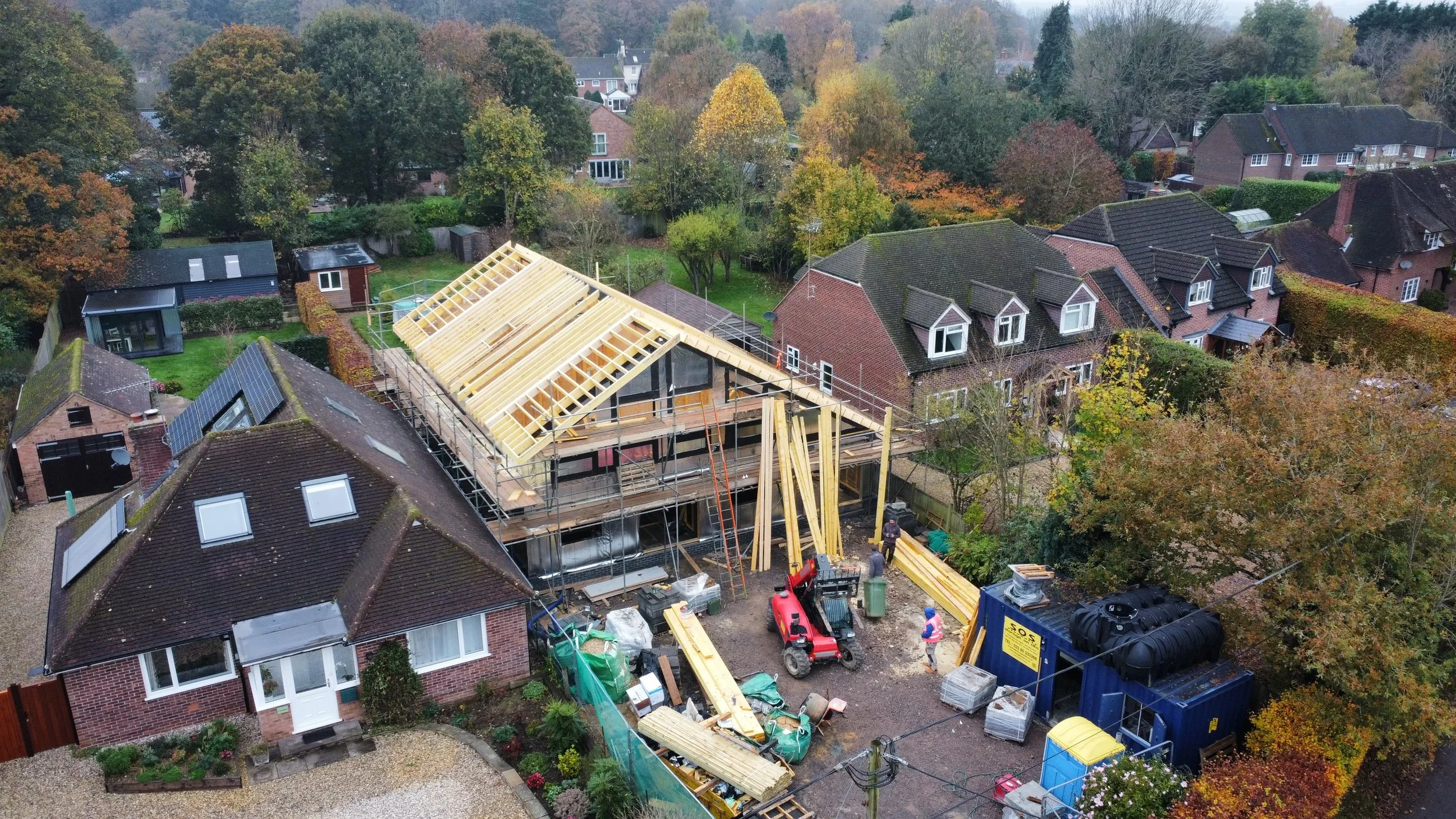
We met Maddy and her partner in early 2026. Their story started back in 2023, when they had purchased a tired bungalow on a quiet lane in West Berkshire with a clear ambition: to design and build a sustainable eco home. Having always admired self-build projects and programs like Grand Designs, they decided to take the leap and replace the original structure with a purpose-built energy-efficient house.
The project was completed in July 2025, marking the culmination of a multi-year journey involving planning, construction, and thoughtful design. The result is a contemporary family home that prioritises environmental performance, spatial functionality, and long-term efficiency.
Building an Eco Self-Build in West Berkshire
An Asymmetric Design with Purpose
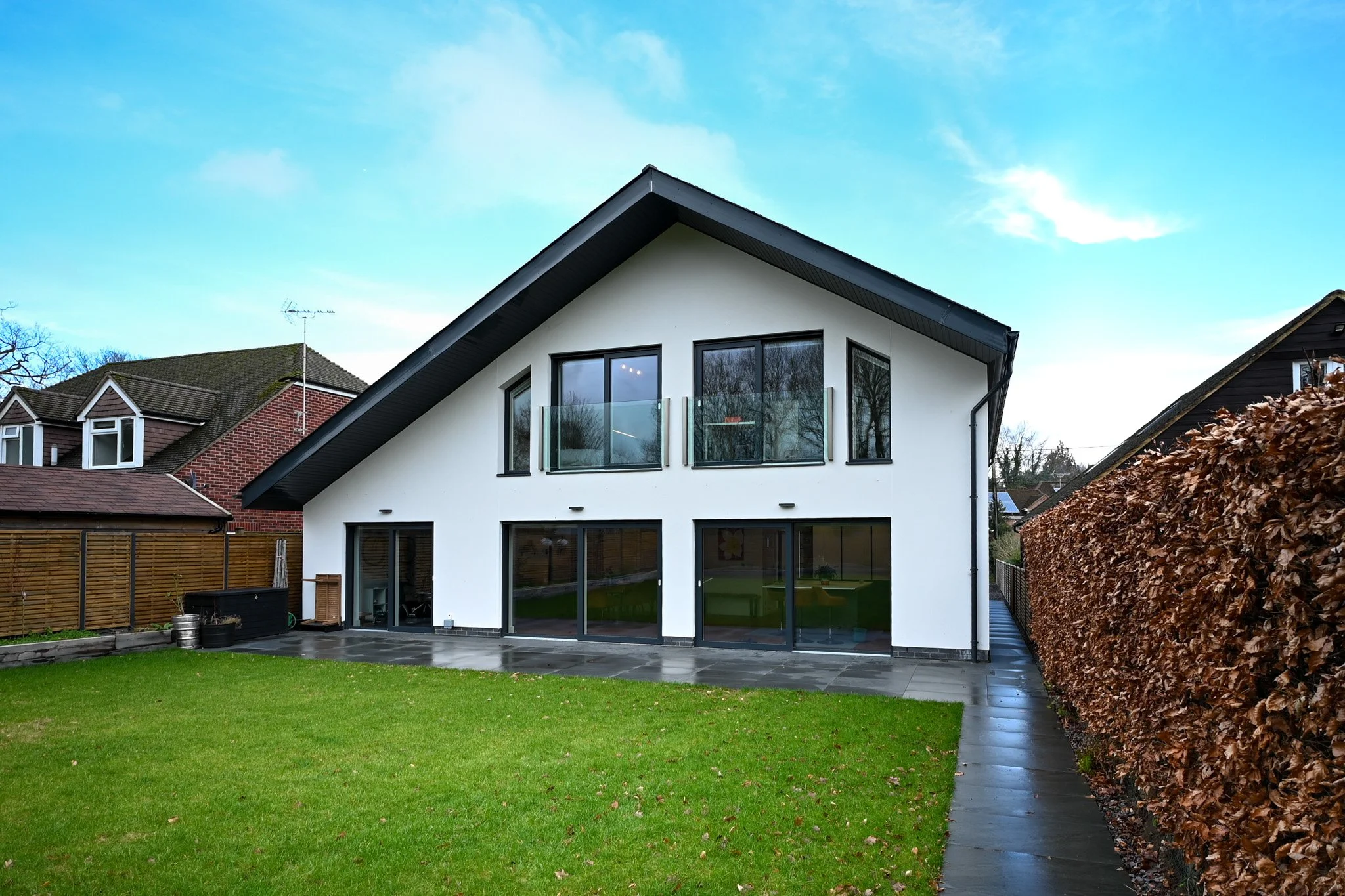
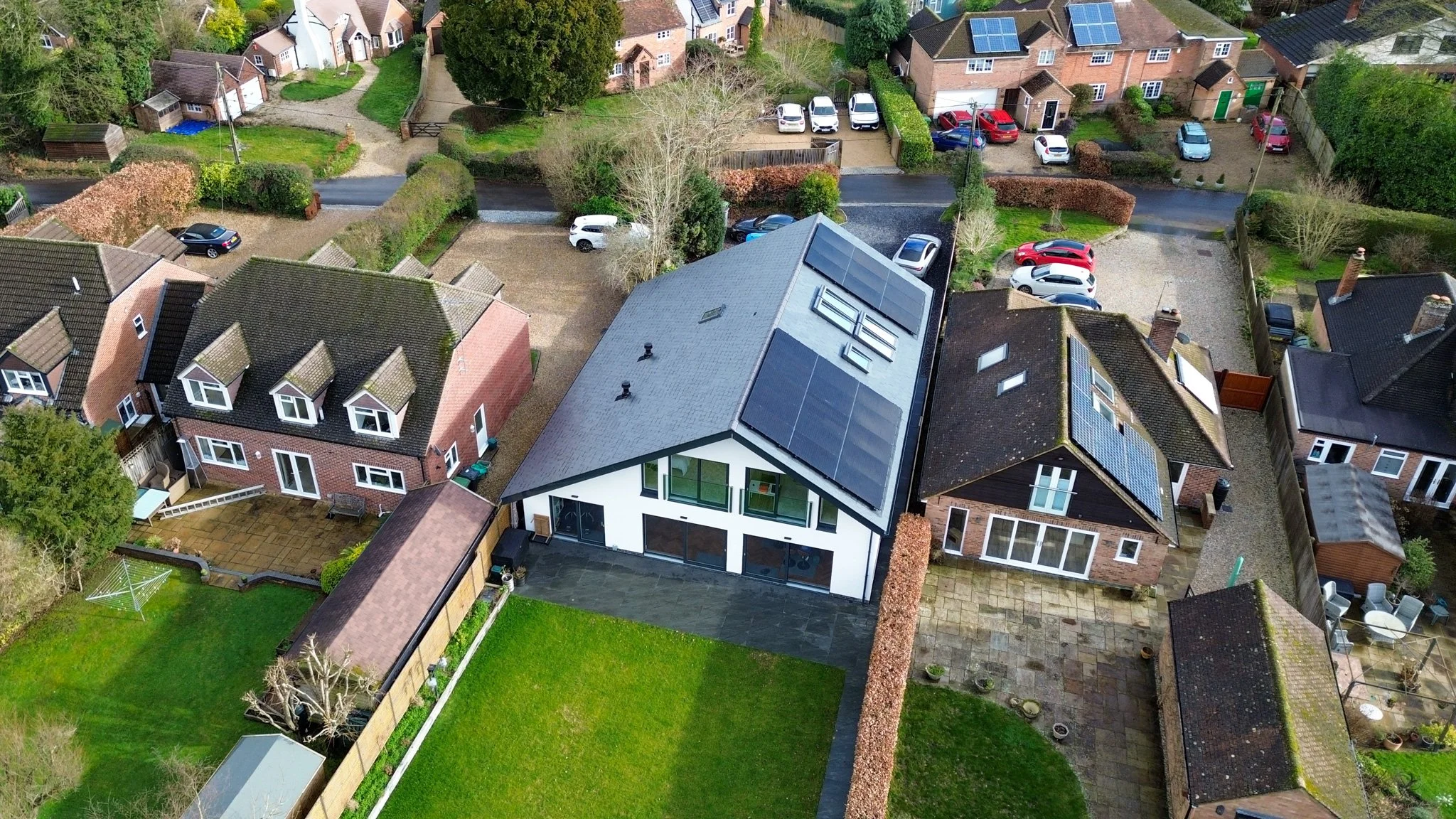
The house features an asymmetric roofline and gabled windows – design choices that were intentional rather than decorative. The angled roof pitch helps minimise light obstruction for neighbouring properties, while the distinctive gabled windows introduce architectural character and visual interest.
Some observers may find the geometry unconventional, but the homeowners embraced a design that balances form with environmental and contextual sensitivity.
Energy Efficiency at the Heart of the Build
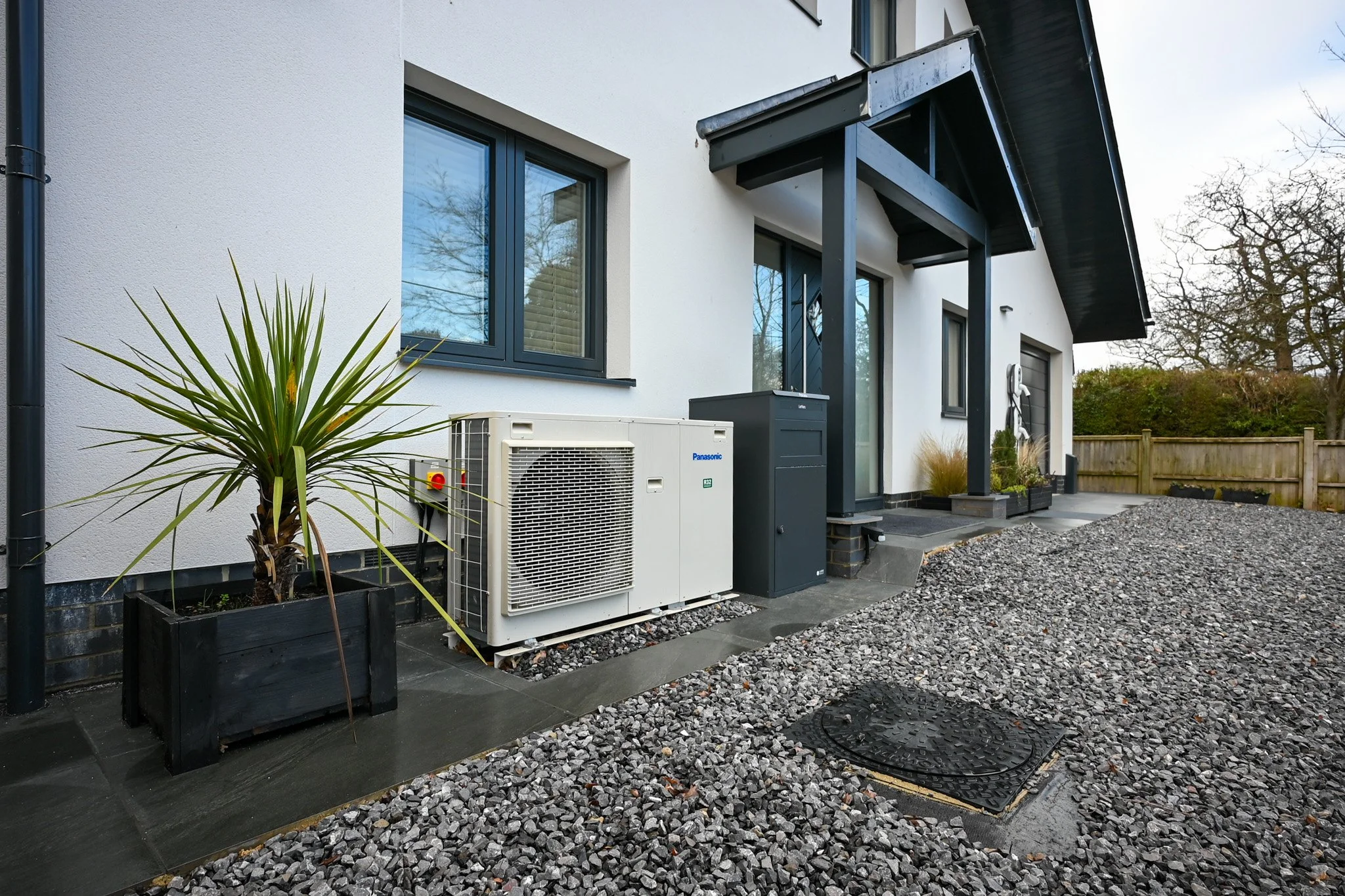
Central to the project was the integration of renewable technology and low-energy construction methods. An air source heat pump system provides heating and energy efficiency, supported by solar panels and battery storage. The aim was to reduce reliance on traditional energy sources and achieve a high standard of thermal performance.
Though the external placement of the heat pump initially raised aesthetic concerns, the homeowners now view it as a positive statement of sustainable intent – reflecting the broader ethos of the build.
Entrance and Hallway: Light and Practicality
A Spacious, Light-Filled Entrance
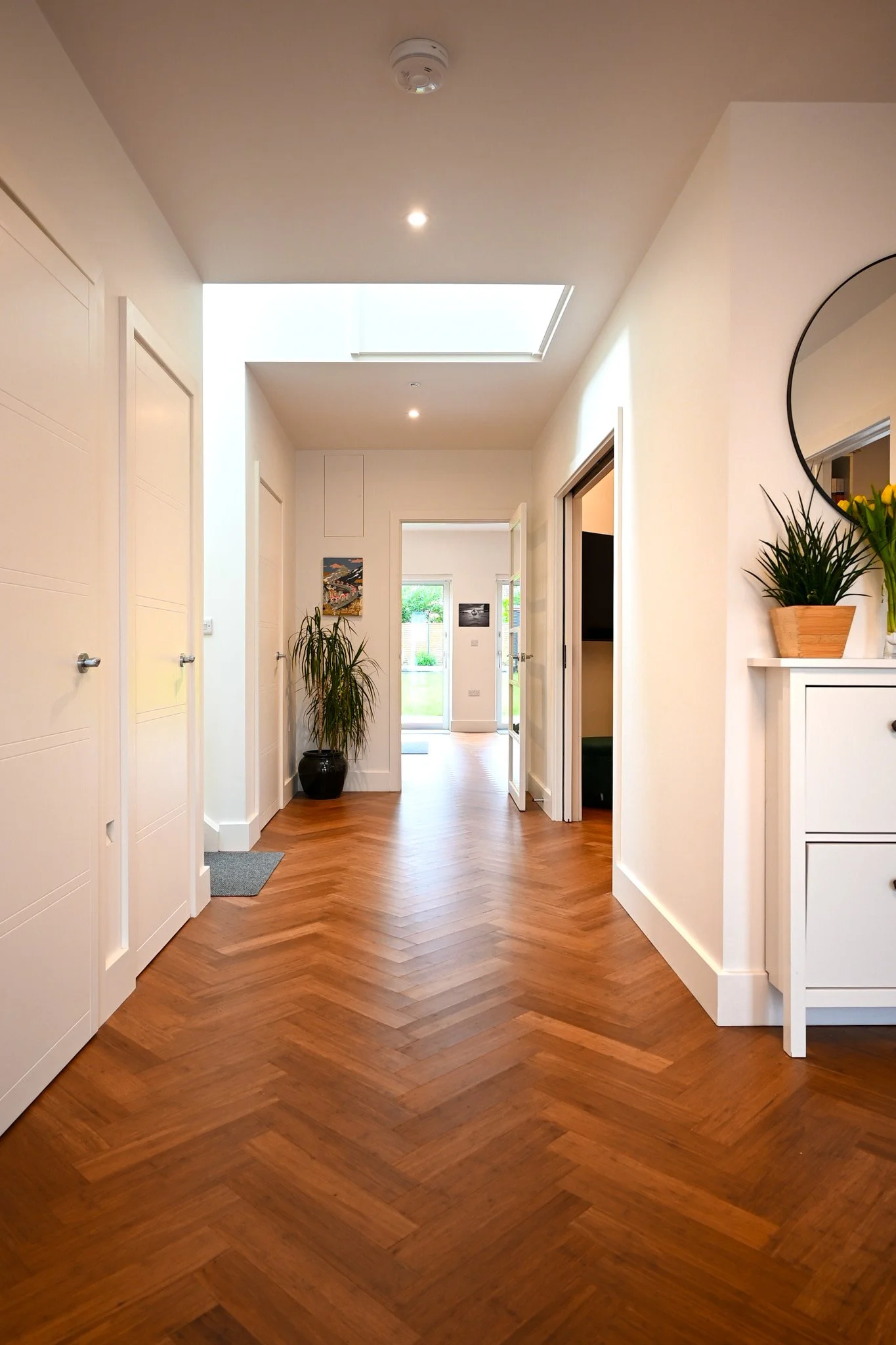
The hallway was designed as a generous, welcoming space suitable for family life and visitors. Rooflights and a lightwell enhance natural illumination, creating an airy atmosphere despite the home’s deep floor plan.
Practicality was also a priority. Bamboo flooring was selected for its environmental credentials and durability. The material is harder and longer-lasting than many traditional options, aligning with the eco objectives of the project.
Underfloor Heating and Thermal Performance
Underfloor heating, installed by specialists NuHeat, works efficiently due to the home’s high insulation standards. The system typically requires only one to four hours of operation per day, demonstrating the effectiveness of the building’s thermal design.
Upstairs, heating was deemed unnecessary – a testament to the overall energy performance of the property.
Personal Spaces and Interior Design
Study and Multi-Functional Rooms
The study doubles as a music and relaxation space, introducing a richer colour palette within an otherwise neutral scheme. This approach allows for personal expression while maintaining visual cohesion throughout the home.
A downstairs bathroom and guest shower were incorporated to enhance flexibility for visitors. Neutral tones and natural materials ensure the space feels warm and inviting.
Natural Materials and Interior Choices
Interior design decisions were made by the homeowners themselves – despite no professional background in design. The focus was on using natural materials such as oak and bamboo to create a calm, light-filled environment.
The success of these choices demonstrates that thoughtful design is achievable without formal expertise, provided the principles of proportion and materiality are respected.
Energy Systems: The Plant Room and Renewable Infrastructure
The Heart of the Eco Home
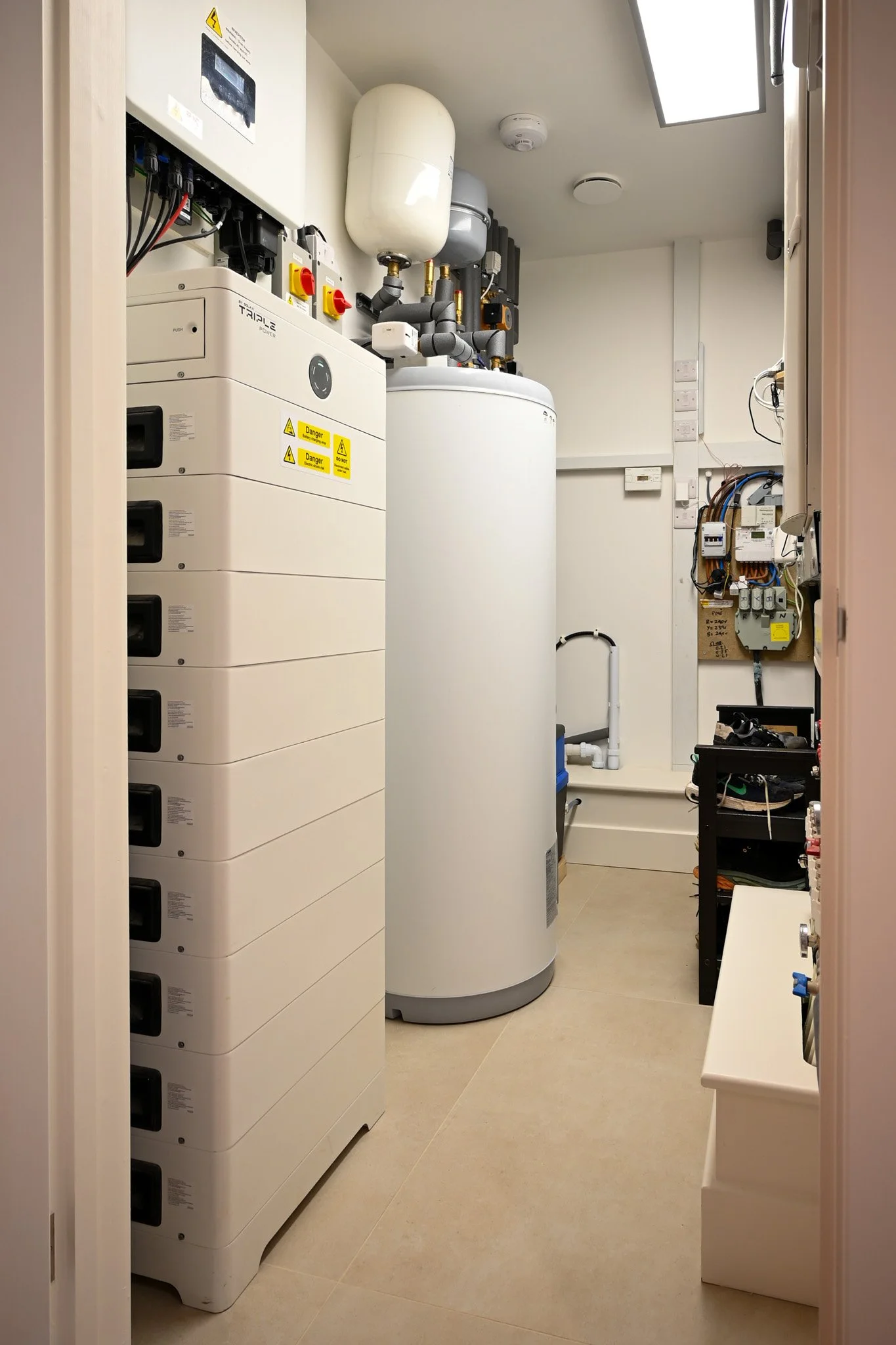
The plant room houses the technology that powers the property, including a 33 kW battery system and 24 solar panels. These components store and generate energy, reducing reliance on external electricity sources.
During summer months, excess energy is exported to the grid, while in winter the system draws power at off-peak rates and stores it for later use. This strategy optimises efficiency and minimises energy costs.
The homeowners anticipate achieving net energy performance – producing more energy than they consume – once a full year of data has been collected.
Electric Vehicles and Sustainable Mobility
The family owns two electric vehicles, which are charged using stored renewable energy. Charging overnight takes advantage of lower electricity tariffs and further integrates transport into the home’s sustainability framework.
Living Spaces: Light, Layout, and Design Solutions
The Central Sitting Room
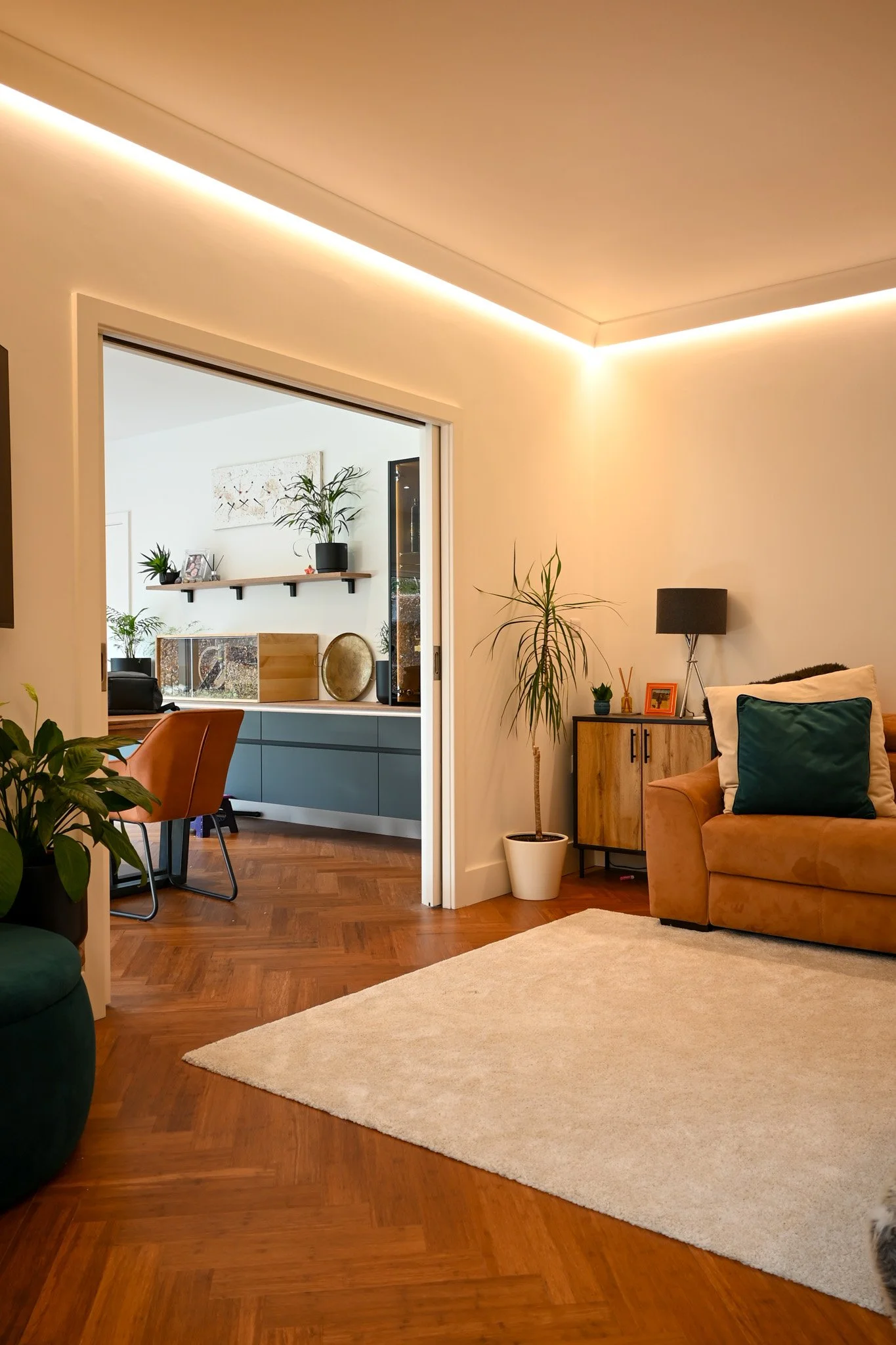
Located in the middle of the property, the sitting room presented a design challenge due to limited natural light. To address this, LED strip lighting was installed beneath the cornice, creating a soft illumination that mimics daylight.
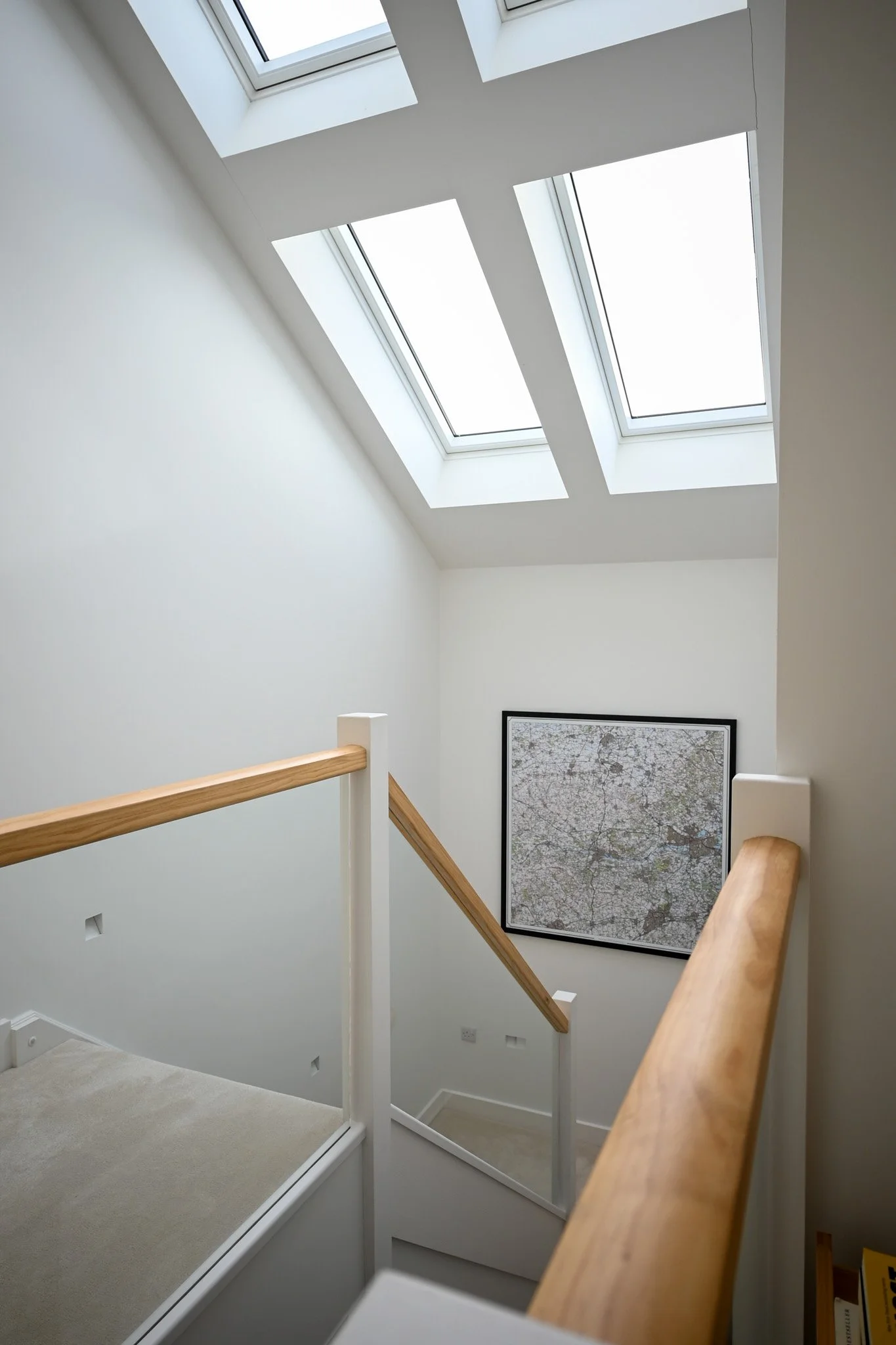
A large mirror reflects garden views and enhances the perception of space. Skylights above the room also channel light from the roof, improving brightness across multiple floors.
Kitchen and Dining Area
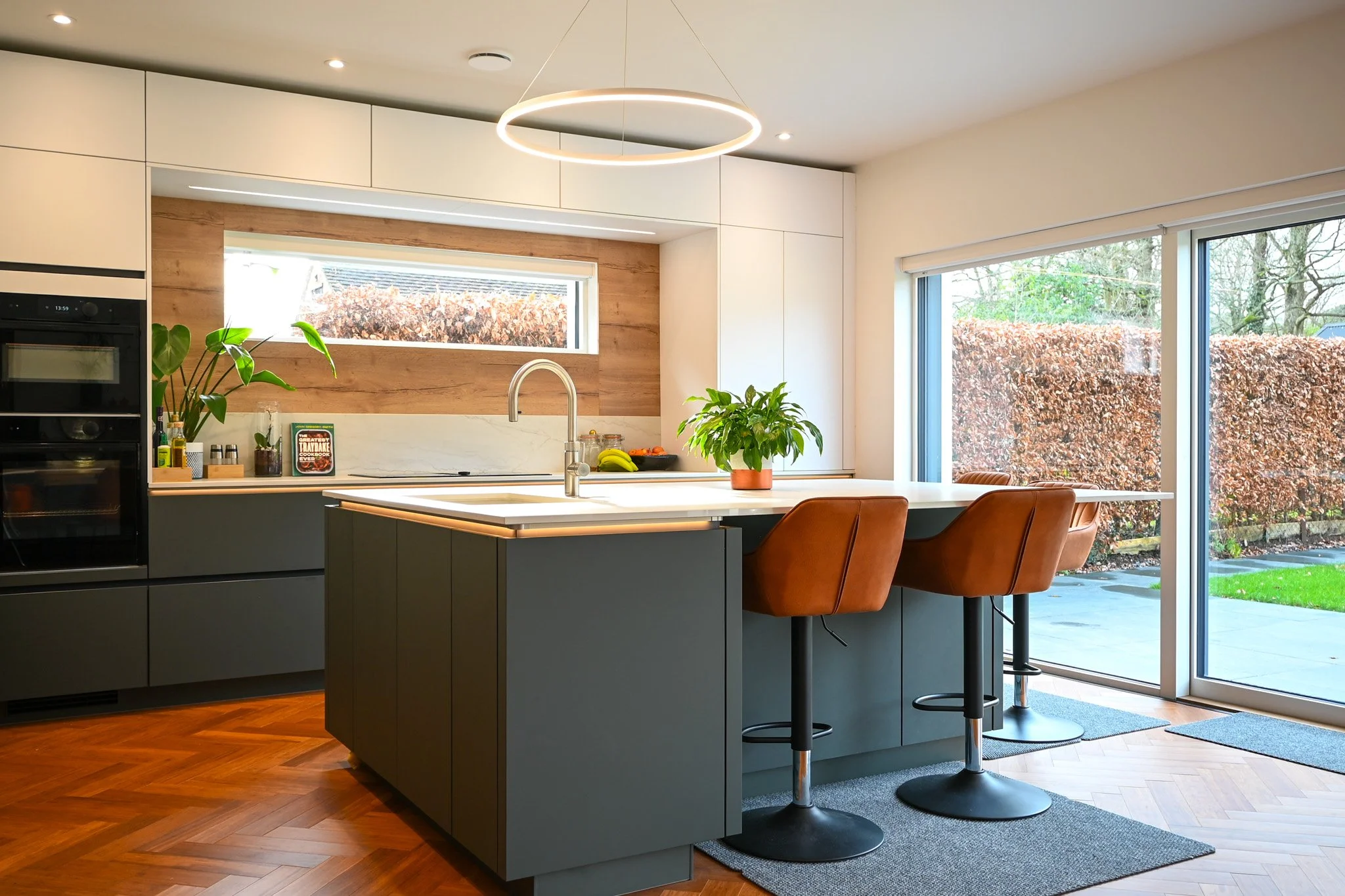
The kitchen features energy-efficient sliding doors that connect the interior to the garden. A carbon-neutral worktop material known as Dekton was selected for its durability and environmental performance.
A breakfast cabinet with integrated lighting provides a personal space for morning routines, demonstrating how small design details can enhance daily living.
HomeInspire Downloads
Download Our Complete Renovation Handbook
A step-by-step guide to planning, designing, and delivering your dream home.
Planning your first renovation doesn’t have to be overwhelming. This 62-page step-by-step eBook guides you through every stage - from budgeting and planning to design, permissions, and finishing touches. Packed with expert advice, checklists, and cost guides, it helps you avoid mistakes, stay on track, and bring your dream home to life.
Garden and Outdoor Design
Sustainable Landscaping and Drainage
The garden incorporates raised beds, a large lawn, and drainage systems designed to manage rainfall and prevent flooding. A 7,000-litre underground water tank collects rainwater from the roof, supporting irrigation and water reuse.
Additional storage tanks enable water retention during dry periods, improving resilience and reducing dependence on mains water.
Lighting and Environmental Considerations
Solar-powered downlights provide subtle evening illumination without disturbing wildlife. Regulations around outdoor lighting require sensitivity to ecological impacts, and the homeowners prioritised solutions that balance usability with environmental responsibility.
Upstairs: Bedrooms and Family Spaces
Flexible Bedrooms and Storage Solutions
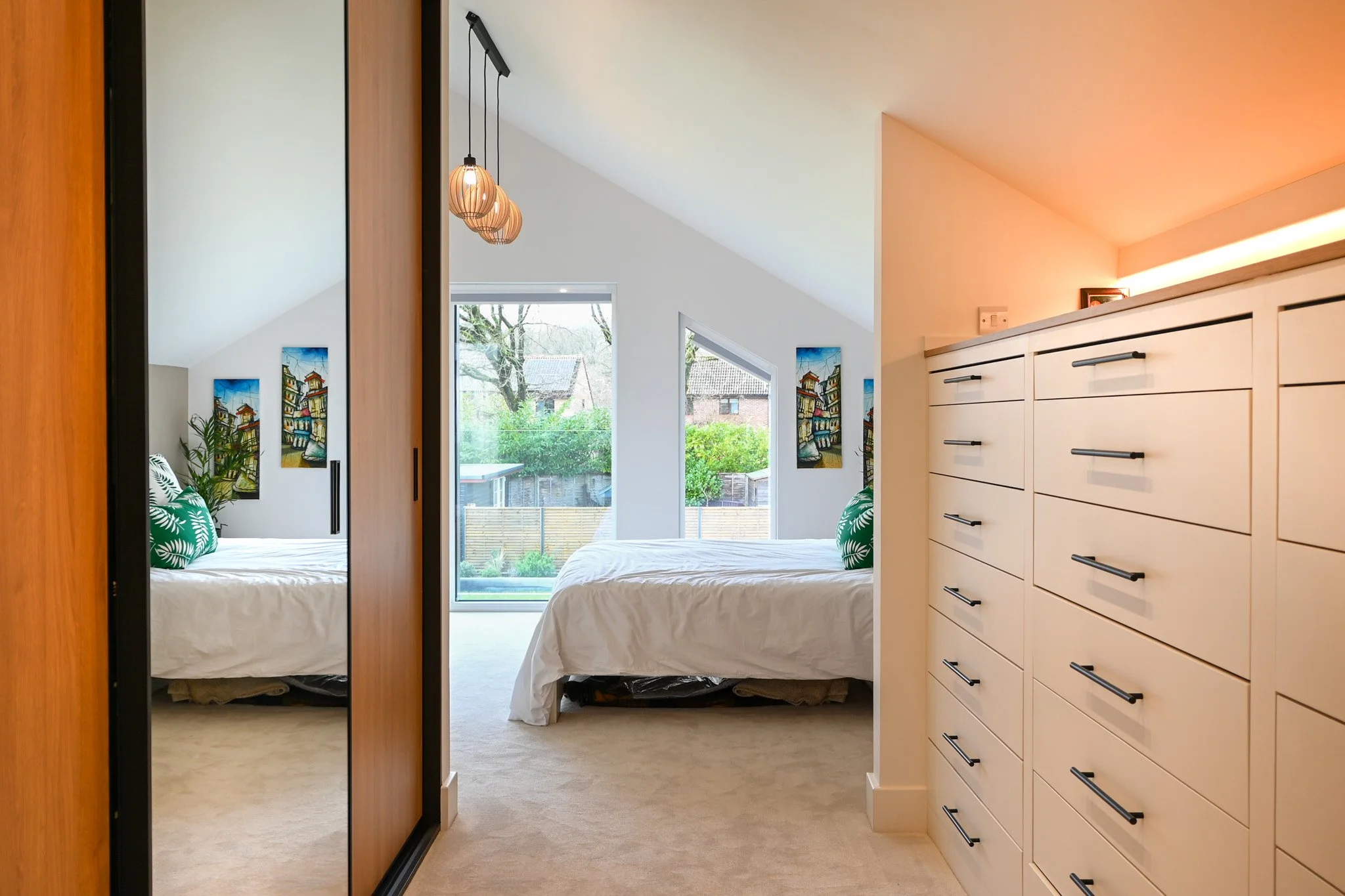
The house contains four bedrooms, including a principal suite with an en-suite bathroom. Large sliding doors and a Juliet balcony enhance ventilation and natural light.
Storage was prioritised throughout the design. Built-in wardrobes and ottoman beds maximise space – an essential consideration in family homes.
Bathrooms and Finishes
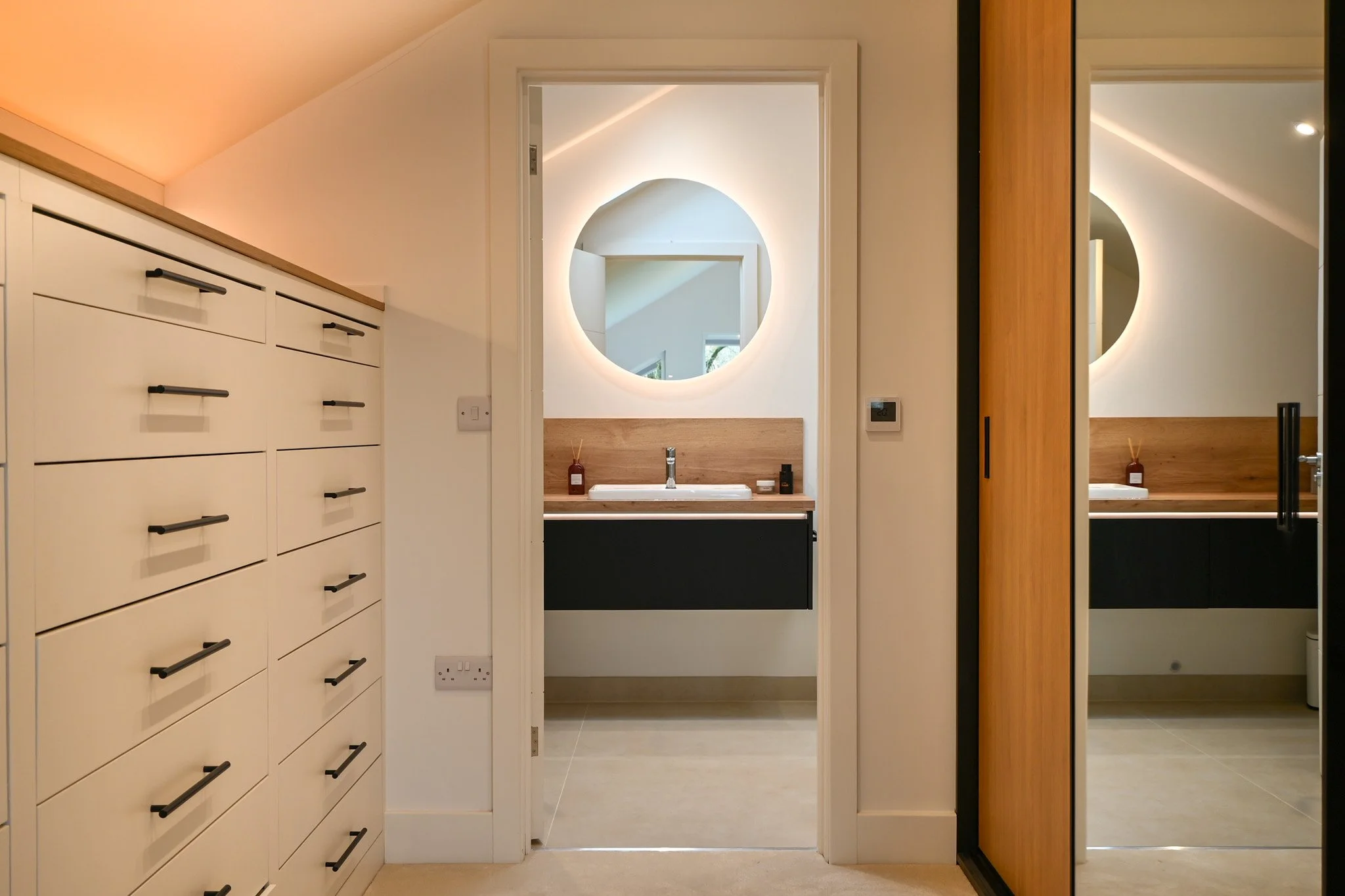
Large porcelain tiles and high-quality sanitaryware create a sophisticated yet practical aesthetic. The use of oversized tiles reduces grout lines and simplifies maintenance, while also contributing to a modern visual style.
Lessons from the Self-Build Journey
This eco self-build demonstrates that sustainable architecture can combine environmental responsibility with family functionality and aesthetic quality. Challenges around airtightness, insulation, and renewable integration were addressed through collaboration with specialists and careful planning.
Key lessons include:
Energy efficiency is achieved through both design and technology.
Simple building forms reduce heat loss and improve performance.
Renewable systems can deliver long-term cost and environmental benefits.
Interior design need not be complex to be effective.
The project stands as an example of what can be achieved through determination and thoughtful design.
Project Info
Location: West Berkshire
Architects: Neon Architecture
Contractors: Greenham Construction
Timber Frame Suppliers: Vision Development
Filmed & Produced by HomeInspire
Photography by InspireMedia
Written by Dan Burge | Founder of HomeInspire
Video Statistics
YouTube Views: 20,000 +
YouTube Impressions: 200,000 +
Instagram & TikTok Views: 125,000 +
To see more, watch our full project tour on our YouTube channel!
Share This Story
Get in touch if you’d like to be featured on HomeInspire.
FAQs – Eco Homes & Self-Build Projects
-
An eco self-build is a home designed and constructed with sustainability as a core principle. This typically includes high levels of insulation, renewable energy systems (such as solar panels and heat pumps), airtight construction, and materials chosen for environmental performance. Unlike traditional builds, the focus is on reducing energy consumption and long-term environmental impact.
-
Costs vary widely depending on size, location, and specification. Eco self-builds often range from £1,500 – £3,000+ per square metre, with renewable technology and high-performance materials influencing the budget. However, long-term savings on energy bills and increased property efficiency can offset upfront investment.
-
Yes – eco homes are designed to minimise energy use. Features such as airtight construction, underfloor heating, solar panels, and heat recovery systems significantly reduce energy demand. In this West Berkshire project, the home uses approximately 5 kW of energy per day compared to over 100 kW in their previous property – demonstrating the efficiency gains of sustainable design.
-
Most self-build projects require planning permission from the local council. Requirements vary by location and design, with considerations around height, materials, and impact on neighbours. Working with planners early in the process and employing professional designers can improve the likelihood of approval.
-
Timber frame is often favoured for eco builds due to its sustainability and energy efficiency. Timber structures can achieve high insulation standards and reduce construction waste. However, brick and block can also be used effectively when combined with modern insulation and airtight design principles. The best choice depends on design goals and site conditions.
You May Also Be Interested In:


HomeInspire visited interior designer Natasha and her own home in Walthamstow, East London - a Victorian house she bought 26 years ago for £125,000, extended by 6 m along the side return and dug down for extra ceiling height, then colour blocked across walls, shutters, ceiling and floor. With shutters made from scaffolding boards, a yellow rubber kitchen floor and a copper pipe light inspired by the Tube map, the renovation has been built up room by room, turning a cold, run-down house into a home shaped by how Natasha actually lives in it.