Triangle House: Inside Rose's Fully Renovated and Extended Edwardian Home in SW London
Produced & Written by Dan Burge | 15 April 2026
HomeInspire visited Rose's fully renovated and extended Edwardian home in Southwest London to film and feature her remarkable transformation of a tired, dated period property into a beautifully considered, light-filled family home. A serial renovator on her third project, Rose project managed and designed every element herself — bringing a sharp eye for colour, eclecticism and detail to every decision made.
Project Overview and Vision
From Dated to Distinctive
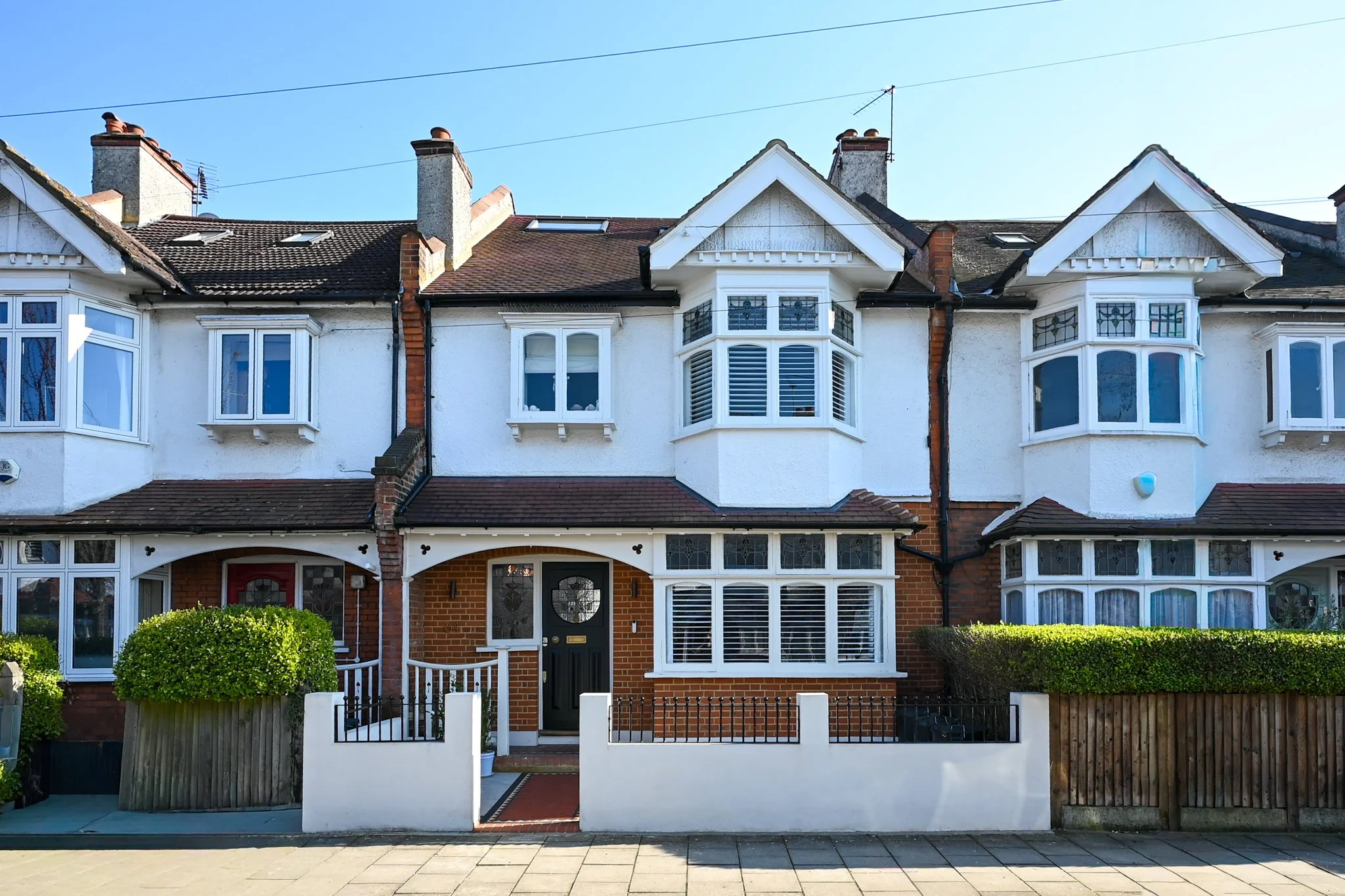
When Rose purchased this Edwardian home in Southwest London in 2021 — two days before the stamp duty holiday ended — the house had been owned by the same person for 40 years. It was in reasonable condition, but nothing about it reflected how Rose and her husband wanted to live. The rear of the house had never been extended, the loft conversion was a poorly executed 1980s job, and the layout felt dated and disconnected. There was, however, something immediately compelling about it.
Rather than diving straight in, Rose spent a full year living in the property before touching a thing. Getting to know its proportions. Understanding the light. Planning what it could become. It was a discipline that would pay off considerably when the work eventually began.
A Serial Renovator's Eye
This is Rose's third renovation. Before this, she and her husband bought a two-bedroom flat in Balham and progressed to a four-bedroom house. Each project has built on the last. What makes this one different is scale — and the confidence that comes from having done it before. Rose handled all of the interior design herself, project managed the build alongside her husband, and made decisive, considered choices at every stage. The result is an eclectic, layered home that is unmistakably hers.
The Team
For the rear extension, Rose brought in dRaw Architecture to advise on design and planning. The build itself was carried out by Aven Construction, a company Rose credits as instrumental to the success of the project. It was Aven who suggested several of the most memorable features in the house — including the glass wine wall beneath the stairs — demonstrating the value of having builders who are genuinely invested in the outcome.
The Ground Floor
The Hallway
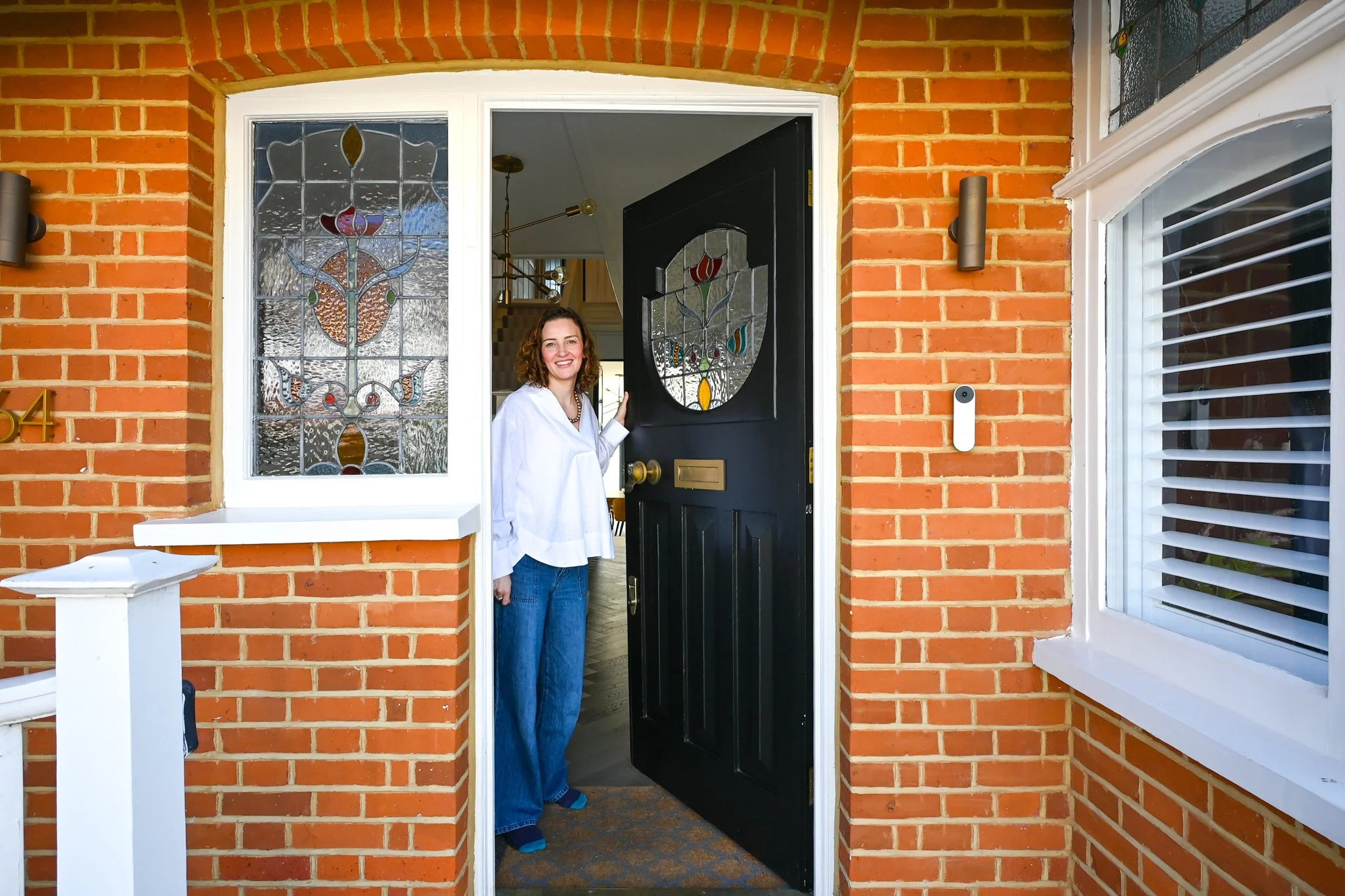
The hallway was one of Rose's primary reasons for buying the house. Edwardian proportions are noticeably more generous than Victorian equivalents, and this one delivers — a wide, welcoming entrance with a graceful twisted staircase that greets you rather than funnels you through. Originally, the space was dark, with no borrowed light and a kitchen door awkwardly positioned to the side.
Rose's intervention was considered and thorough. Full-height crittal-style doors were introduced at the rear, allowing light to travel through from the garden. A skylight was opened up through the top floor, drawing sunlight down through the stairwell. The flooring is Ted Todd herringbone — a material Rose has used in all three of her homes — laid here in a warm mid-tone shade. Walls are painted in Little Green Flint, with Joanna on the woodwork two tones darker, adding depth without strong contrast.
One of the hallway's most clever moves is the wall panelling, which conceals no fewer than three doors — the cloakroom, utility room and a route through to the kitchen — creating a seamless wall rather than a corridor of interruptions.
The Cloakroom
Rose was determined to separate the downstairs cloakroom from the utility room — a common pairing in houses of this type, but one she had no intention of keeping. The result is a bijou, beautifully finished space with one standout feature: three-dimensional tactile tiles that stop every visitor in their tracks. Rose first used these tiles as a kitchen splashback in her previous renovation, and bringing them here felt like carrying a piece of that house into the new one.
The Sitting Room
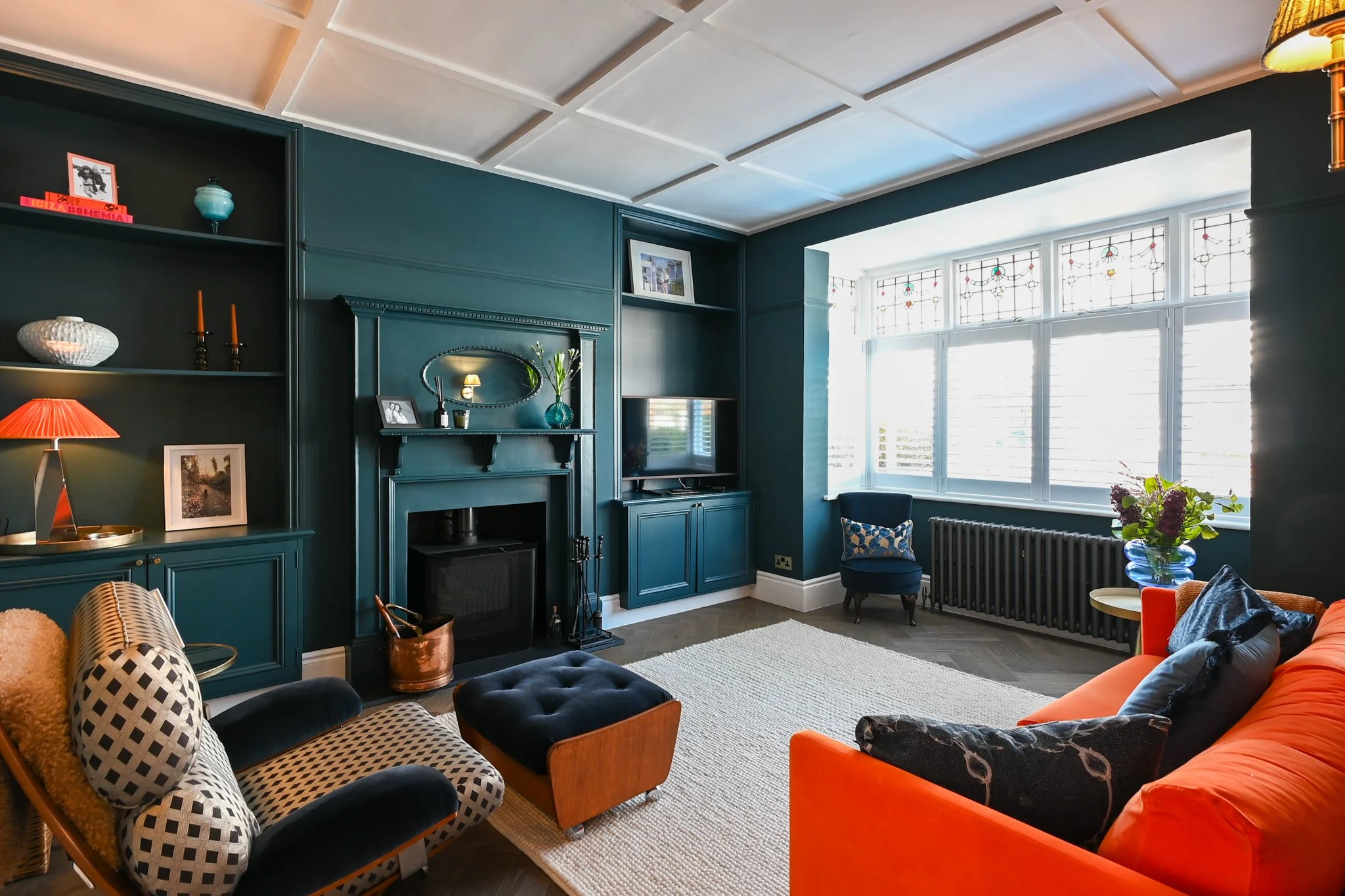
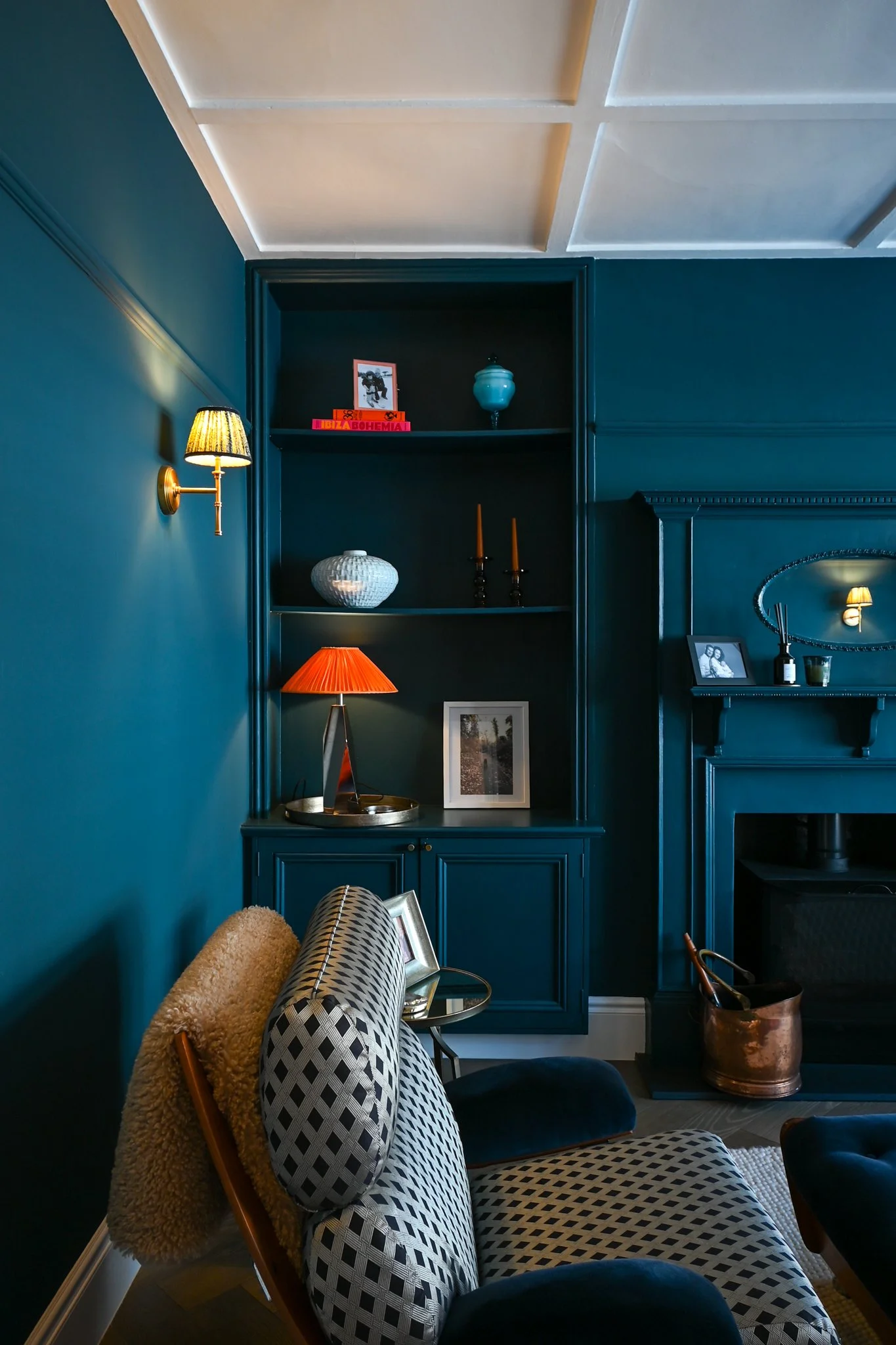
The front sitting room is north facing, and Rose has leaned into it completely. The room is colour drenched in Lick Blue 07 — walls, woodwork, ceiling — creating an enveloping, cosy atmosphere that comes into its own with the log burner lit on a winter evening. A salvaged Edwardian fireplace was sourced to replace one lost in a fire ten years before Rose bought the house. The wall panelling is original to the Edwardian era and was non-negotiable. Four wall lights from Pooky — chosen to complement the period character of the room — replace a pendant that couldn't be threaded through the panelling. An armchair that belonged to Rose's mother in the 1970s, reupholstered by Liberties in a bold Liberty fabric with bright orange detailing, sits in the corner — a reminder that great interiors accumulate over time.
The Rear Extension
Planning and Architecture
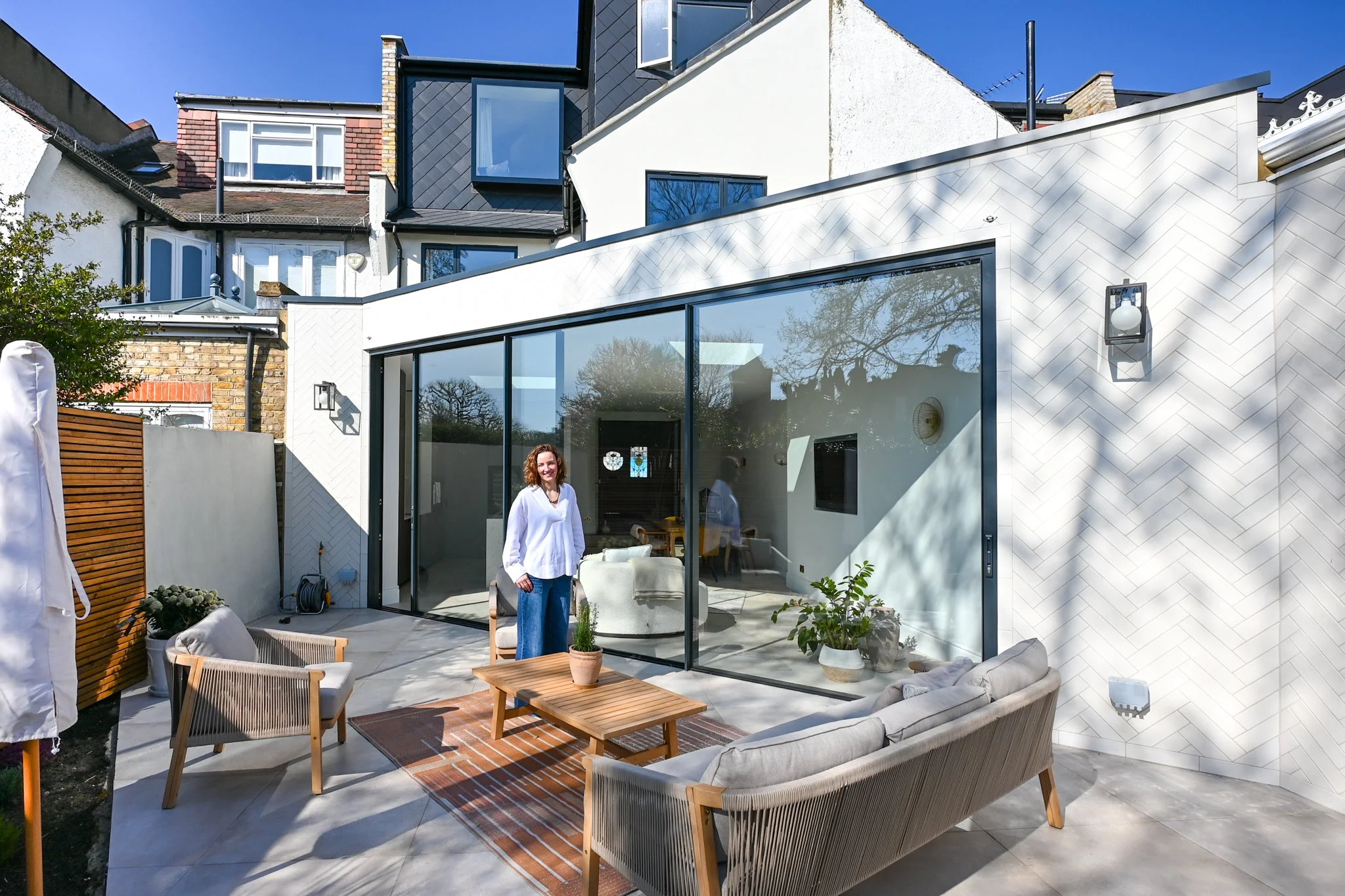
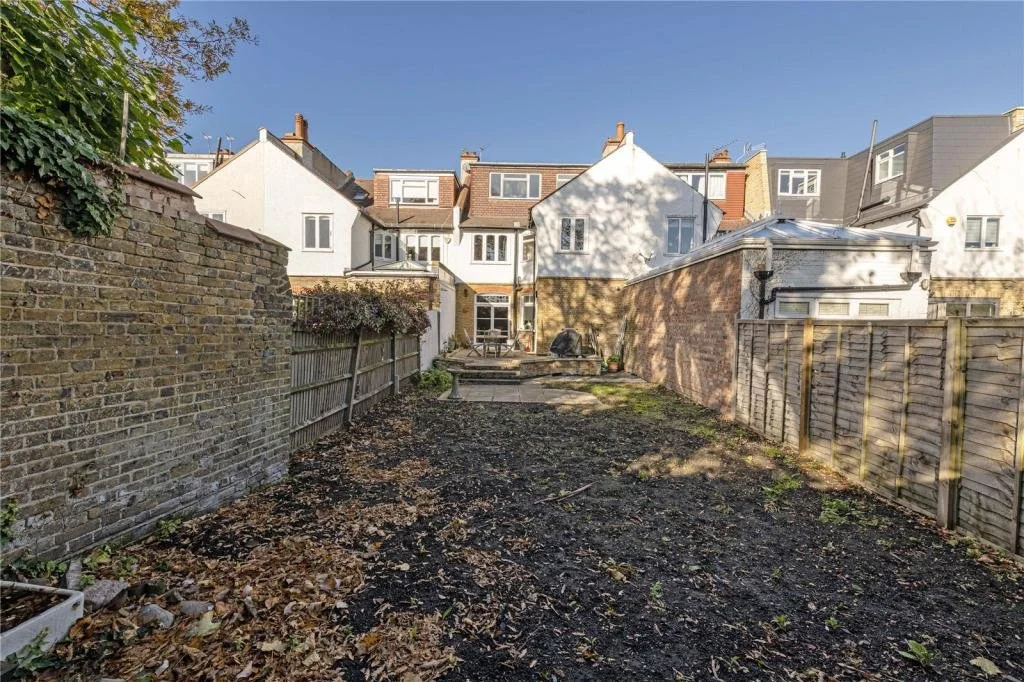
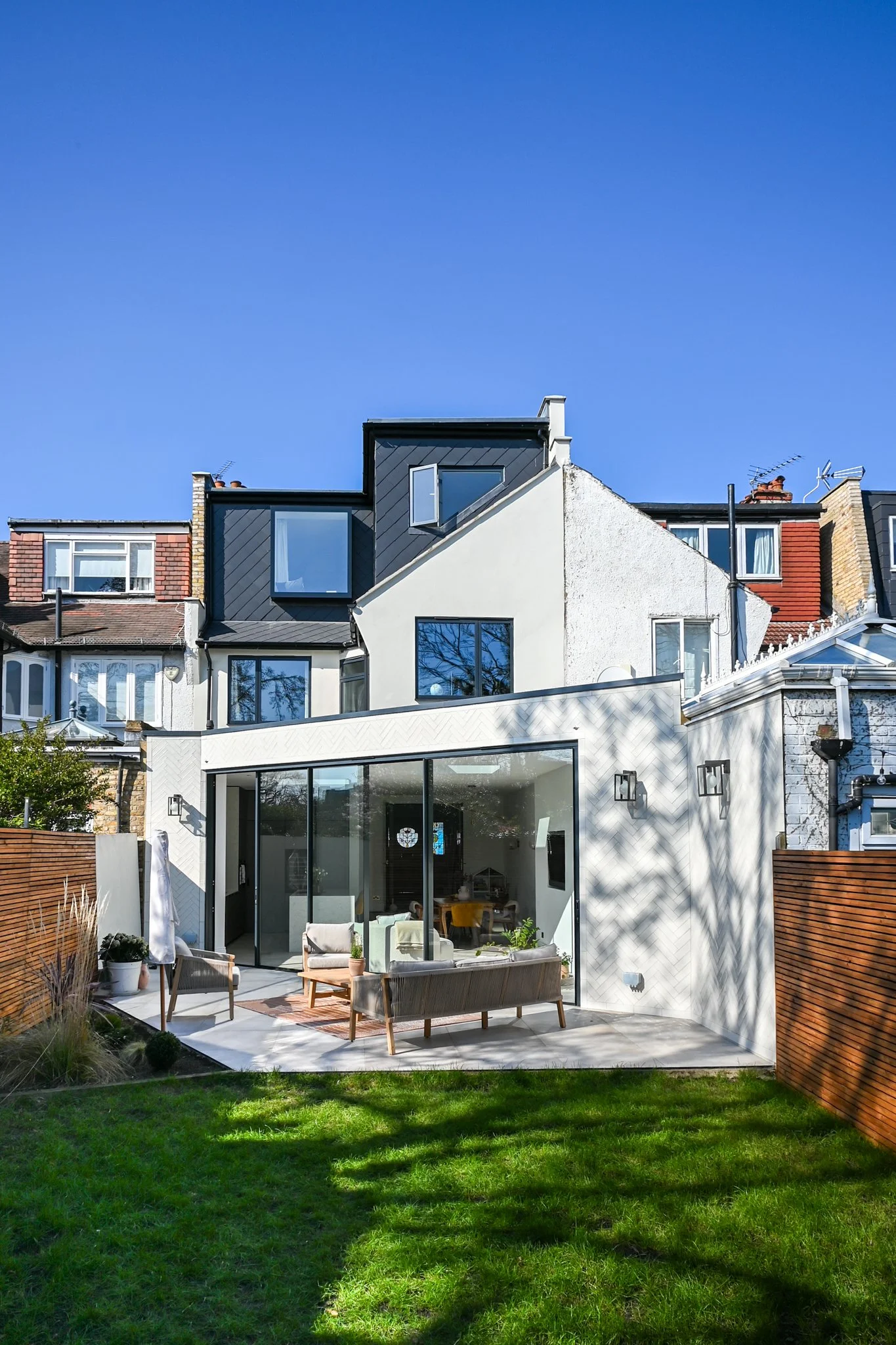
The rear extension is the defining architectural move of this project, and it did not come easily. The house sat between two very different neighbouring additions — one built in the 1980s that extended well beyond what permitted development allows today, and one sitting right at the current boundary. Rose wanted to maximise every centimetre of permitted development on her side while also digging the floor down to achieve 3m ceiling heights throughout the new space.
Two planning applications were required. The first was rejected — the ceiling heights were deemed too tall for the area. Not because the extension broke the parapet line of the neighbours, but because digging down had increased the internal volume. It was a subtle but important distinction that ultimately required the planning consultants to visit the site in person before the second application was approved.
The plan that emerged is what Rose calls the triangle house. Because the 1980s extension to the left extends further than the permitted development boundary and the addition to the right sits exactly at it, the geometry of the new space produces an unusual triangular footprint at the rear — a condition the architects embraced rather than resolved, creating an informal snug area that the family now use daily.
The Kitchen
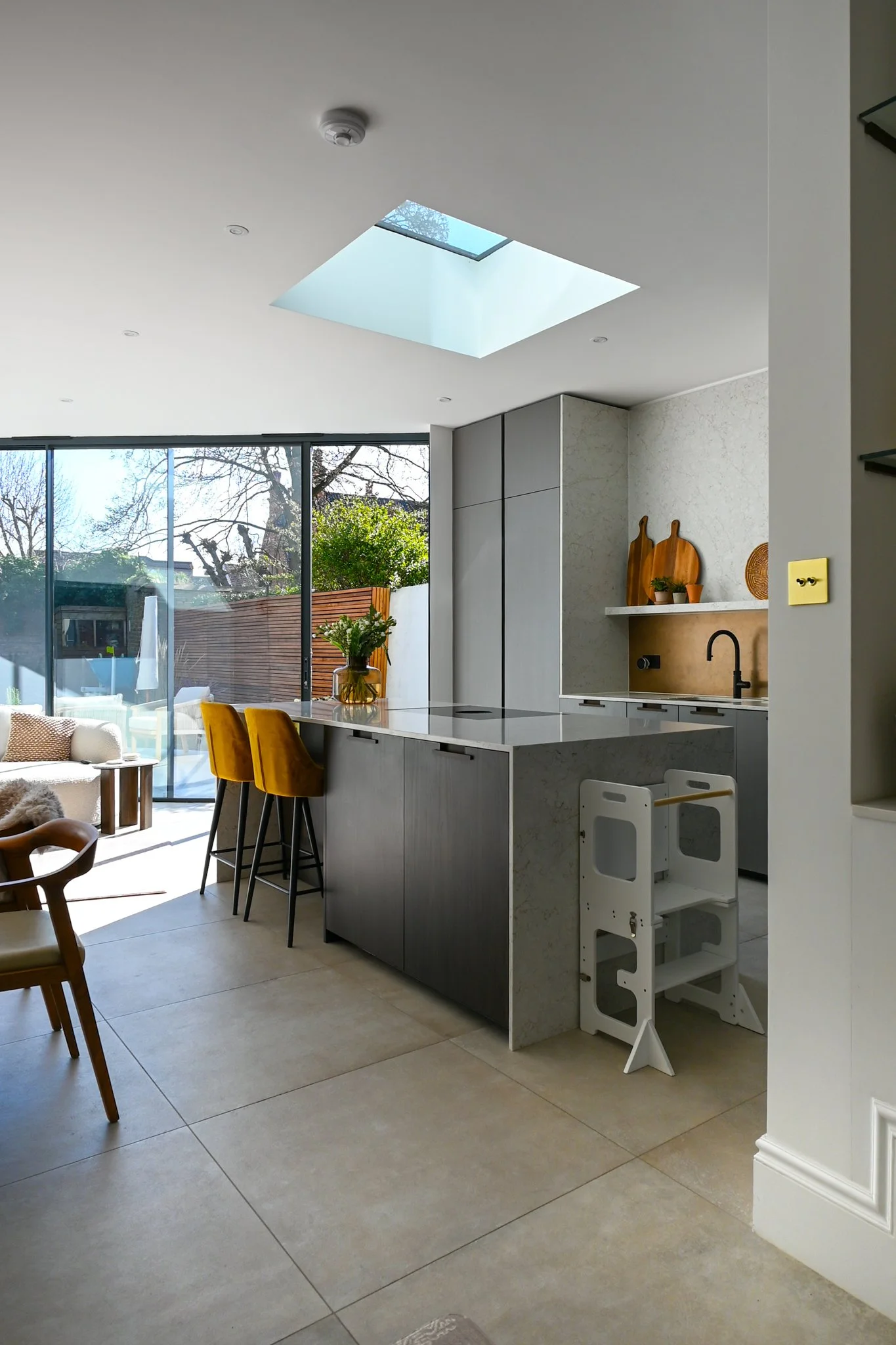
The kitchen is handbuilt in Italy and was designed in close collaboration with Espresso Design. Rose was deliberate in moving away from the ubiquitous shaker kitchen — here the units are handle-free and handle-mixed, in a two-tone pairing of silver grey and walnut. The splashback runs floor to ceiling in quartz stone, matching the island and taking full advantage of the 3m ceiling height. The hob is a Bora induction unit with an integrated extraction system built into the worktop — a revelation for Rose and her husband, who had always positioned the sink in the island to avoid overhead extractor fans blocking the view to the garden.
Appliances are Samsung and Miele. The floor is porcelain tile — the same tile that runs uninterrupted onto the garden patio outside, creating a seamless indoor-outdoor connection underfloor heated throughout. A hidden pantry door sits flush with the cabinetry, concealing everything from sterilisers to stand mixers.
Light, Glazing and the Garden
The rear of the house is defined by glass. Three sets of 2m wide by 3m high sliding doors — the largest that could be brought through the front of the property without removing the stained glass window — open onto a fully south-facing garden and patio. The same porcelain tiles used on the kitchen floor continue out onto the patio, reinforcing the sense of inside-outside continuity. A herringbone pattern on the exterior render of the extension ground floor echoes the Ted Todd flooring in the hallway, a detail Rose's builders persuaded her to include. The loft extension above features roof tiles laid in a diamond pattern — a small but deliberate move to distinguish the house from its neighbours.
First Floor
The Family Bathroom
Originally a shower room, the family bathroom was extended by taking space from the adjacent office to accommodate a full bath — essential for a young family. The room features a distinctive angular window — a characteristic shared with only four other houses on the road — which presented a welcome challenge when planning the layout. Rather than placing a mirror above the sink, Rose positioned a full mirror opposite the door and introduced a vanity mirror on the angled wall beside it. Tiling is from Porcelain Nozza, with four large format tiles making up the majority of the walls.
The Children's Room
A relatively modest room in footprint, the nursery carries a safari theme throughout — walls in Lick Green 09, wall stickers Rose pinned and arranged herself to create what most visitors assume is a painted mural, and blinds and light fittings that continue the theme. The original Edwardian fireplace in this room was non-negotiable.
The Guest Suite
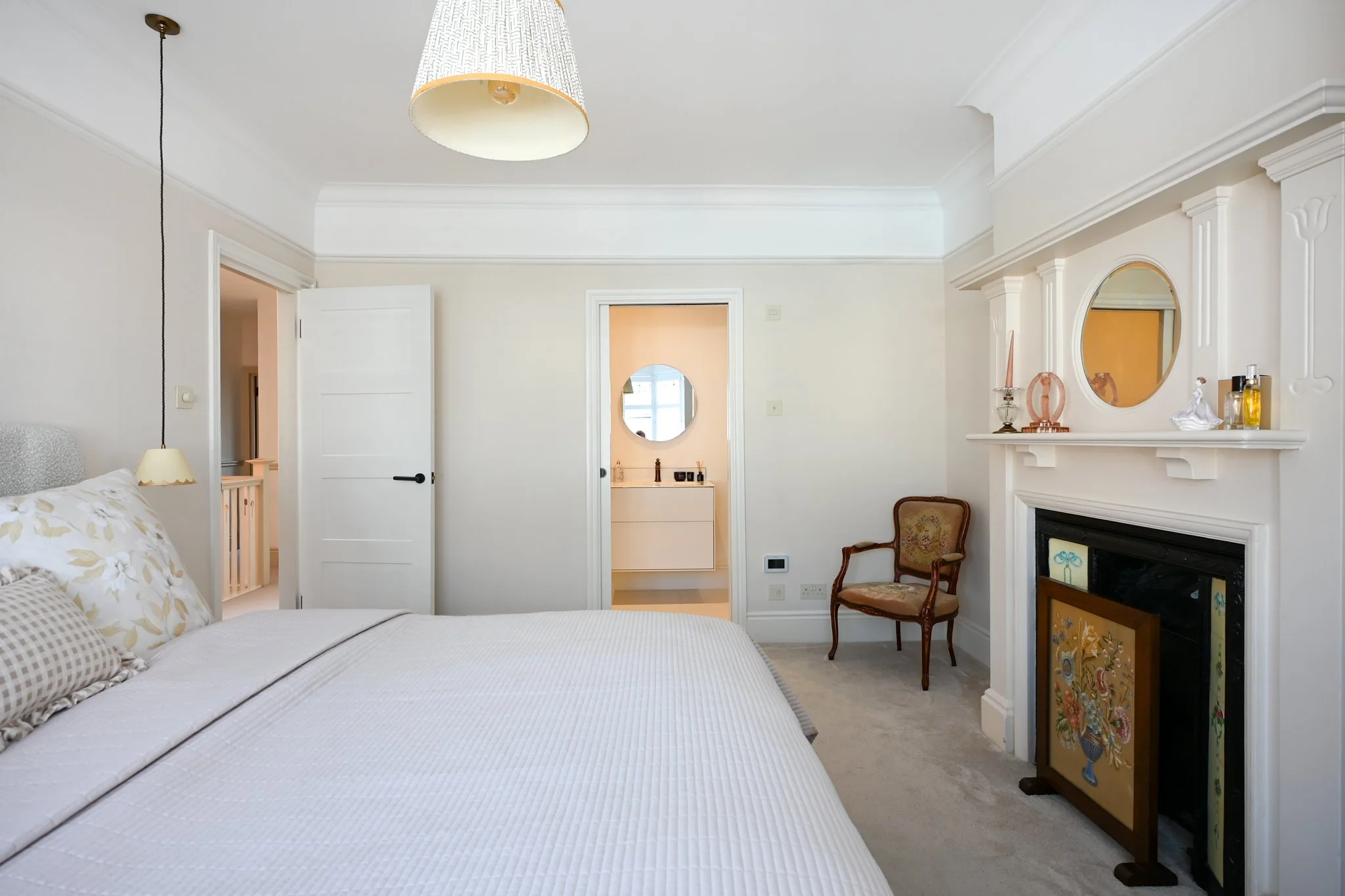
The main spare room has been given a warm, feminine, elegant character. Walls are colour drenched in Farrow & Ball Dimity, with the original Edwardian fireplace — its pink-toned tiles informing the soft pink palette of the whole room — as the focal point. Pendant lights from Pooky flank the bed. A wardrobe sourced from an antique centre in Yorkshire and pieces inherited from Rose's great aunt — including a hand-stitched tapestry — give the room a personal, accumulated feel. The ensuite is finished in copper accessories and small-format porcelain tiles, with a niche for toiletries built in — a feature Rose includes in every bathroom she designs.
HomeInspire Downloads
Download Our Complete Renovation Handbook
A step-by-step guide to planning, designing, and delivering your dream home.
Planning your first renovation doesn’t have to be overwhelming. This 62-page step-by-step eBook guides you through every stage - from budgeting and planning to design, permissions, and finishing touches. Packed with expert advice, checklists, and cost guides, it helps you avoid mistakes, stay on track, and bring your dream home to life.
The Loft Conversion
What makes Rose's renovation so compelling is not any single decision in isolation, but the coherence of the whole. From the hallway to the principal suite, the house tells a consistent story — traditional Edwardian character preserved at the front, clean and confident contemporary living at the rear, with an interior that layers antique finds, inherited pieces and bespoke joinery into something that feels entirely personal and entirely considered.
This is a home that could only have been created by someone with genuine clarity of vision, the patience to plan properly and the confidence to push through a difficult planning process to achieve what they wanted. Rose had all three. The result speaks for itself.
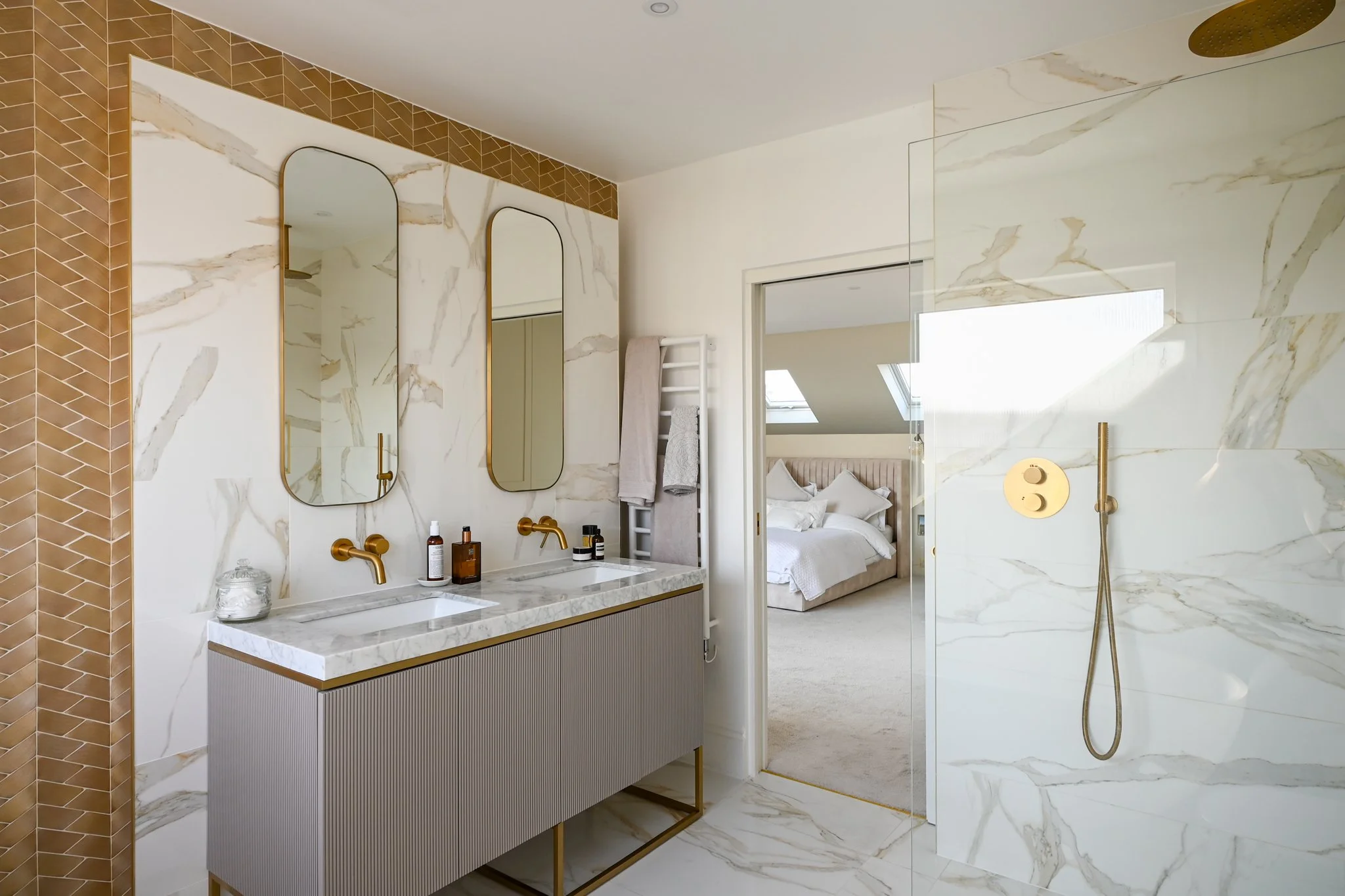
The principal suite occupies the full width of the loft level, significantly expanded from a single bedroom and bathroom that previously existed here. The entire bathroom is new build — a new extension that pushed out as far as permitted development allowed — and contains a freestanding bath, double sinks and a walk-in shower. Lusso taps feature throughout. The mirrors — found on M&S online for £40 — were a fortunate find that matched the tap finish precisely.
The bedroom itself is anchored by a custom joiner-built headboard wall featuring integrated electrics, bedside lighting, open storage and a full library of books behind it. Rose positioned the bed in the centre of the room facing the large window — a deliberate decision to take advantage of the view across a green garden square opposite. A bespoke staircase light installation — made by Rose herself after failing to find anything commercially available that worked on the diagonal of the stairwell — hangs through the full height of the house, visible from the ground floor.
A Home Built on Patience and Conviction
What makes Rose's renovation so compelling is not any single decision in isolation, but the coherence of the whole. From the hallway to the principal suite, the house tells a consistent story — traditional Edwardian character preserved at the front, clean and confident contemporary living at the rear, with an interior that layers antique finds, inherited pieces and bespoke joinery into something that feels entirely personal and entirely considered.
This is a home that could only have been created by someone with genuine clarity of vision, the patience to plan properly and the confidence to push through a difficult planning process to achieve what they wanted. Rose had all three. The result speaks for itself.
Project Info
Location: Wandsworth
Architects: dRaw Architecture
Contractor: Avian Construction
Kitchen Designer: Expresso Design
Filmed & Produced by HomeInspire
Photography by InspireMedia
Written by Dan Burge | Founder of HomeInspire
Video Statistics
YouTube Views: tbc
YouTube Impressions: tbc
Instagram & TikTok Views: tbc
To see more, watch our full project tour on our YouTube channel!
Share This Story
Get in touch if you’d like to be featured on HomeInspire.
FAQs - Edwardian Homes & Rear Extensions
-
Many rear extensions fall within permitted development rights and do not require a formal planning application, provided they meet specific criteria around size, height and materials. However, if you are seeking to dig down to increase ceiling heights, or if your property sits in a conservation area, you are likely to require planning permission. Always consult your local planning authority or an architect before proceeding.
-
Timelines vary depending on the scale and complexity of the work. A project of this nature — involving two separate planning applications, a full rear extension, loft works and complete interior renovation — typically takes between 12 and 18 months on site, with additional time required for the design and planning stages beforehand.
-
One approach, used here, is to dig the floor level of the new extension down below the existing ground floor level. This can significantly increase internal ceiling height without raising the roof line above what planning will permit. It does, however, add cost and complexity to the build, and will typically require a planning application and structural engineering input.
-
Continuity is key. Using the same tile or stone inside and out — as Rose did here with her porcelain tile running from kitchen floor to garden patio — creates a seamless visual connection that makes both spaces feel larger and more connected. For the rest of the ground floor, hardwearing engineered oak in a herringbone pattern remains a perennially strong choice for period properties.
-
The most successful approach is usually to draw a clear line between old and new rather than trying to blend them. Preserve and restore what is original at the front and in the original rooms — fireplaces, cornicing, original windows — and allow the extension to be confidently contemporary. The contrast, handled well, is what makes the architecture interesting.
You May Also Be Interested In: