
Bowerdean House, Fulham.
A Full Back to Brick Renovation & Extension Project by EMR Architecture.
Written by Dan Burge | 15 December 2025
We filmed this project with Award-Winning Architect Emilie Moran, Director of EMR Architecture, in Fulham.
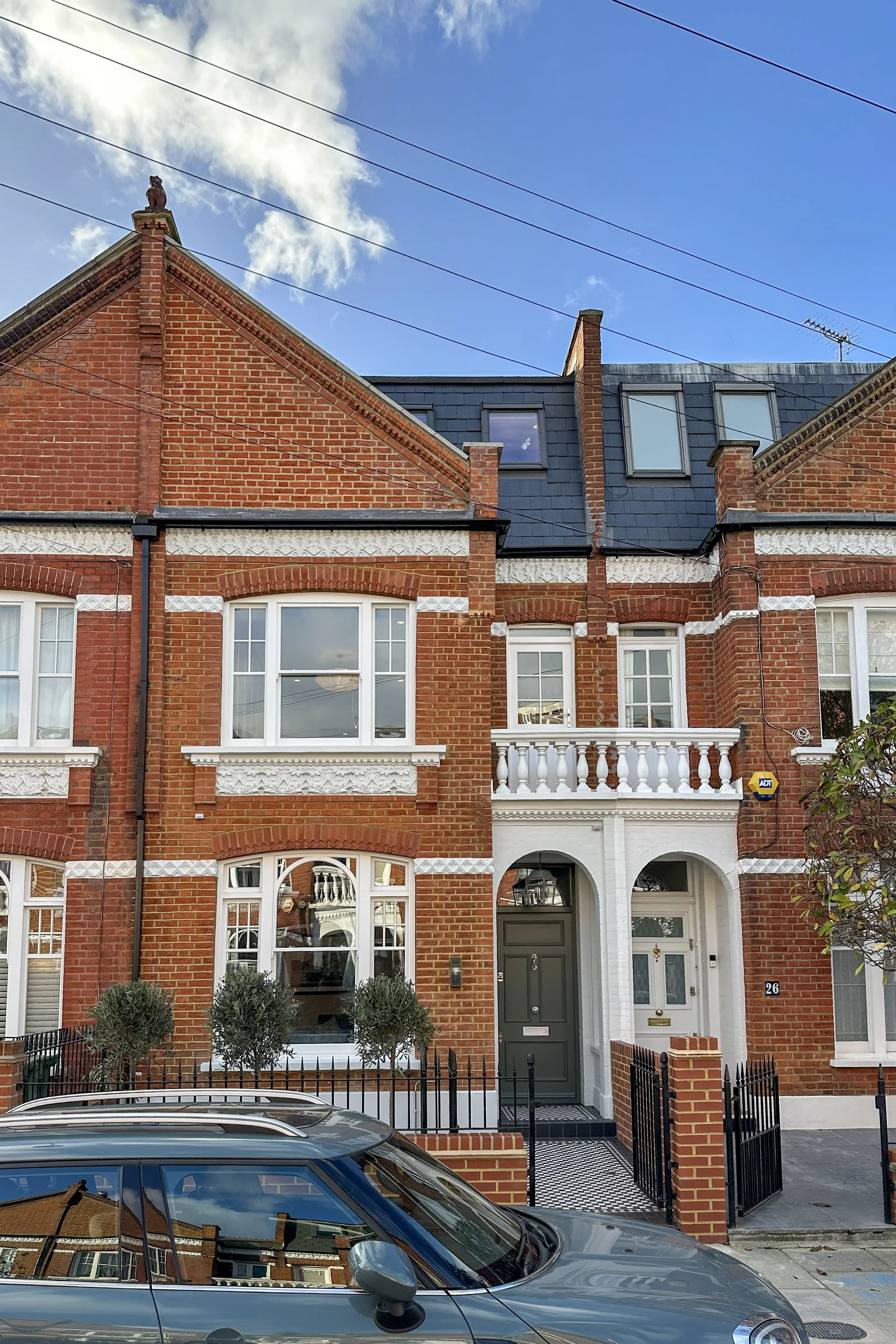
In this project tour, we take you inside Bowerdean House, one of the iconic Lion Houses set within the prestigious Peterborough Estate. Commissioned by local developer Alphabrix, the home underwent a complete back-to-brick refurbishment, including a newly excavated basement, rear and side extensions, and a full reconfiguration of the internal layout.
The result is a bright, contemporary six-bedroom family home that blends the charm of a classic Victorian Lion House with thoughtful modern design, generous volumes, and an exceptional sense of flow across all floors.
In this tour, we walk through the entire house with Emilie, hearing her insights into the architectural decisions behind the project — from layout planning and light strategy to storage, material choices, and family-focused design.
“This is a typical Victorian Lion House in Fulham,” Emilie explains. “They’re defined by their proportions and character, but they often need a complete rethink to work for modern family life.”
Reworking a Victorian Lion House
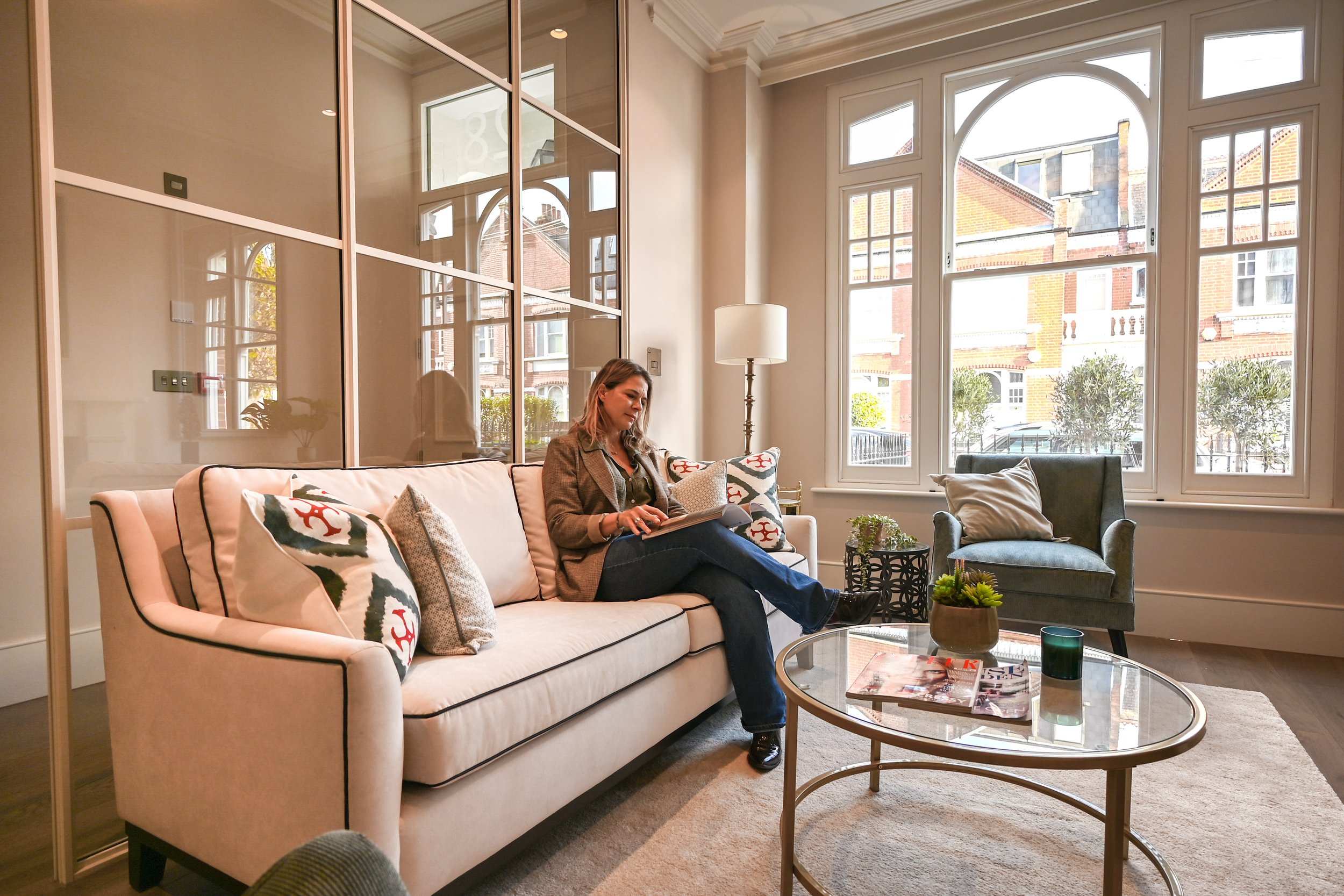
Like many Lion Houses, the original layout featured a long, enclosed front living room separated from the entrance hall. Emilie describes how this traditional arrangement often feels restrictive, noting that “the typical Victorian property has quite a long front living room with a wall separating the entrance,” which can make the ground floor feel closed off.
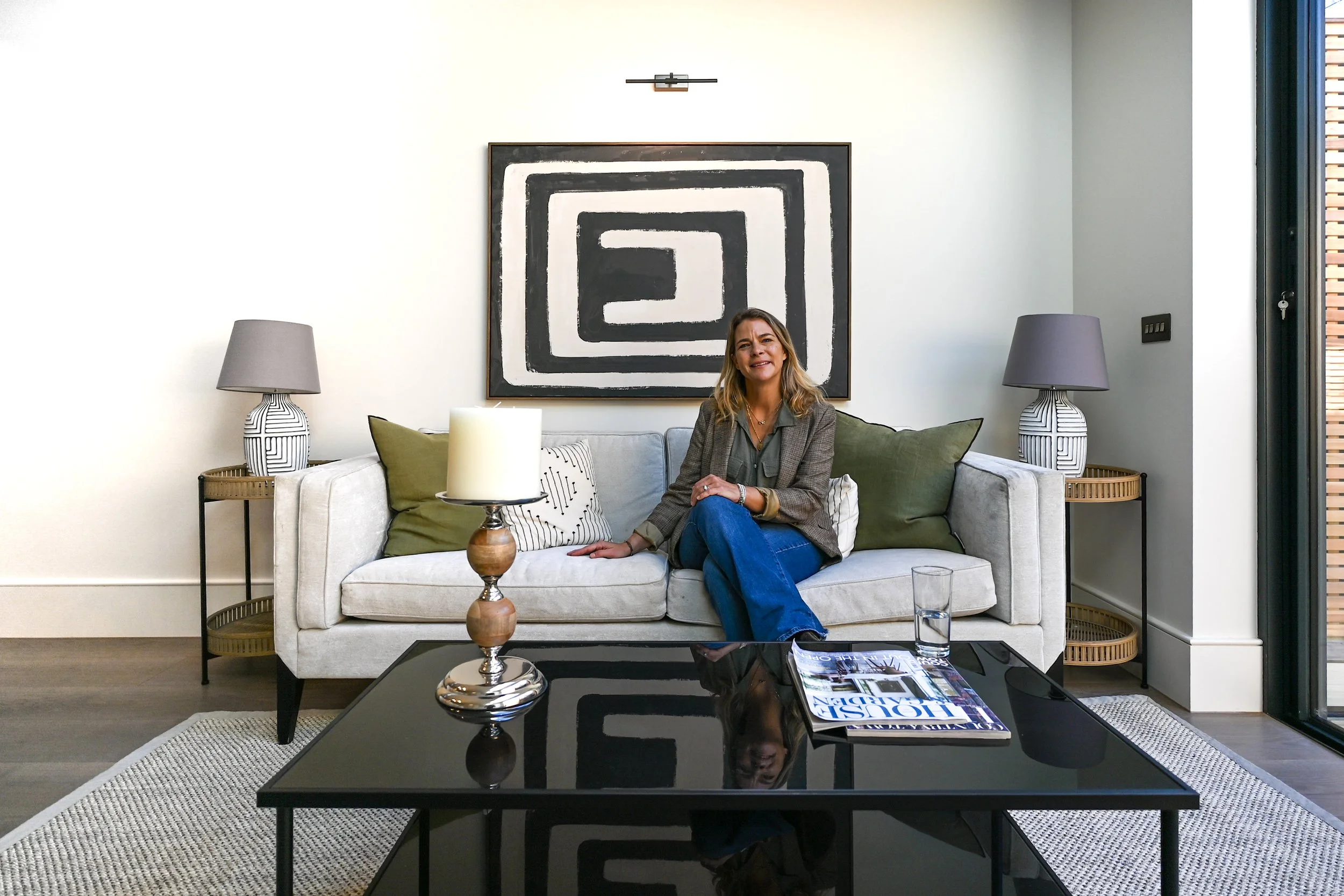
To counter this, the front reception has been redefined with a Crittall-style glass partition, opening sightlines while maintaining calm and acoustic separation. The often-awkward zone behind the front living room - a space Emilie says people “never really know what to do with” — has been transformed into something highly functional. Instead of leaving it unused, it now accommodates generous coat and shoe storage alongside a neatly integrated cloakroom.
That balance between practicality and elegance runs through the detailing. The new cornicing incorporates a concealed curtain pelmet, allowing the curtains to sit discreetly behind the moulding. As Emilie explains, “we created a little pelmet so the cornice can run in front, and the curtains sit behind it,” preserving the classical proportions while supporting a clean, contemporary interior.
The fireplace retains a traditional appearance but uses a bioethanol insert, chosen with family life in mind. Emilie notes that bioethanol feels “much safer around children” and, importantly, allowed the removal of chimney breasts on the upper floors — unlocking more space for storage and better room layouts throughout the house.
A Kitchen Designed Around Everyday Life
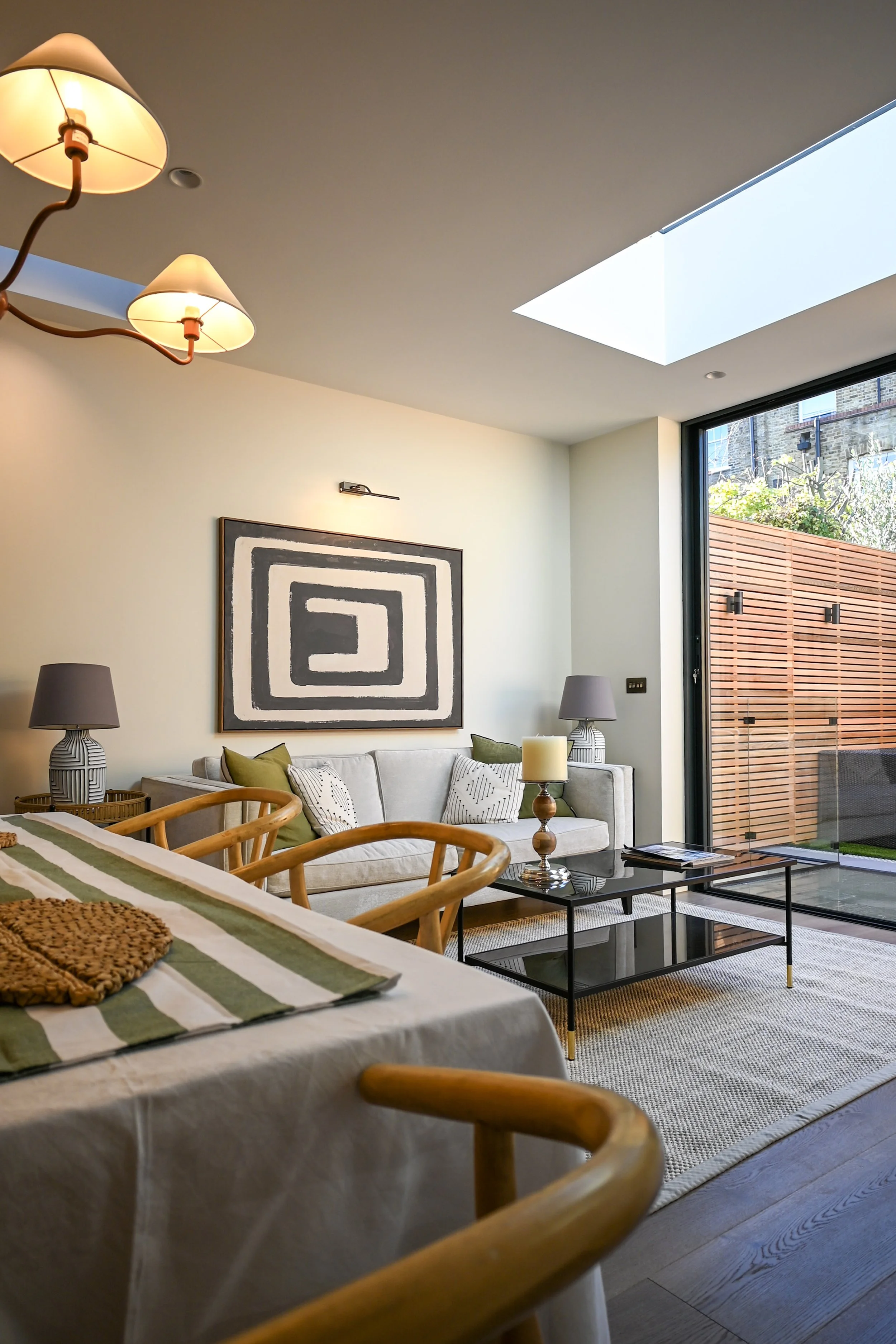
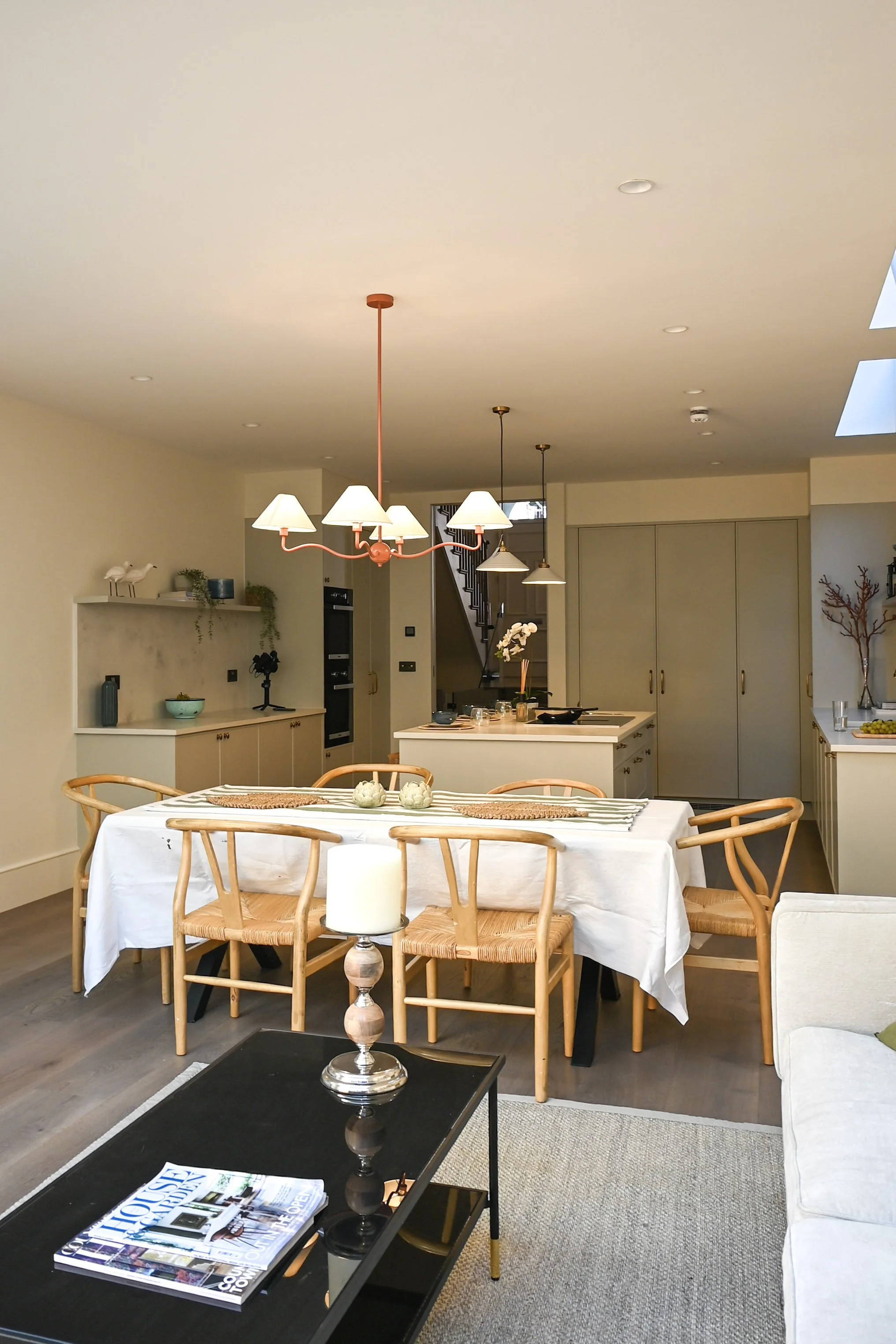
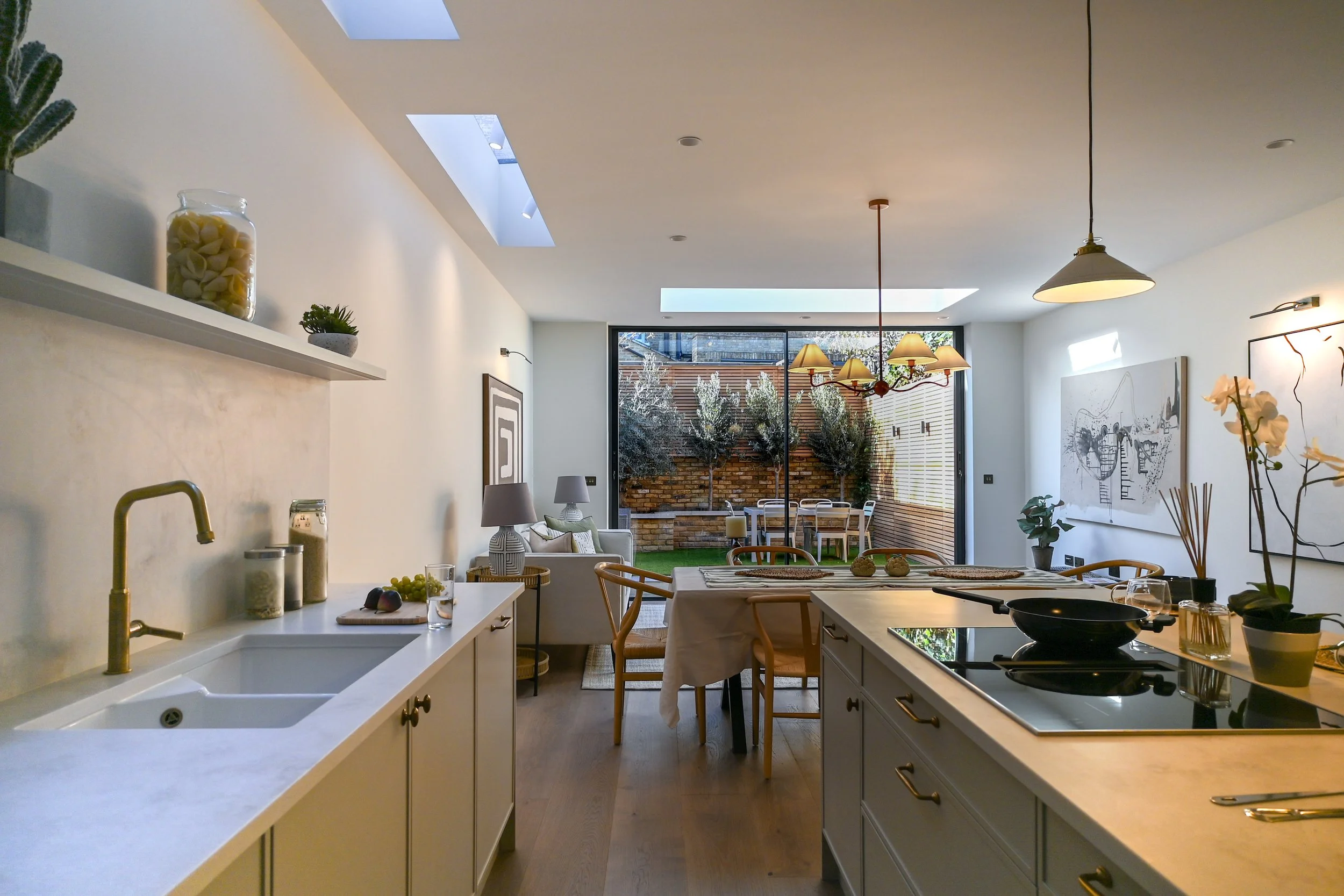
At the rear of the house, the ground floor opens into a large kitchen–dining–living space that forms the heart of the home. Emilie is clear that kitchen design must be rooted in day-to-day use, explaining that “it’s very important to design a kitchen in a very practical way — that’s something we are quite passionate about.”
The layout follows the classic kitchen triangle, ensuring ease of movement between sink, hob, and fridge. As Emilie puts it, “your sink, your hob, and your fridge are the three things you need really easy access to.” If compromises are needed, she explains, it should be elsewhere: “you don’t tend to be in and out of your oven all the time.”
A double sink allows washing and drying to happen simultaneously, helping to keep worktops clear — something Emilie values highly, noting that it keeps the kitchen “completely free of clutter.” Storage is built into the island on both sides of the hob, while a walk-in pantry with integrated power allows appliances like the microwave to be hidden from view.
Visually, the kitchen is deliberately softened. Upper cabinetry has been kept to a minimum, replaced with open shelving so the space feels lighter and more relaxed. Emilie explains that when a kitchen doubles as a living space, “it’s important to make it feel more like a living room than just a kitchen.”
The dining table is positioned perpendicular to the island, a subtle move that has a big impact. Because Victorian houses are typically very linear, Emilie notes that turning the table in this way “gives a real sensation of width” and improves both circulation and the overall feeling of space.
Extensions, Light, and Garden Connection
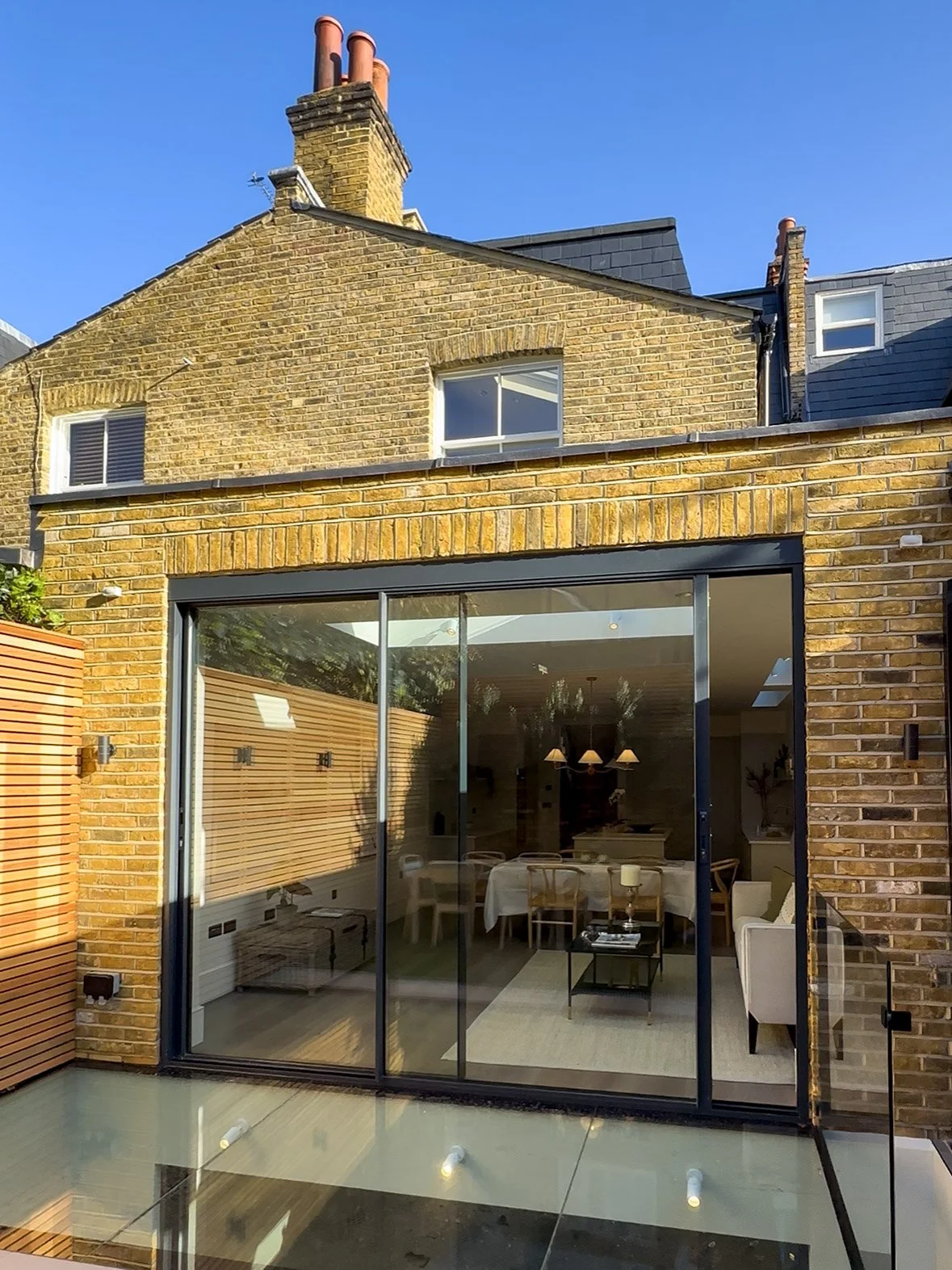
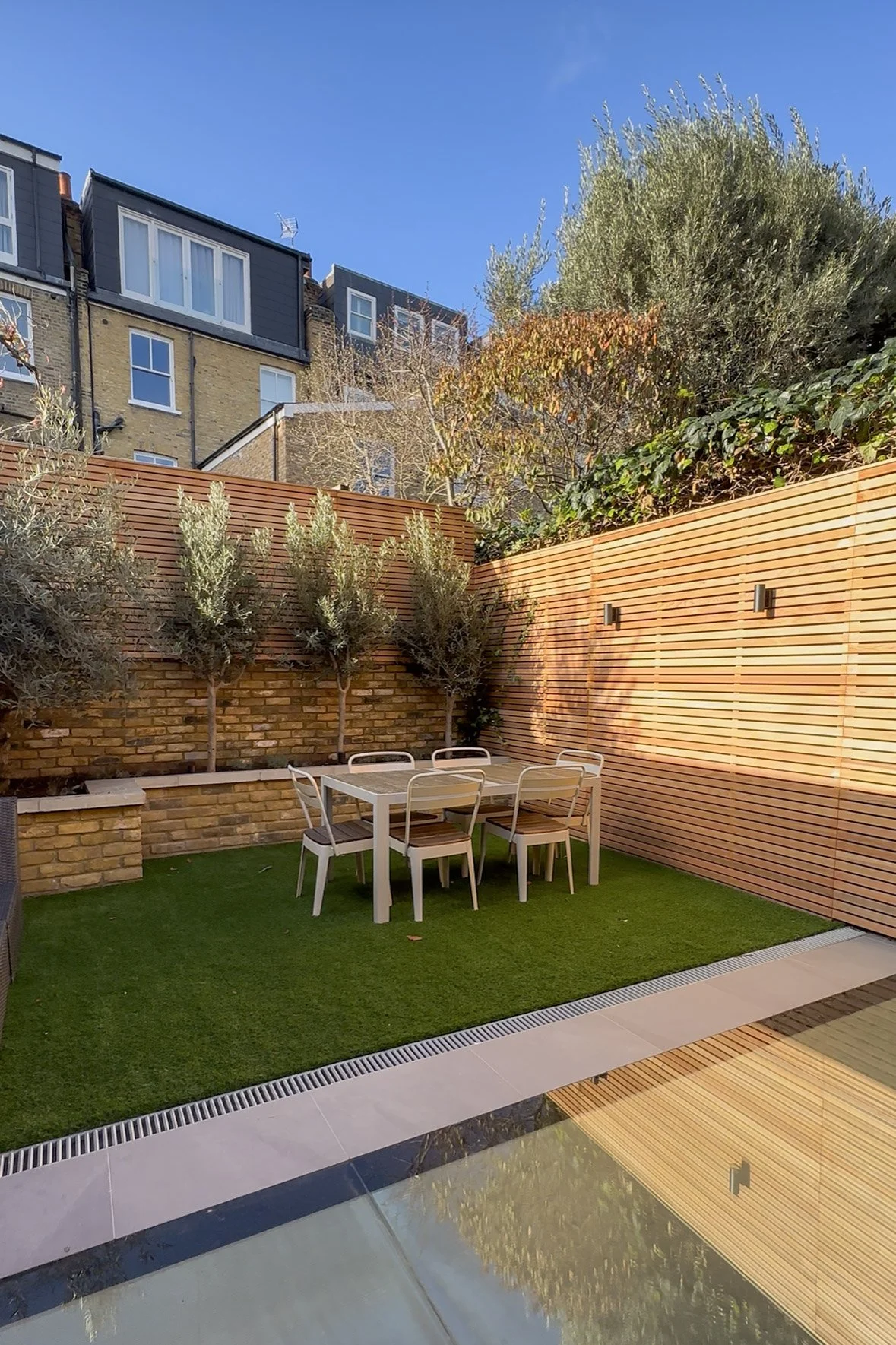
The house was extended 3.5 metres to the rear, in line with planning regulations, while retaining over half of the garden. Rooflights were introduced wherever possible, reflecting Emilie’s belief that natural light is fundamental to good design. As she jokes, “being French, light is very important — it’s something I suffer with a little bit in England during winter.”
Large sliding doors connect the kitchen to the garden, prioritising slim frames and uninterrupted views rather than full-width openings. Emilie is pragmatic about this choice, asking, “how many days can you really enjoy a fully open door in London?”
A walk-on glass panel above the basement allows daylight to filter down into the lower level, while also supporting natural ventilation. Though compact, the garden has been carefully designed to look good year-round, with evergreen planting ensuring the view from inside always feels considered.
A Fully Excavated Basement Level
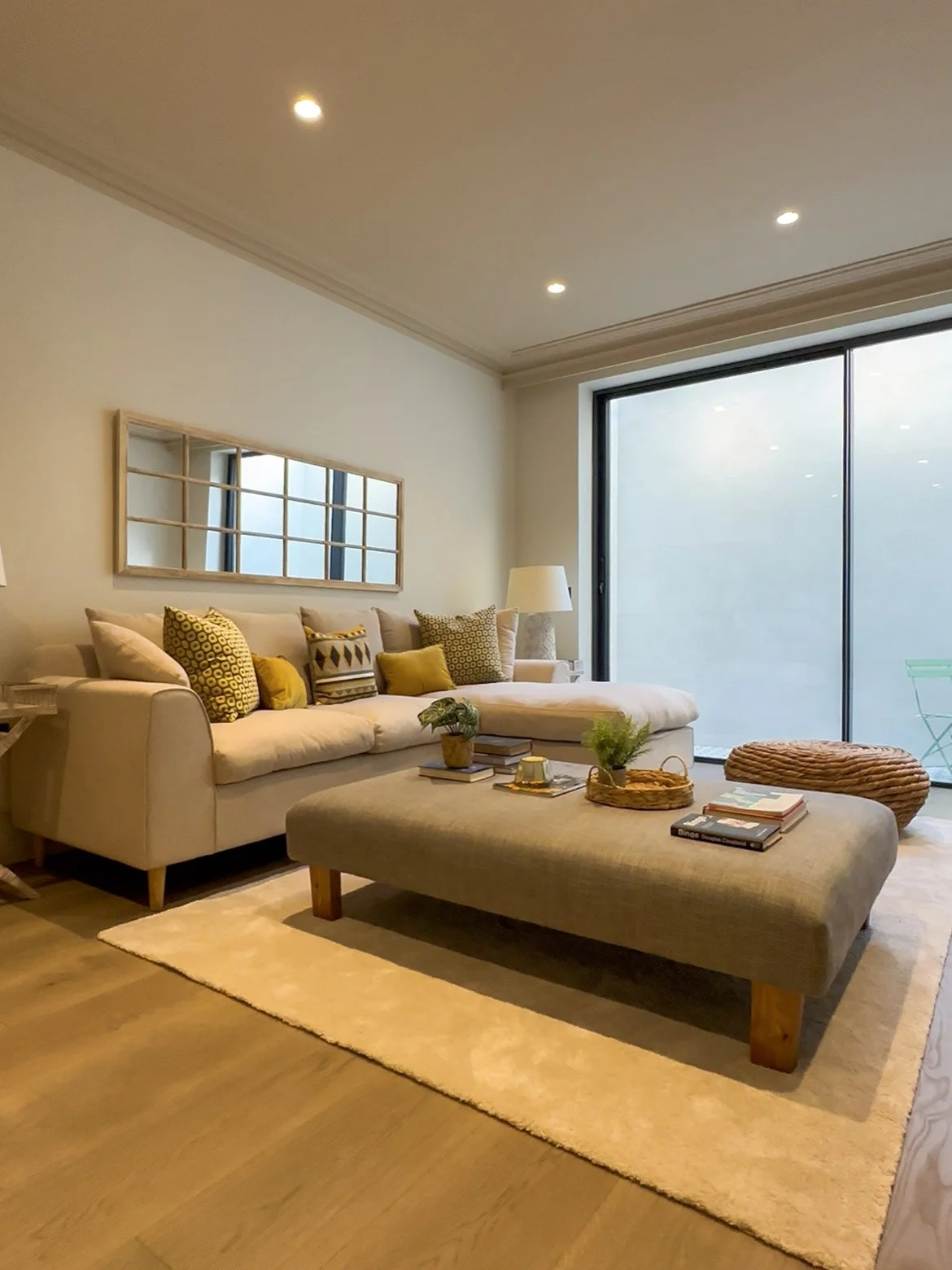
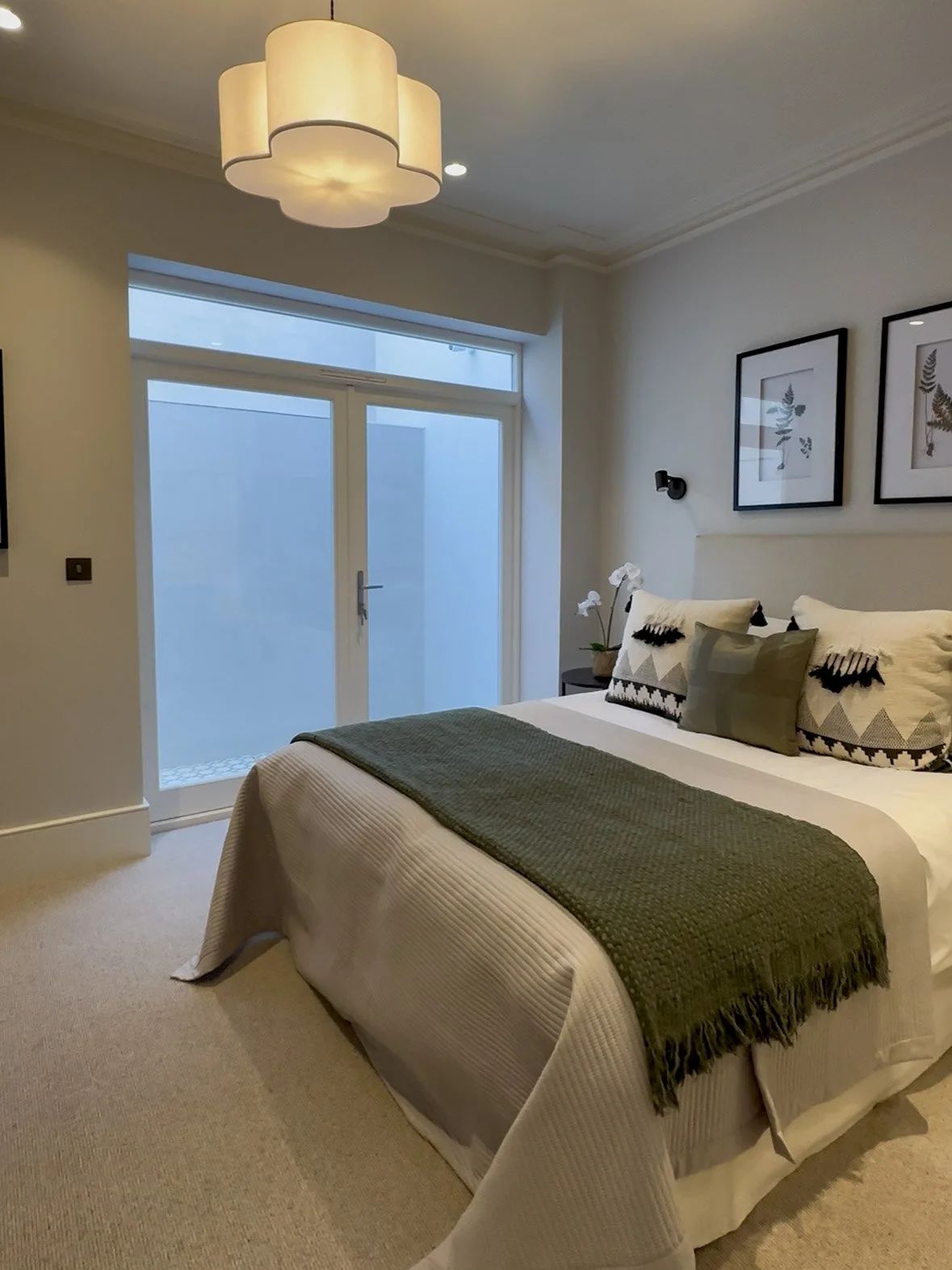
The basement level was entirely excavated, creating a substantial new floor with 2.8-metre ceiling heights. It now functions as a flexible guest and entertainment level, housing a guest or nanny bedroom with ensuite, a large utility room, a separate WC, extensive storage, and a family media and playroom.
Natural light was a key concern. Emilie explains that basements should never feel like cellars, which is why wide corridors, large glazed doors, and a generous lightwell were introduced. Walk-on glass at the rear further enhances the sense of connection to the garden above.
Pocket doors allow spaces to be closed off acoustically when needed — particularly useful when children are playing or watching TV downstairs. Reflecting on the decision to dig down, Emilie notes that creating a basement is often “much cheaper than moving house,” adding her guiding principle for projects like this: “don’t move — improve.”
Upper Floors: Privacy, Comfort, and Storage
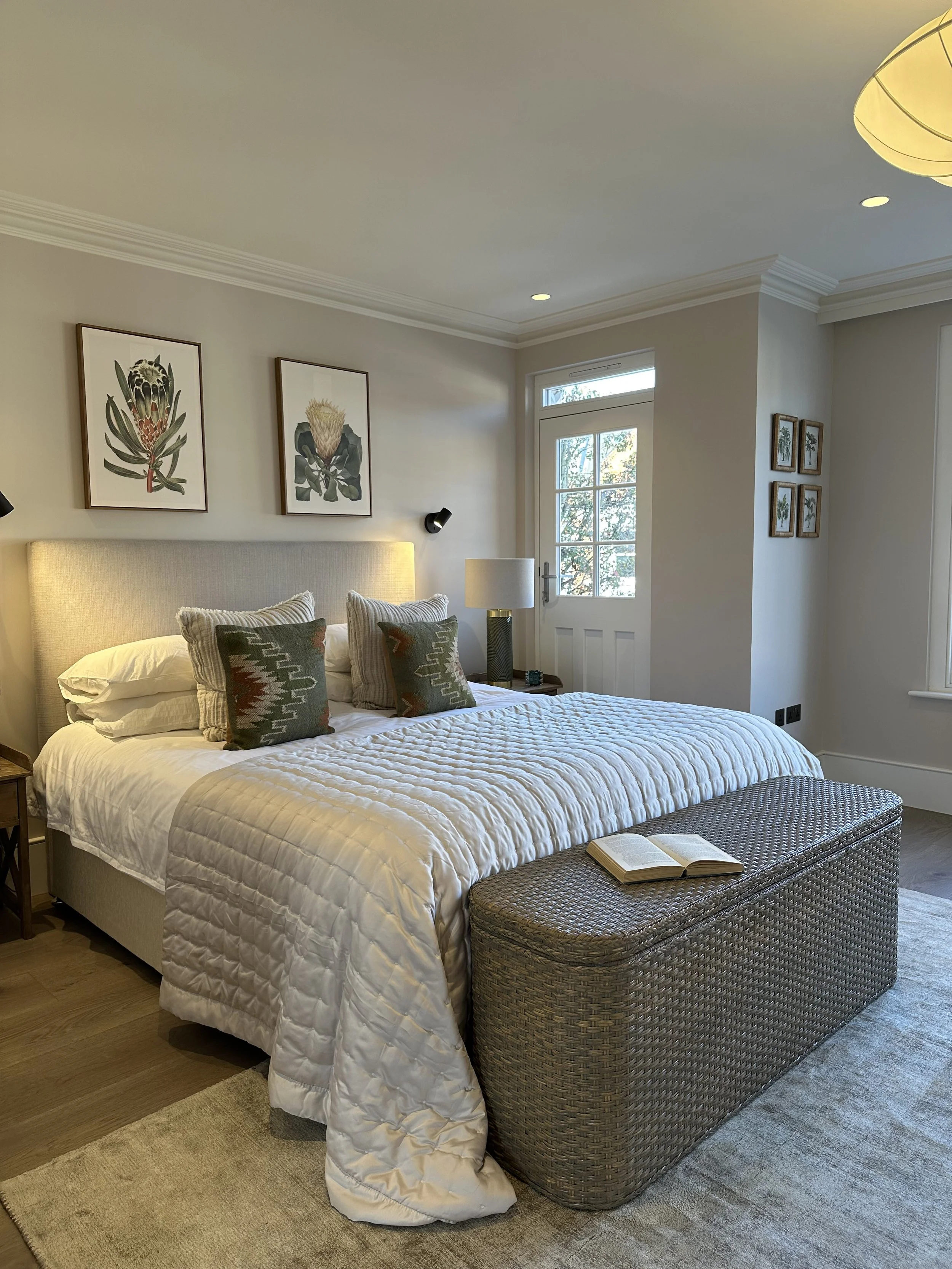
On the first floor, the traditional Victorian layout has been reworked to create a generous principal suite at the front of the house, complete with dressing area and ensuite. The remaining space on the floor accommodates a guest bedroom and a family bathroom, with storage carefully integrated throughout — including linen cupboards on the landing, which Emilie highlights as an often-overlooked opportunity.
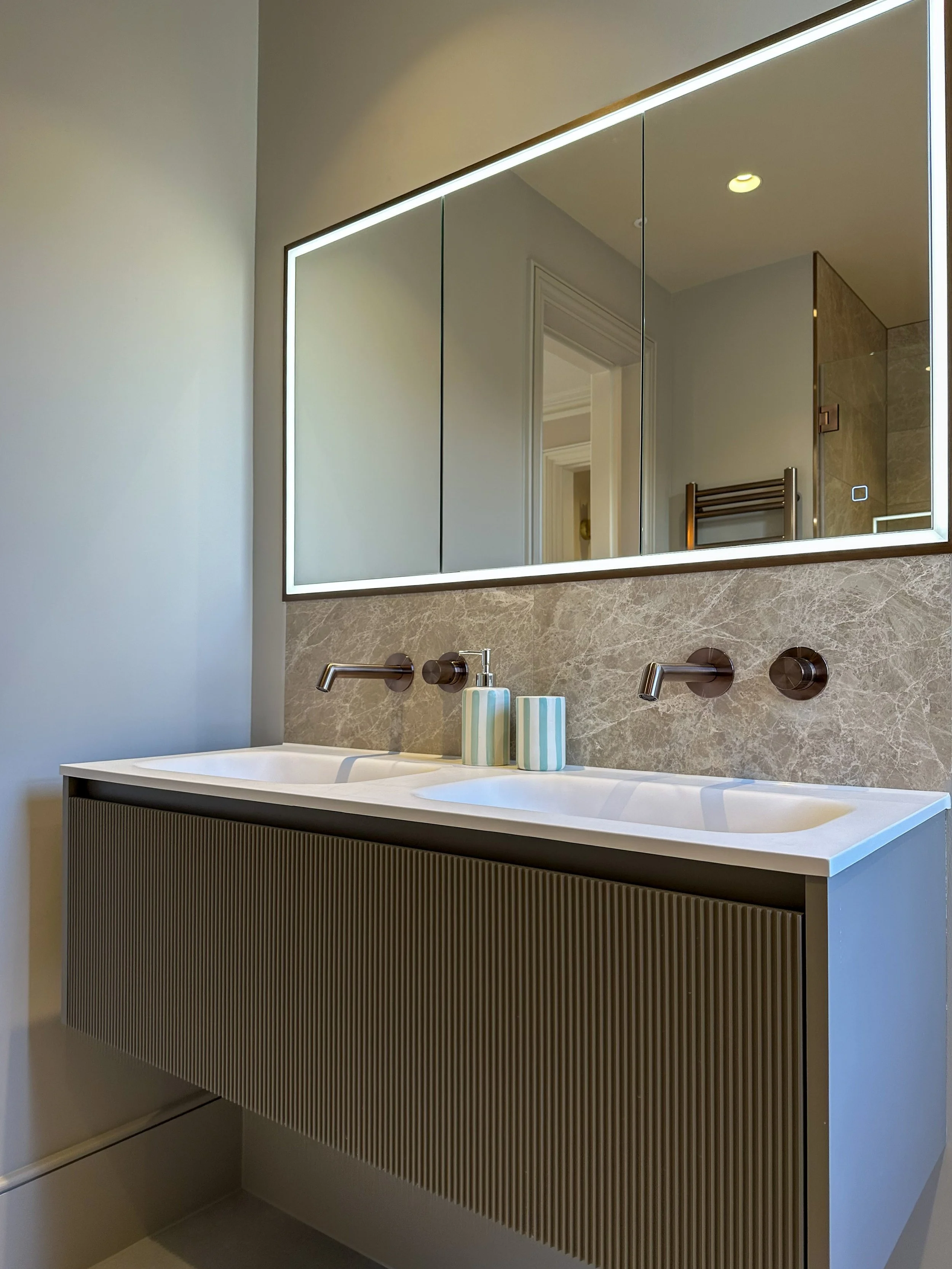
Bathrooms throughout the house are designed with everyday comfort in mind. Large mirrors with integrated lighting replace costly joinery, mixers are positioned so hot water can be turned on before stepping into the shower, and fluted glass is used instead of standard obscured glazing to create what Emilie describes as a “much nicer light.”
The upper floors house additional bedrooms designed for flexibility, suitable for children, teenagers, or home offices. Carpet replaces timber flooring on these levels to reduce noise, while rooflights over the stairwell draw daylight all the way down through the house.
A Contemporary Family Home Rooted in Fulham
Bowerdean House is a considered example of how a historic Victorian Lion House can be reimagined for modern family life. By prioritising light, flow, storage, and flexibility, Emilie Moran and EMR Architecture have created a home that feels calm, generous, and effortless to live in — while remaining firmly rooted in the character of Fulham’s Peterborough Estate.
Project Credits
Architect: EMR Architecture
Developer: Alphabrix
Filmed & Produced by HomeInspire
Photography by InspireMedia
Written by Dan Burge | Founder of HomeInspire